

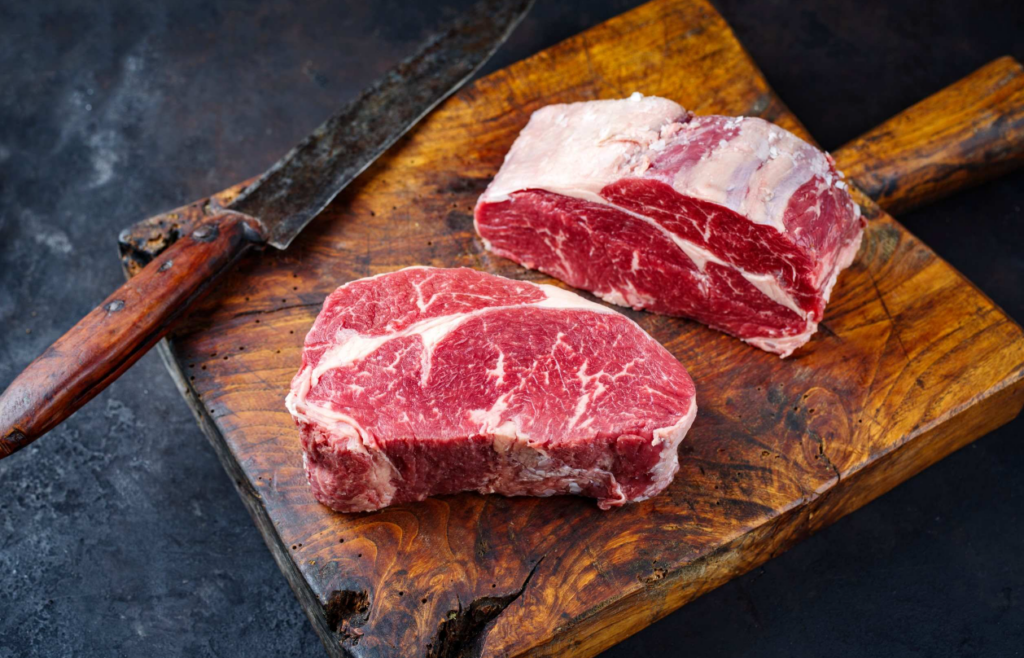
The United States Department of Agriculture (USDA) uses two distinct grades for beef carcasses. Quality Grades, based on marbling and maturity of the carcass indicate the eating satisfaction (tenderness, juiciness and flavor) of cooked beef. Yield Grades estimate the red meat yield (cutability) of a beef carcass. These grades enable differentiation of beef carcass quality and yield in the value transaction between producers and processors. Grading serves to establish the value of cattle and beef products in the market place.
Limitations of Current Yield Grading System
The USDA Yield Grade system was introduced in 1965. This system, based on a population of cattle that were small and early maturing, determined cutability could be predicted based on external fat thickness, ribeye area, carcass weight, and the percentage of Kidney, Heart and Pelvic fat. Despite genetic and management advancements, the system has remained unchanged for over 60 years. The system’s inaccuracy is due to outdated models that do not account for modern cattle size, composition, and processing practices. Modern cattle are significantly larger, with carcass weights now similar to the live finished weights of cattle from the early 1960s. Advances in genetics and growth-promoting technologies have increased carcass size and altered composition. Accordingly, research shows that yield grades currently explain less than 35% of the variation in the true red meat yield of a modern beef carcass. Current premiums and discounts based on outdated yield grades no longer accurately reflect carcass value from the red meat yield aspect. There is a need for more precise, objective measurement tools that can operate at commercial speeds.
A New System Based on Advanced Technologies
Modern technologies and data analysis capabilities provide an opportunity to capture absolute measurements of carcass composition and modernize the yield grade system. Recent studies indicate technologies like 3D imaging, computed tomography (CT), and radar can accurately predict beef carcass cutability explaining over 70-90% of variation in red meat. Processed CT data has been utilized to measure carcass cutability with near perfect accuracy but processing speed and carcass size remain as limitations with this technology.
The timeline for when a new yield grading system is in place remains to be determined but validation of the technologies is happening at a rapid pace. Development of these tools is an industry priority as their implementation will modernize yield assessment, improve market signals, and enhance industry efficiency. The tools developed will be applicable to live cattle production and serve to inform management and genetic decisions made at the seedstock and cow-calf level.
Reference:
https://beefimprovement.org/2026-symposium/2026-presentation-archive/. Advancing Red Meat Yield: Innovation in Carcass Evaluation – Dr. Dale Woerner, Texas Tech University.