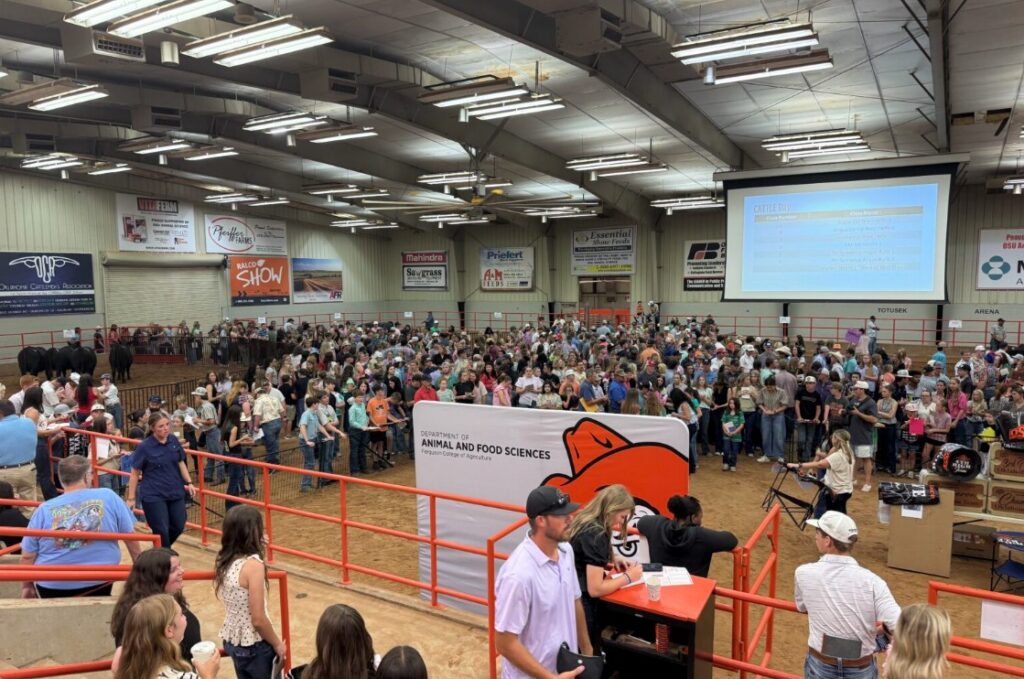
The annual Big 3 Field Days recently brought together thousands of agricultural students and advisors from across the state to test their livestock judging skills and build community. For young participants and seasoned agricultural educators alike, the Big 3 Field Days serve as a premier proving ground for leadership, decision-making, and hands-on agricultural education. Oklahoma Farm Report Intern Presley Strickland was on the ground, interviewing attendees and instructors to capture the unique energy, growth, and learning experiences defining this year’s event.
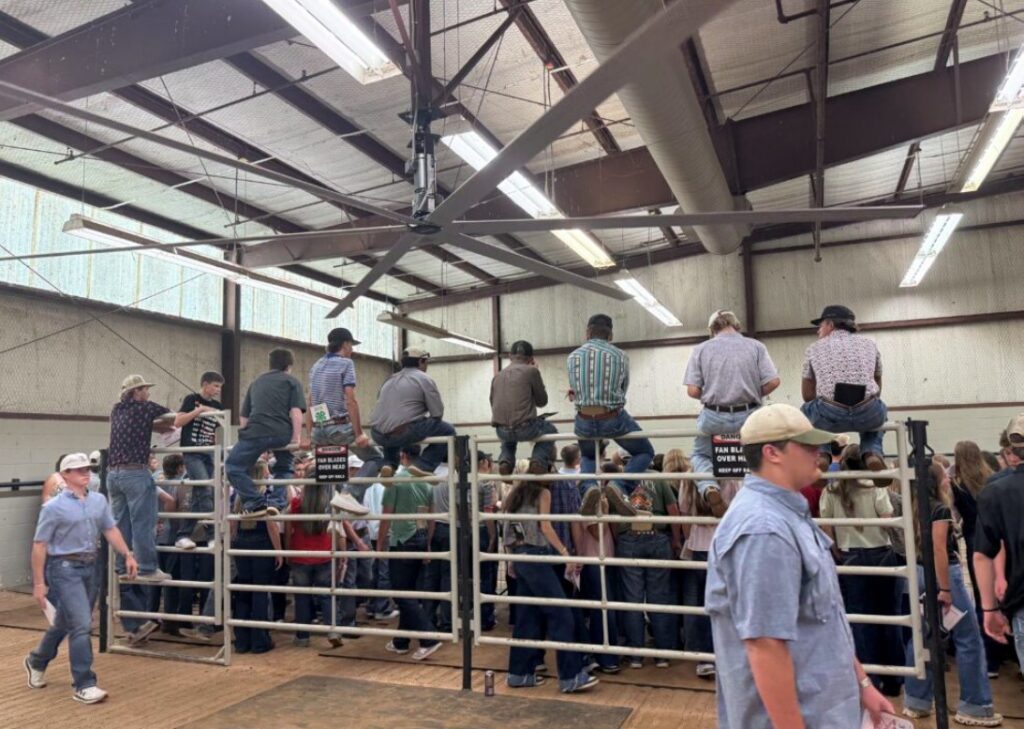
Students Find Fellowship and Lifelong Skills on the Judging Floor
For the students competing, the event represents far more than just evaluating animals; it is an opportunity to reconnect with peers and push past personal comfort zones.
- Brynlee Price, a junior from Stroud participating in her third Big 3 event, shared that the camaraderie keeps her coming back year after year. “Seeing all my friends and all the people I met at alumni camp a couple weeks prior just makes it all the better when judging livestock,” Price noted. While her favorite species to judge is pigs because of her background showing them, she emphasized that the real value lies in the experience. Her advice to anyone hesitating to try livestock judging is simple: “Just go for it. You don’t know if you have it until you try… at the least, you’ll gain some friends and some experience.” Price also humorously recalled that family ties can add to the pressure, remembering a past class where she had to remain quiet and focused while her own brother kept trying to distract her.
- Georgia Dobson, a student from Turner attending the event for the very first time, looked forward to the vast scale of the exhibition. “Just getting to see all of the stock and being able to make connections with those people is something that I’m really excited for,” Dobson said. To prepare, she relied heavily on the institutional knowledge of the agricultural community, asking seasoned industry veterans what to look for in the stock. Dobson admitted that judging the species you personally show can be the biggest challenge, noting that a tough goat and sheep day left room for growth, though she was eager to tackle the swine classes—a species she showed during her first two years of high school. Ultimately, she credits the discipline with building her independence. “It really isn’t a thing you can do as a team, so just being able to prepare by myself is something that’s going to help me in the future,” she explained.
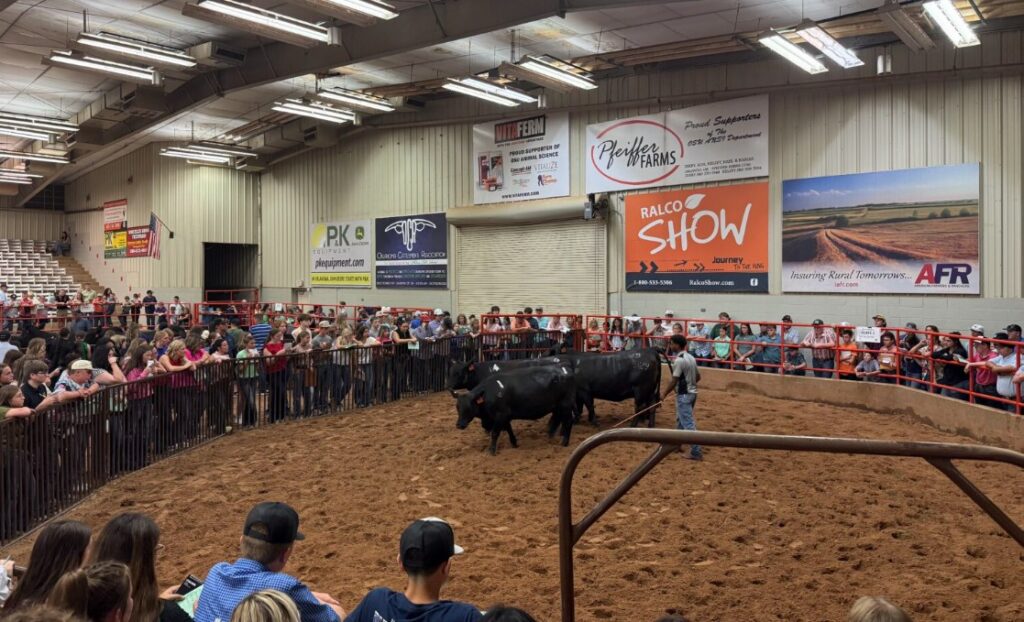
Advisors Emphasize Leadership and Career Preparation
Behind every student team is an advisor dedicated to teaching the finer points of animal science and structural correctness, while using the competitive environment to instill life skills.
- Kashon Urban, the FFA advisor at Fletcher, views the competitive floor as a classroom for critical thinking. Urban uses the event to encourage “leadership improvement,” “decision making,” and the ability to cleanly justify placement reasons, noting that the animals themselves are simply the tools used to teach those foundational lessons. He deliberately balances the intensity of the morning classes with fun, team-building activities in the afternoon to give students a well-rounded experience. According to Urban, exposing students to the sheer competitiveness of the event provides perspective, showing them the serious effort required to win while maintaining a fun, laid-back atmosphere. He also noted how the event has adapted to support the comfort of the participants over the years, including infrastructure updates like air-conditioned barns.
- Melinda Tegg, the advisor for Washington High School, highlighted the immense educational value of exposing youth to a massive variety of livestock across the three-day rotation. Tegg leverages the expertise of local alumni to guide students through oral reasons, while also acknowledging the powerful social draw of the event. “They may not always admit it, but they do like to come for the social aspect of it and see friends from alumni camp or WLC,” Tegg observed. By encouraging even the youngest 4-H and FFA members to participate in reasons practice, Tegg sees a distinct rise in confidence. The practice provides a safe space for students to deliver notes to familiar advisors before they ever have to face collegiate judges.
Ultimately, Tegg believes investing in youth livestock programs remains crucial because of how fully it encompasses the mission of agricultural education. The livestock aspect of FFA incorporates everything from basic production to networking opportunities that follow students long after graduation, helping them build a lifelong network of agricultural peers.