

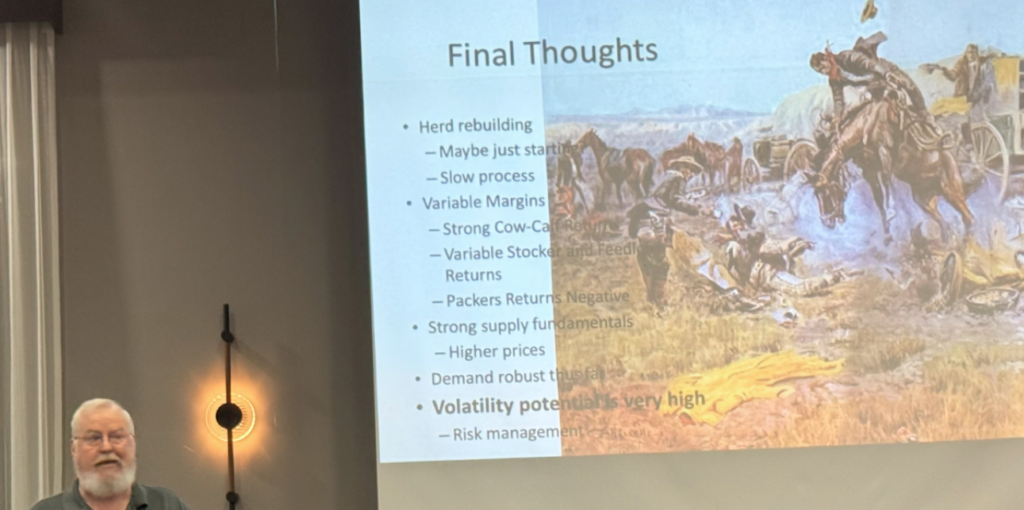
In today’s Beef Buzz, senior farm and ranch broadcaster Ron Hays speaks with Dr. Derrell Peel, Oklahoma State University Extension livestock marketing specialist, about the latest USDA Cattle on Feed report and the midyear cattle inventory report. While the July numbers came in largely as expected, Peel says they continue to tell the same story—feedlots are keeping cattle on feed longer, but meaningful herd expansion has yet to begin.
July Cattle on Feed Report Matches Expectations
Peel said the July USDA Cattle on Feed report offered few surprises, with most of the figures falling close to pre-report expectations. “The July cattle on feed report had placements in June down 2.7 percent, marketings were down 2.9 percent, and the July one on feed total was up 2.2 percent year over year.”
Although placements came in slightly lower than analysts anticipated, Peel said the report remained well within expectations. “There’s no real big surprises in this. Placements maybe just a little bit more down than expected, but it was within the range of expectation, so no big surprise.”
Longer Days on Feed Continue to Drive Inventories
Peel emphasized that the higher cattle-on-feed inventory should not be interpreted as an increase in the number of cattle entering feedlots. Instead, cattle are simply remaining on feed longer because marketings have slowed more than placements. “We continue to see this cattle on feed inventory over a year ago, but you have to understand that’s coming from the fact that we’re just slowing down marketings more than we’re slowing down placements. There’s not more cattle in feedlots, but they’re staying in there longer, and that’s why that number goes up.”
He added that longer feeding periods continue to slow turnover in feedyards. “We’re just slowing down the turnover rate in the feedlots. That’s feedlots’ incentive to try to keep those lots as full as they can. But the total amount of production as a flow coming out of those feedlots is down.”
Heifer Numbers Still Not Pointing to Major Expansion
Because July also includes USDA’s quarterly breakout of steers and heifers on feed, Peel closely examined the heifer percentage—a key indicator of whether producers are retaining females to rebuild the cow herd. “Heifers on feed came in at 37.4 percent. That’s actually up one-tenth of one percent from the April estimate. We continue to see that heifer on feed number staying elevated relative to what we might be looking for in terms of heifer retention.”
Historically, Peel said aggressive herd rebuilding has been accompanied by a much lower percentage of heifers in feedlots. “The last cattle cycle, about 12 years ago, that heifer percentage dropped down to about 32 or 33 percent.”
While today’s beef-on-dairy industry has likely increased the normal percentage of heifers in feedlots somewhat, Peel said current levels still don’t suggest producers are holding back large numbers of replacement females. “Maybe this thing is up by one or one and a half percent more than compared to history, but it still doesn’t suggest that we’re holding a lot of heifers.”
Midyear Inventory Shows Only Slight Signs of Retention
Peel also discussed USDA’s midyear cattle inventory report, which offered only modest evidence that producers are beginning to retain more females. “The midyear report shows a very slight increase in the total cattle inventory in the country. Beef cows were actually down another seven-tenths of a percent. Beef replacement heifers were up about 2.7 percent, and dairy replacement heifers were up about 2.9 percent.”
While replacement heifer numbers increased slightly, Peel cautioned against reading too much into those gains. “That’s a slight indication of heifer retention, but not enough to really signify significant herd growth.”
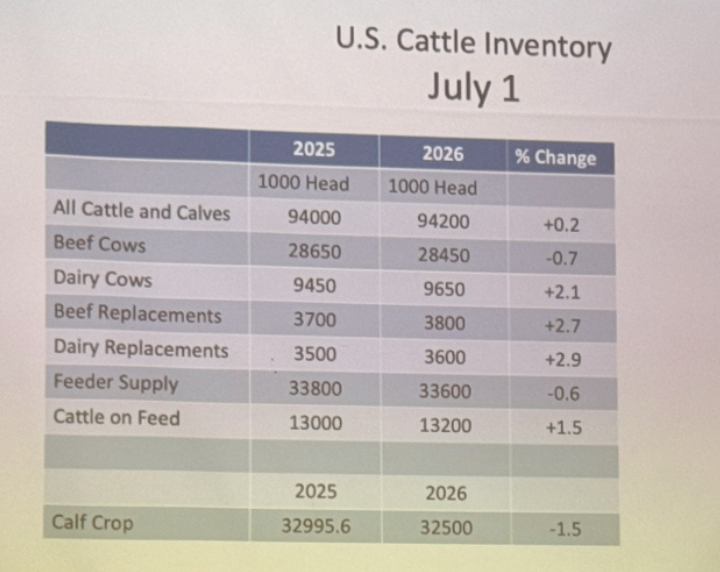
He also noted that the July inventory report is based on a smaller survey than the comprehensive January report. “This is a smaller survey, so it’s got a little less data in it. It doesn’t have any state breakdown, so all we get are these national numbers.”
Herd Growth Still Moving Slowly
When asked whether the cattle industry is finally getting serious about rebuilding the national cow herd, Peel said the evidence simply isn’t there yet. “The short answer is not really. I think we’re just crawling toward that idea. It may be slowly building, but it certainly does not indicate significant herd growth.”
He added that if producers were aggressively retaining heifers, the numbers would look much different. “Typically, if we’re doing aggressive heifer retention, we’d see that beef replacement heifer number jump four or five percent for a year or two. We are seeing nothing like that at this point.”







