

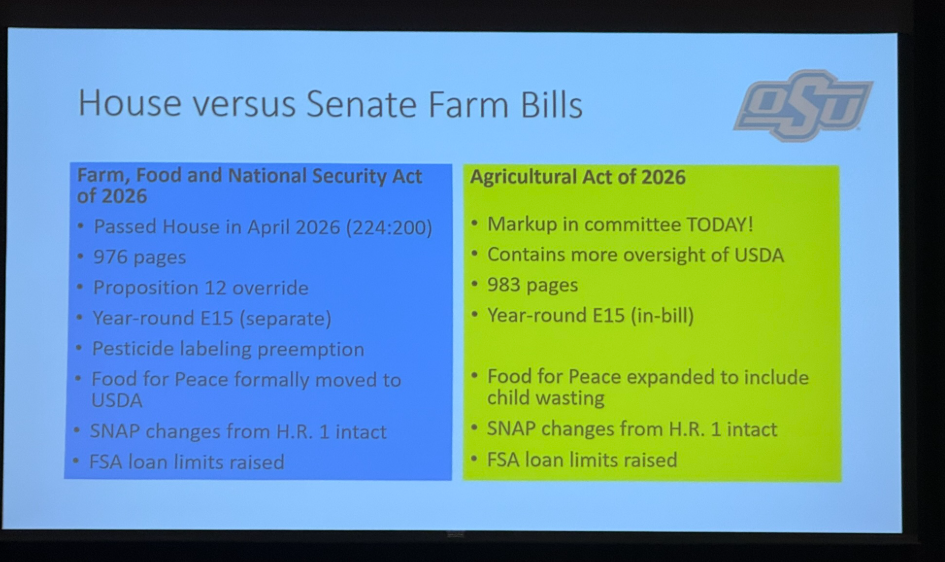
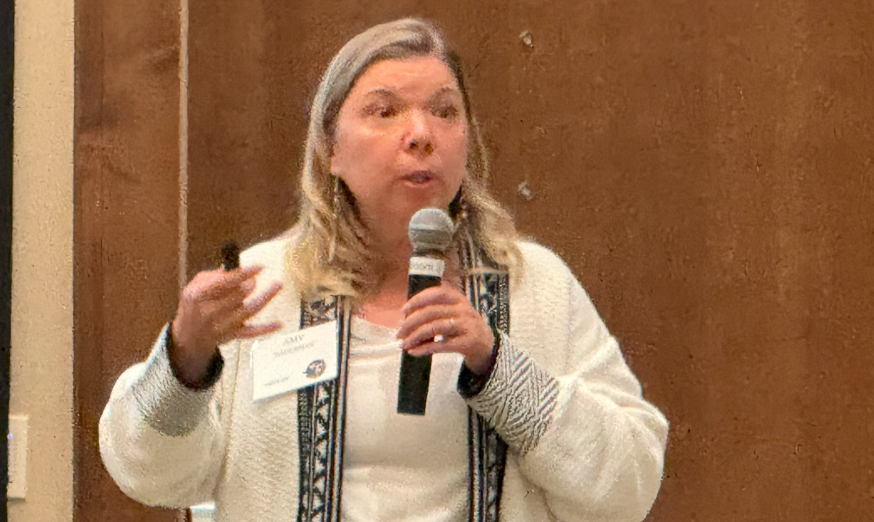
The ongoing discussions surrounding the United States Farm Bill remain a critical focus for agricultural producers across the nation. In a detailed conversation, Farm Director KC Sheperd spoke with Dr. Amy Hagerman from Oklahoma State University’s Department of Agricultural Economics to break down the latest developments in federal policy. They examined the comparison between the House and Senate proposals, analyzing key areas of overlap, significant differences, and what the overall process means for producers on the ground.
The Markup Process and Legislative Progress
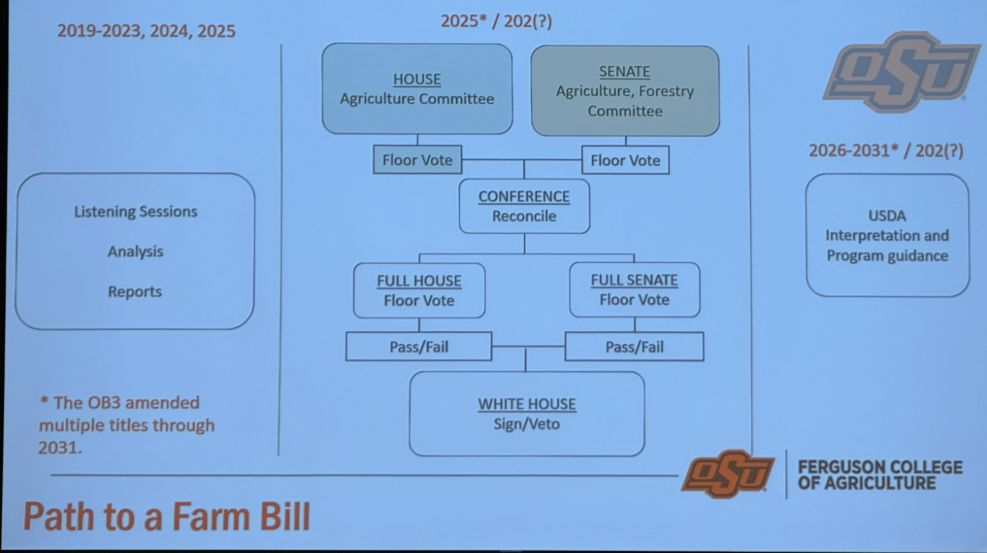
During the discussion, Dr. Hagerman clarified the mechanics of the legislative markup process. Committee members review introductory legislative text, debating proposed amendments to determine what should be added or removed. While this procedure can often span several days, the Senate version benefited from earlier developments in the House. Because the base content of the Senate bill was built upon the House draft, much of the foundational debate had already taken place. Consequently, Senate discussions largely focused on identifying specific additions and evaluating where the two versions align or diverge.
Key Areas of Alignment
Despite differences between the chambers, several notable points of agreement exist between the proposed bills:
- Transition of Food Programs: Both drafts reflect general agreement on transitioning the administrative home of programs like Food for Peace into the USDA following discussions around the dissolution of USAID.
- FSA Loan Limits: Both proposals advocate for raising loan limits across various Farm Service Agency (FSA) programs, including direct, guaranteed, operational, and microloans tailored for smaller or beginning producers. However, Dr. Hagerman noted that the overall cap on total loan dollars was not increased, suggesting future loans may be larger in individual size but fewer in total quantity.
- Precision Agriculture: Both versions maintain support for advancing precision agriculture initiatives within federal conservation frameworks.
Key Differences: Senate Priorities and Specialized Policies
The Senate draft introduces several unique priorities that separate it from the House version:
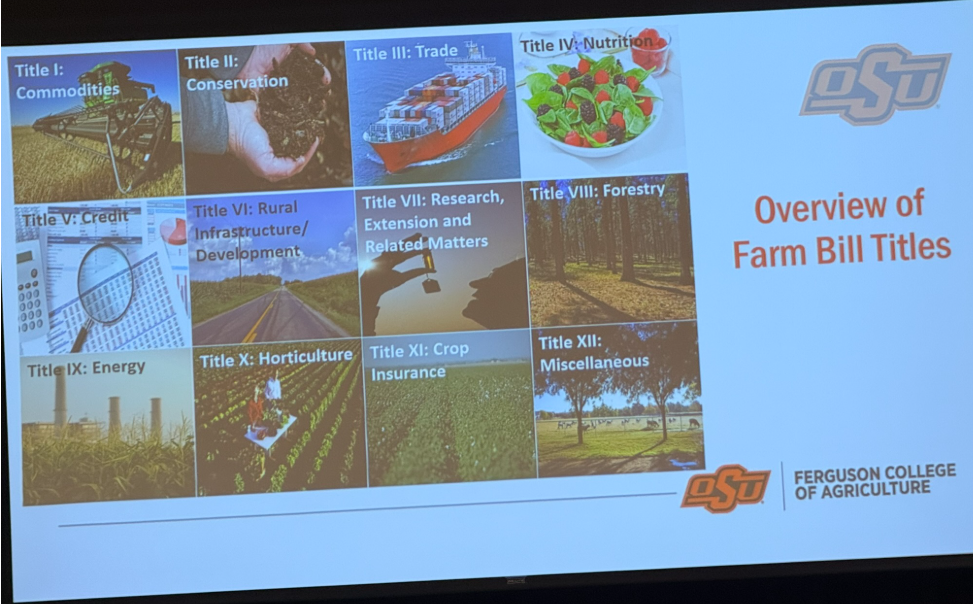
- Disaster Preparedness and Commodity Coverage: The Senate bill places stronger emphasis on disaster preparedness under Title 1 (Commodities), extending coverage options to include fertilizer and storage facility loans, as well as expanding the Livestock Indemnity Program.
- USDA Oversight and Reporting: There is a heightened focus on legislative oversight, with the Senate version requiring more frequent reporting from the USDA to Congress regarding program implementation and transparency.
- Conservation Reserve Program (CRP): The Senate proposal seeks further expansions to the Conservation Reserve Program, particularly relative to grassland initiatives.
Base Acres and Proposition 12 Debates
The conversation also highlighted key agricultural policy debates currently shaping producer strategy:
Base Acre Expansion
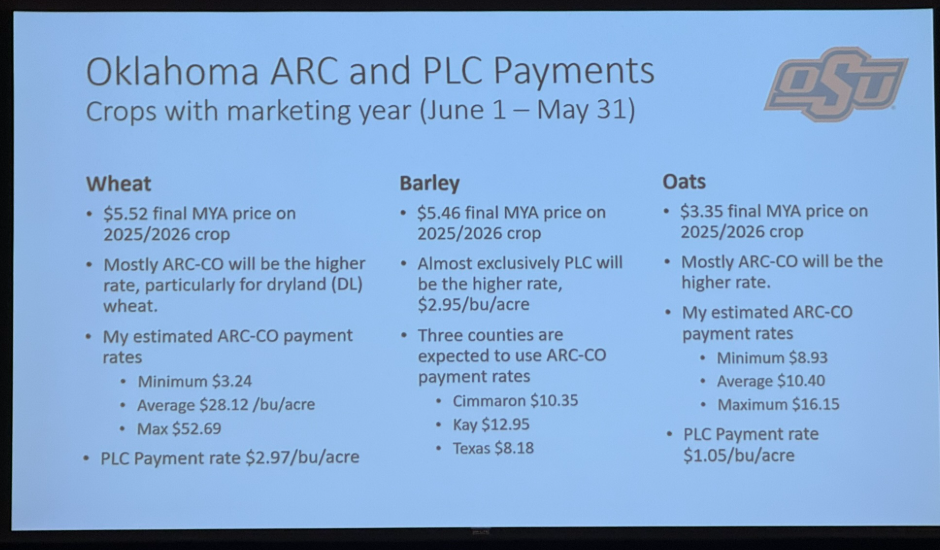
Under the framework established in earlier legislation (HR 1), the opportunity for producers to update or add base acres remains open via online portals such as login.gov. Dr. Hagerman emphasized that opting out of base acre additions requires proactive action from the operator. Given the recent performance of ARC and PLC safety net programs during times of market volatility and regional drought, producers are encouraged to review their operations carefully before the deadline.
State vs. Federal Standards (Proposition 12)
While California’s Proposition 12 is not named directly in the text, language in the House-passed bill addresses state-level production restrictions. The proposed provision dictates that federal standards would override state laws attempting to regulate agricultural production methods conducted outside their own borders, such as gestation crate requirements. Stakeholders continue to deliberate whether the Farm Bill is the appropriate venue for resolving these interstate trade considerations.
SNAP and Nutritional Funding Adjustments
Nutritional spending through the Supplemental Nutrition Assistance Program (SNAP) remains a central point of debate in both drafts. The primary policy shift centers on shifting a portion of SNAP payment oversight and fiscal responsibility onto state governments.
| Legislative Draft | Timeframe for State Implementation | Details |
| House Version | Unadjusted | Maintains strict original timelines for state compliance. |
| Senate Draft | 1-Year Grace Period | Proposes an additional year for states to reduce error rates before fiscal penalties apply. |
Dr. Hagerman noted that because some high-error states previously received multi-year grace periods, debate continues over whether all states should receive equal time to adjust their administrative budgets to accommodate these financial shifts.
Practical Takeaways for Producers and Expected Timeline
For Oklahoma wheat farmers and livestock ranchers evaluating risk management, Dr. Hagerman emphasized that core coverage—including crop insurance, safety nets, and primary loan structures—remains authorized through 2031. The passage of a new Farm Bill offers enhanced benefits, such as expanded CRP grassland caps and elevated FSA loan thresholds, but fundamental protections remain intact. Producers are advised to maintain active digital accounts via login.gov as administrative filing continues moving toward streamlined electronic processes.
Regarding the overall timeline for reconciling the House and Senate bills into final legislation, Dr. Hagerman offered a pragmatic assessment. Considering congressional recess schedules, election-year campaigning, pending continuing resolutions, and incoming legislative turnover, a full reconciliation prior to the next congressional session remains challenging. The most realistic outcome appears to be a one-year extension of existing programs, with final legislative reconciliation extending into next year.







