

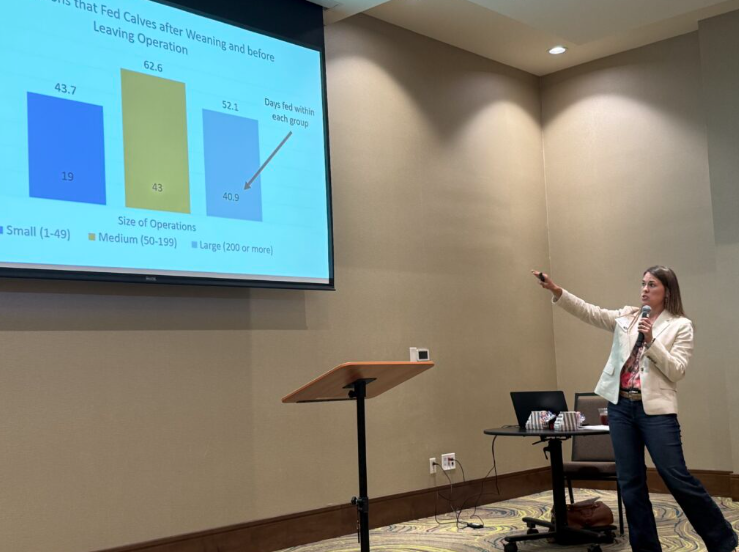
In today’s Beef Buzz, senior farm and ranch broadcaster Ron Hays features comments from Dana Zook, OSU Extension area livestock specialist, on the benefits of preconditioning calves. Zook recently spoke with Oklahoma Farm Report intern Presley Strickland at the Women in Ag Conference about how producers can use the time after weaning to help calves adapt, improve their health and nutrition, and prepare them for the next stage of production.
“So it is an essential time to apply some management that really can have an impact to the rest of the beef industry sectors,” Zook says. “It can really positively benefit those calves.”
She says preconditioning can include helping calves adjust to weaning, implementing vaccination protocols, castration and dehorning, while also focusing on nutrition. “We’re really trying to achieve a high-quality nutrition to get consumption up,” Zook says. “We’re helping them get through those stressful events because they’ve just been weaned.”
Vaccination Is a Key Part of the Process
One of the biggest benefits of preconditioning is giving producers time to establish a strong vaccination program before calves experience additional stress from transportation and commingling. “One of the biggest things is preconditioning really offers that time for vaccination,” Zook says. “Health is really benefited down the industry stream by getting calves vaccinated under a proper protocol.”
Zook says vaccination can help mitigate risks such as bovine respiratory disease and clostridial disease later in the animal’s production cycle. “We are preparing their immune system for those later segments, maybe some shipping, maybe some transportation,” she says.
Zook adds that research conducted at Oklahoma State University and across the beef industry has demonstrated the benefits of preconditioning, particularly with higher-risk cattle.
Nutrition Helps Calves Learn How to Eat
Zook says nutrition is another major piece of a successful preconditioning program. The goal isn’t necessarily to put on a large amount of weight during the period, but rather to establish good eating habits and prepare calves for future weight gain. “So really, what you’re doing during that time is you’re reducing stress,” Zook says. “You’re getting them to kind of learn how to eat.”
She says producers may introduce calves to different feed ingredients while providing the protein, energy, vitamins and minerals needed for growth. “You might not be able to achieve that,” Zook says of putting on significant weight. “But what you’re doing is helping them learn how to eat, giving them used to maybe some different feed ingredients and that sort of thing.”
According to Zook, research throughout the beef industry has shown that preconditioning can benefit most cattle herds, but producers need to make a plan before getting started.
Make a Plan Before Preconditioning
Zook recommends producers first evaluate the resources they already have, including hay, feed, facilities and access to animal health professionals. “If you’re thinking about preconditioning is understand, make a plan,” Zook says. “Understand what resources you have.”
She recommends getting hay tested, evaluating local nutrition options and determining the cost before committing to a program. Producers also need facilities where calves can remain healthy and where they can be monitored and treated if necessary. “Having a good vet on your team, a good nutritionist on your team to really help make that plan, I think is important,” Zook says.
She emphasizes that simply getting calves to eat isn’t enough. They need a balanced nutritional program that provides the nutrients necessary for continued growth. “Growing through this period is important, but creating a firm foundation is pretty important,” Zook says.
Keep a Close Eye on Calves During Summer Heat
Zook also offered some advice for producers preconditioning calves during the summer months. Providing shade and a clean, comfortable environment is especially important during periods of high heat. “Specifically, you’re going to need shade for those calves,” Zook says. “You’re going to need a pen that’s not excessively dusty.”
She says producers should monitor calves closely and pay attention to changes in behavior. “If you’re seeing a calf that doesn’t come up to the feed bunk, there could be something wrong,” Zook says.
Zook encourages producers to know what normal behavior looks like for their cattle so they can quickly recognize when something is wrong. “Cattle producers who know their animals can identify something that’s off,” she says. “Know the normal behavior and know what’s a little bit off.”
The Beef Buzz is a regular feature heard on radio stations around the region on the Radio Oklahoma Ag Network and is a regular audio feature found on this website as well. Click on the LISTEN BAR above for today’s show and check out our archives for older Beef Buzz shows covering the gamut of the beef cattle industry today.







