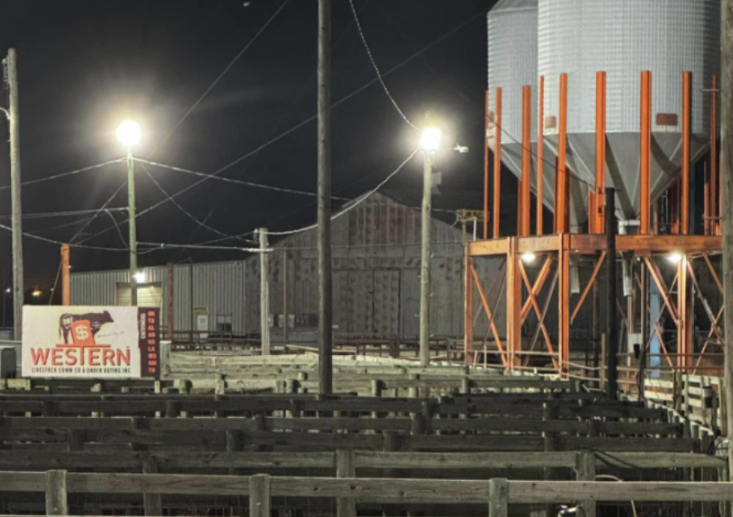
On Tuesdays, Senior Farm and Ranch Broadcaster Ron Hays visits with Ben Hale of Western Livestock Auctions as he talks about the latest in the markets and more. Established in 1995, Western has grown into a multi-generational family-owned and operated business and stands as a symbol of tradition, excellence, and a deep-rooted passion for the cattle industry. Western Livestock Auctions operates the Western Livestock Commission Firm, which sells cattle on Mondays and Tuesdays. They also operate the livestock auction markets in Woodward, Comanche, Waurika, and Knoxville, Iowa.
The cattle market continues to face uncertainty, with tighter supplies and recent policy announcements adding pressure to feeder cattle prices. Hale says the heat is not necessarily the biggest factor affecting the market, pointing instead to reduced receipts at sale barns. “I think it’s just tighter numbers. You look around these sale barn receipts, and they’re half what they were a year ago,” Hale said.
Hale says the market should have more positive momentum following a bullish USDA Cattle on Feed report, but uncertainty surrounding President Donald Trump’s beef tariff announcement has made it difficult for producers and traders to know what comes next. “Everything is indicating that it should be better for no reason other than he strictly just tweeted out whatever he’s trying to do,” Hale said. “We just got to operate under what we do know, and what we do know is it should be good, it should pick up, but who knows?”
While feeder cattle are still bringing historically strong prices, Hale says producers have to look beyond the price per head and consider whether the cattle can ultimately make money. “It doesn’t matter what they’re bringing. What matters is what you give for it and what you sold it for,” Hale said. “And is that a plus or a minus? And right now it’s a minus.” He adds that continued declines in feeder prices could eventually put more pressure on feedyards and the broader cattle market.
Hale also questions the impact of Mexican cattle imports resuming and the administration’s decision to allow more Argentine beef into the U.S. market. He says the number of Mexican cattle coming across the border is unlikely to significantly change the overall supply picture through the end of 2026. Regarding Argentina, Hale says the situation has created frustration among cattle producers and traders. “The traders have made a pile of money on it,” Hale said. “When you’re messing with people’s lives like that, that’s just not a good thing.”
Hale says cattle producers are struggling to determine how to respond to the current market, especially with many operating at reduced capacity because of forage and weather conditions. “I think they’re just as lost as we are,” he said. Hale notes that some producers are running significantly fewer yearlings and cows than they normally would, while a return of rainfall could change decisions about retaining heifers. Meanwhile, Western Livestock markets are expected to remain active this week, with roughly 1,800 cattle at Waurika, more than 500 cows, 1,000 to 1,200 head at Comanche and several loads of feeders and heifers expected at Woodward.
Hale can be contacted at 940-631-2333. Check out more about the marketing options that Western offers by clicking here.