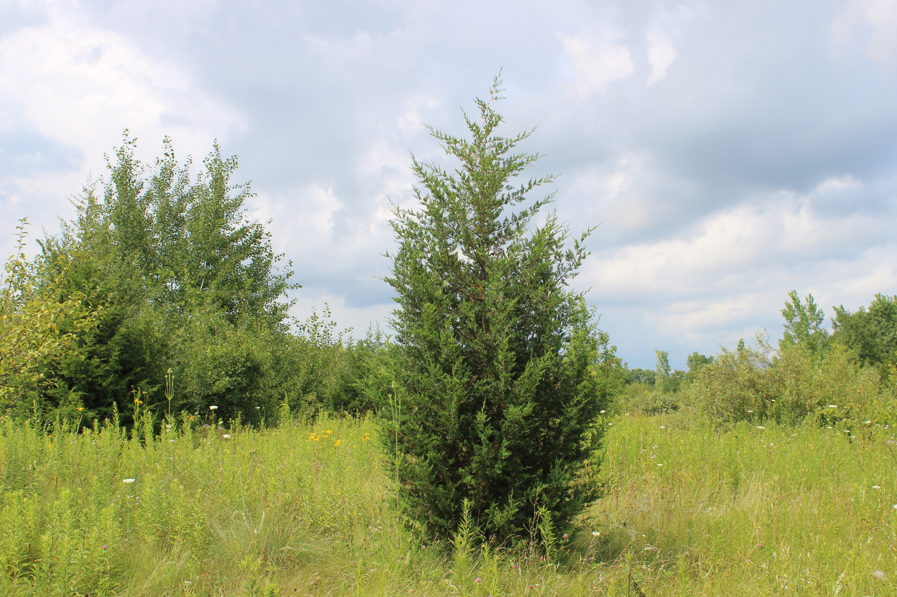
Lingering drought, concern about limited water supplies for human use and our natural resources leads to the topic this week: the water demands of the Eastern Redcedar tree. Eastern Redcedar encroachment has been a long-term problem in Oklahoma and these trees continue their rapid encroachment into the grasslands of the Great Plains and Midwest. Research done at Oklahoma State University has quantified Eastern Redcedar trees impact on the water cycle, soil water content, water use by trees and streamflow.
Key Findings and Implications.
Eastern Redcedar trees use water every day, year-round, sapping soil water content. The average water uptake of each tree ranges between 0.5 – 21 gallons/day. Water use varies by tree size and stand density.
Encroachment of Eastern Redcedar trees not only leads to lower soil moisture but also altered water flow. Rainfall is intercepted by the Redcedar tree, preventing runoff and groundwater recharge. Only heavy rains break through the tree canopy to the ground. Rain captured by redcedar trees does not run off to replenish streams or groundwater.
When Redcedar trees are not controlled, they thrive in a wide variety of soils, have a high tolerance to drought, and are highly resilient. On a positive note, they are vulnerable to fire.
Bottomline: Controlling these trees is critically important. Soil water content is lower where Redcedar trees exist. These trees have a huge negative impact on ecosystems and resources. Prescribed burning of rangelands can be highly effective in controlling the encroachment of Eastern Redcedar trees.
Reference: