

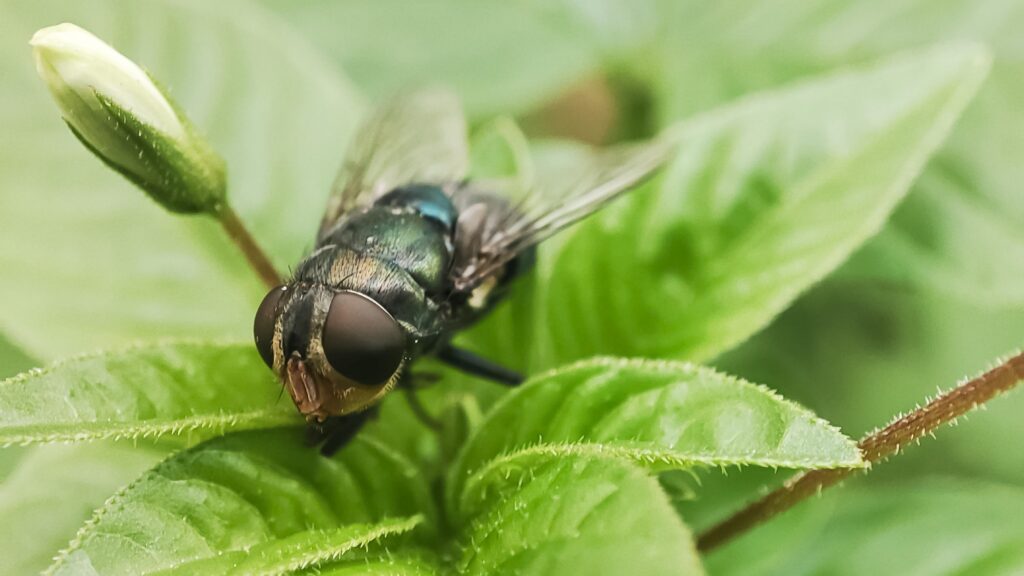
According to reporting by Rod Bain for the U.S. Department of Agriculture in Washington, D.C., scientists are making significant strides in modernizing the Sterile Insect Technique (SIT)—a biological control method that has formed the backbone of New World screwworm eradication across the United States and the North American continent since the 1950s and 1960s.
The traditional eradication system relies on mass-producing screwworm flies, treating them with gamma radiation to induce sterility, and releasing them across large target areas to suppress wild populations over time. However, as USDA research entomologist Alex Arp points out, the historical process carries a fundamental operational flaw:
“Only the male flies are actually contributing to that population suppression,” Arp said. “Historically, with New World screwworm SIT, we’ve released males and females. So, a lot of the resources that go into the sterile insect production are kind of wasted producing these female flies that don’t help us much.”
To solve the issue, Arp and his colleagues at the USDA’s Knipling-Bushland U.S. Livestock Insects Research Laboratory in Texas joined forces with researchers at North Carolina State University. Developed under the Agriculture Department’s New World Screwworm Grand Challenge, the team created a new strain termed NovoFly.
NovoFly incorporates a selective system that destroys female flies while they are still embryos. Because the system can be turned on and off, rearing facilities can maintain a sustainable breeding colony containing both sexes, then engage the switch to produce generations consisting strictly of males.
As Arp explained to Bain, removing females before the sterilization phase addresses a major physiological hurdle:
“When we’re sterilizing these screwworm flies for SIT, the female flies need a really high sterilization dose—about twice what a male needs to be sterilized,” Arp noted. “Right now, all the males we’re producing are getting sterilized at this really high female dose, and it’s reducing their health a little bit in the field and reducing their capabilities for mating females.”
With NovoFly eliminating females prior to irradiation, facilities can administer the lower, optimal gamma radiation dose intended for males. The result is a hardier, healthier sterile male fly that performs significantly better during mating competition in the wild—improving suppression without demanding new production infrastructure.
Before NovoFly can be mass-produced and deployed on a regional scale, it must clear several regulatory hurdles. Approval is required through the Environmental Protection Agency, alongside authorizations from partner nations that operate screwworm production facilities, including Mexico and Panama.