

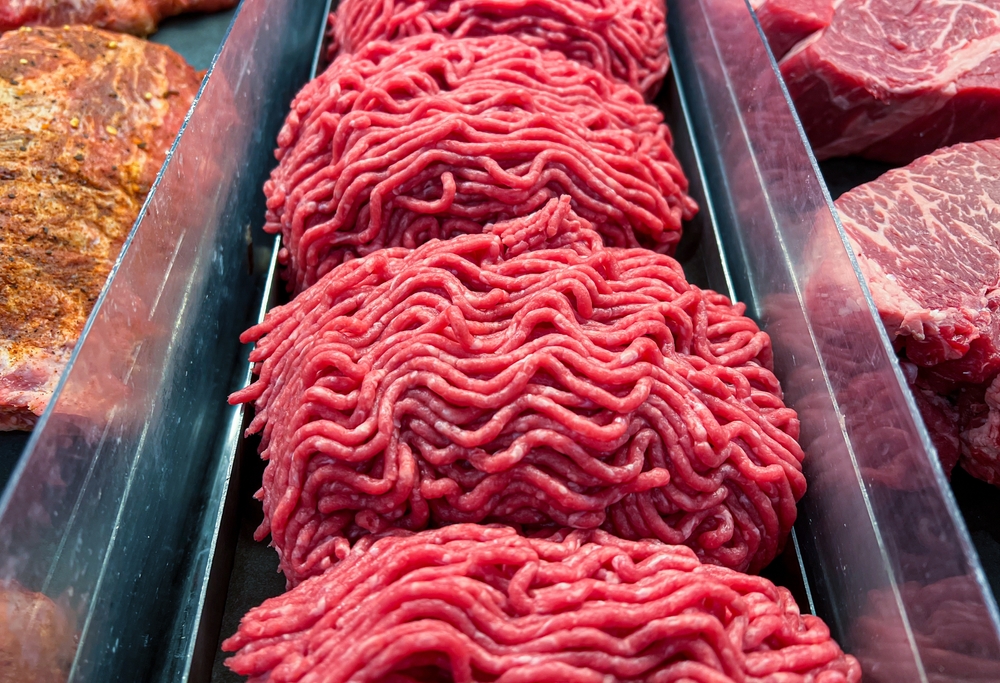
In today’s Beef Buzz, senior farm and ranch broadcaster Ron Hays speaks with Chandler Keys, longtime beef industry lobbyist and consultant to agricultural organizations and companies, about the unprecedented level of attention the beef industry is receiving from President Donald Trump.
Keys says that in his time working in public policy in Washington, D.C., he has never seen a president and his senior advisors so focused on the beef industry. He says the closest comparison he can think of was the response from President George W. Bush during the BSE crisis, when the administration worked to reopen international markets for U.S. beef. “I’ve never seen a president and his senior advisors fixated on the state of the beef industry,” Keys says.
Keys says the current situation is different because the administration is focused heavily on beef prices, domestic supplies and the relationship between cattle producers, processors and consumers.
Beef Imports and the Push to Lower Prices
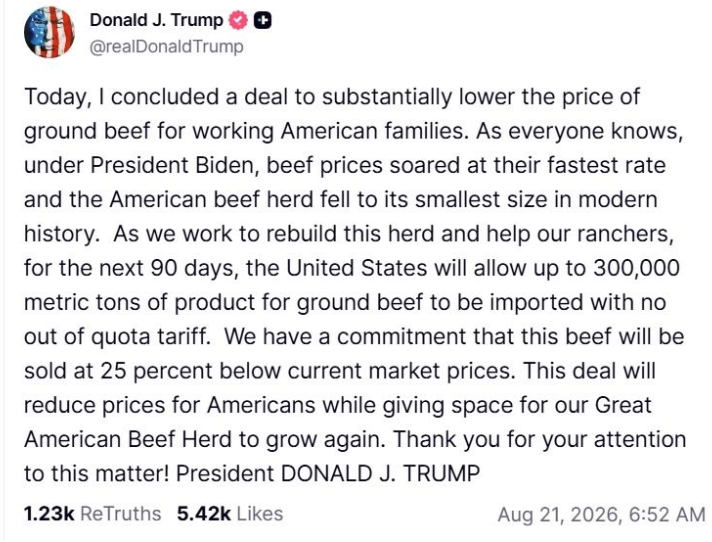
One of the biggest announcements came when President Trump said the United States would allow up to 300,000 metric tons of lean beef to enter the country under an expanded tariff-rate quota, with the administration seeking to have the imported beef sold at a 25% discount to market prices. The measure began September 1 and is divided into three 100,000-metric-ton tranches.
Keys says the important point is that beef was already entering the country under the existing tariff-rate quota system. “The beef was coming in, and it was paying the tariff,” Keys says.
He explains that once the existing quota is triggered, imports can face a 26.5% tariff, but the demand for lean beef remained strong enough that product continued to enter the United States.
Consumers Have Continued Buying Beef
While beef prices have climbed sharply, Keys says consumers have continued to purchase beef despite having other protein choices available. “Even as this beef price went up, the consumer, because we’ve done such a good job over the last 40 years, really improving the quality of our beef, the consumer was still buying beef,” Keys says.
He says that strong demand for beef, particularly ground beef, has surprised other segments of the protein industry. “The consumer wanted high-quality beef and ground beef in particular.”
Keys says the continued demand for beef despite higher prices has contributed to questions about why beef has become such a focus in discussions surrounding grocery inflation.
What Does It Mean to ‘Process Your Own Cattle’?
The following Friday, President Trump turned his attention toward meat processing, calling for farmers and ranchers to have greater ability to process and market their own beef and criticizing the nation’s largest meat processors. The administration has since issued an executive order directing USDA to reduce barriers to ranchers processing and selling their own meat and to support small and regional processors.
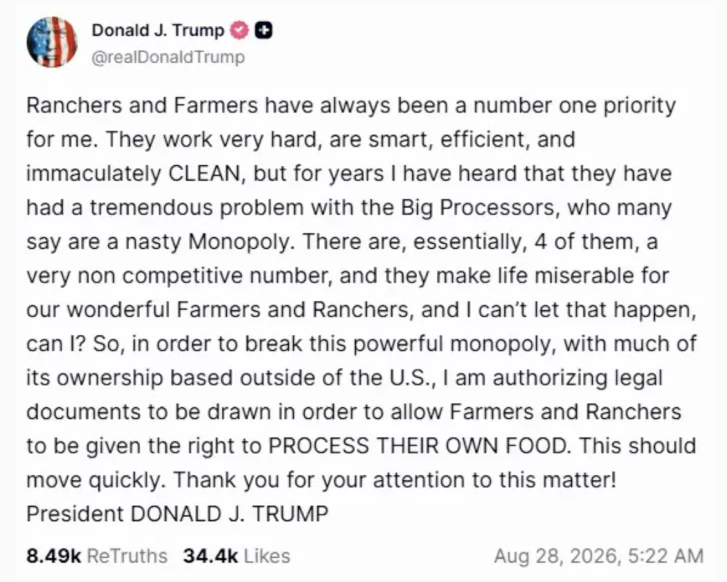
But Keys says there is an important clarification that needs to be made. “I don’t know where that came from, but it was odd,” Keys says of the idea that ranchers could simply process their own cattle.
Keys points out that while there is a growing market for direct-to-consumer beef and smaller processing operations, most ranchers are not actually doing the slaughtering and processing themselves. “Remember, the rancher is not processing these cattle. It’s a processor somewhere. It’s a medium-sized, small processor.”
He says the model can work well for producers who want to raise cattle and sell beef directly to consumers, but a processor is still typically involved in getting that animal from the ranch to a finished beef product. “If you want to raise your own cattle and then find somebody to slaughter them for you and then package them and get it to your direct consumers, that’s a great model.”
Keys says producers interested in direct marketing have pursued that model, but the distinction between owning the cattle and actually processing the cattle is important.
A New Level of Attention on Beef
With presidential actions now touching beef imports, cattle processing and the structure of the beef industry, Keys says the level of attention from the White House is something he has not seen during his decades in Washington. “It’s very unprecedented,” Keys says. “I’ve never seen a president and his senior advisors fixated on the state of the beef industry.”
The Beef Buzz is a regular feature heard on radio stations around the region on the Radio Oklahoma Ag Network and is a regular audio feature found on this website as well. Click on the LISTEN BAR above for today’s show and check out our archives for older Beef Buzz shows covering the gamut of the beef cattle industry today.







