

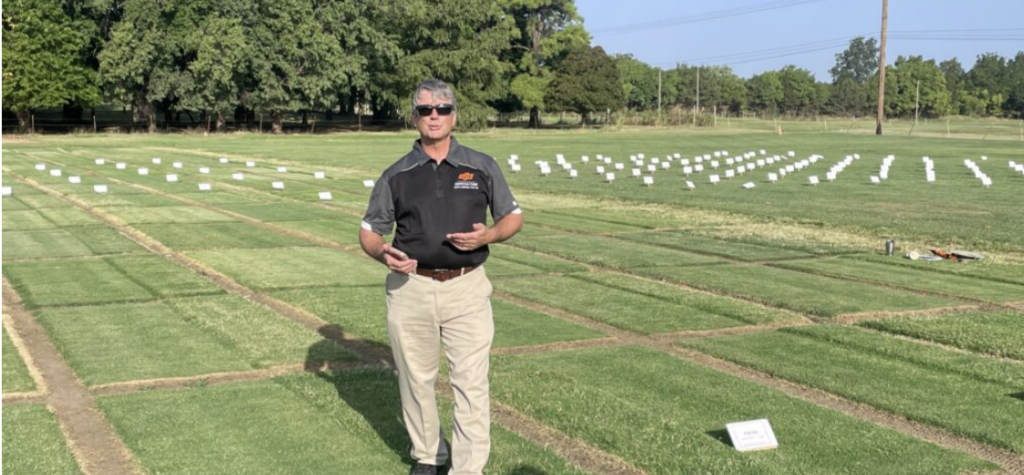
Oklahoma State University researchers showcased advancements in turfgrass development and explored the potential for growing hops in Oklahoma during the university’s Turf & Landscape Field Day on Sept. 16.
Oklahoma Farm Report intern Haden Snelson visited with OSU researchers and students to learn more about their ongoing research and its applications for Oklahoma growers and landscape professionals.
Dr. Dennis Martin, OSU Extension and research turfgrass specialist, said the university’s research facilities encompass approximately 100 acres, including more than 20 acres dedicated to turfgrass research.
“We have at any one time about a thousand different lines of turf grasses across 13 to 15 different turfgrass species of economic importance in Oklahoma,” Martin said.
OSU’s turfgrass research program is known for developing bermudagrass varieties, including Tahoma 31, Latitude 36 and NorthBridge. Researchers also conduct National Turfgrass Evaluation Program trials to compare established commercial varieties with experimental warm- and cool-season grasses.
Martin said the field day provides an opportunity for visitors to see the breadth of research being conducted at the university.
“Just allowing them to see the full breadth of what we have going,” Martin said.
While turfgrass research was a major focus, the event also highlighted alternative horticultural opportunities for Oklahoma growers.
Kaitlyn Constien, a horticulture master’s student at OSU, presented a station covering the use of hops in landscaping, including different cultivars, their uses and growing regions.
Constien said hops production is concentrated in the Pacific Northwest, but interest in locally grown hops is increasing in Oklahoma as craft breweries seek local ingredients.
“It is a growing industry in Oklahoma because many breweries are getting into craft brewing, and so they want local hops,” Constien said.
Although several hop varieties can be grown in Oklahoma, Constien said lower yields remain a significant challenge for producers.
“We just don’t get as big of a yield as we would in the Pacific Northwest,” she said.
Martin said OSU plans to continue hosting the field day, with the frequency depending on demand and the number of new research trials underway. He said the university has enough new trials in progress to generate interest in another field day next year.