

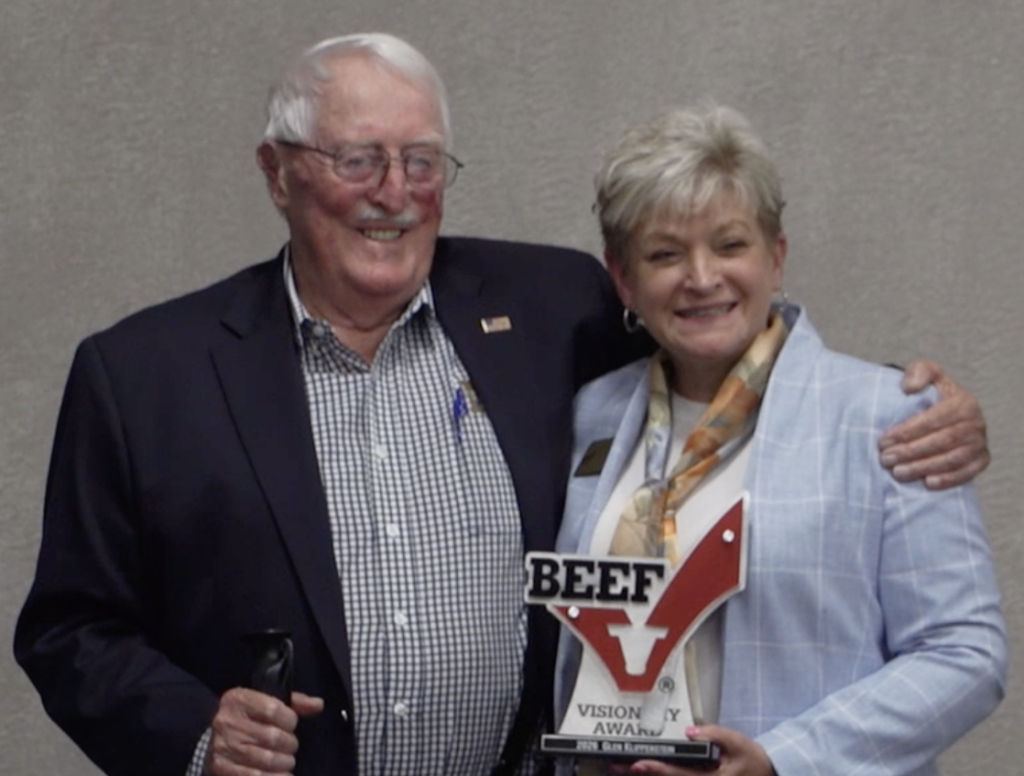
In today’s Beef Buzz, senior farm and ranch broadcaster Ron Hays speaks with Missouri cattle producer and Hereford breeder Glen Klippenstein, one of the cattlemen involved in the early development of the Beef Checkoff.
Klippenstein was recently recognized with the Beef Checkoff Visionary Award for his work helping establish the program in the 1980s. Looking back, he says getting the checkoff approved was anything but easy. Part one of this story can be found here.
The Checkoff Faced an Uphill Battle
Klippenstein says the effort to establish the checkoff encountered setbacks before cattle producers eventually succeeded in getting the program in place. “It might have failed twice, and it was kind of an internal deal that made it fail,” Klippenstein said. “That’s the lesson. I’m not going to spill any names or anything, but yes, it was.”
Eventually, the effort was reorganized and brought directly to cattle producers. “And finally, finally, we liquidated that and got it on our own,” he said.
Klippenstein says the value of the checkoff becomes easier to appreciate when considering how much the cattle industry and individual animal values have changed since the program began.
What the Checkoff Has Done for the Cattle Industry
When the checkoff started, Klippenstein says cattle producers were paying just $1 per head. Today, that same $1 investment remains relatively small compared with the value of the cattle being marketed. “It’s amazing what we’re doing with a little bit of money that we have,” he said.
Klippenstein points to the dramatic increase in cattle values over the decades as one way to put the checkoff investment into perspective. “Our cattle have gone from—I don’t know what they were then. They weren’t that much—but you know, to a $2,500 weaned calf today, compared to maybe a $500 one then,” he said. “You know, just think what would have happened, and that’s scary to think about it.”
He says the checkoff has also had implications beyond the individual cattle producer. “What we wouldn’t have done, what would have happened to our industry, if we, the people that are involved in industry, whose communities thrive from the beef cattle business, if we wouldn’t have had the checkoff,” Klippenstein said.
More Research Could Tell Beef’s Sustainability Story
Looking ahead, Klippenstein says research should be a major priority for the beef industry, particularly research that can help consumers better understand beef production and sustainability. “We need to invest more in research. Absolutely, we do,” he said. “The pitiful amount that we’re putting into our research that feeds this nation—almost a third of our land mass in this country—is owned and managed by cattlemen.”
Klippenstein says the industry needs research that can help connect beef consumption with the broader environmental and economic role cattle producers play. “And the least that we can do is to do the research that, eventually, I hope, will allow everybody that takes a mouthful of beef to think, ‘Hey, I not only enjoy this and it’s good for me, but it’s also good for the planet, and it’s sure good for the sustainability of our rural communities and our individual ranchers,’” he said.
Don’t Take the Industry’s Success for Granted
Klippenstein also says the cattle industry should use the current period of strong demand and cattle values as an opportunity to invest in promotion and build consumer confidence. “When we were Glenkirk Farms at one time, we got to really going good,” he said. “And I told our guys, ‘Hey, we’re going to spend more on promotion and advertising, and we’re going to make sure that we can confirm and verify that what we are saying is what these cattle will do.’”
“That’s what we need to do,” Klippenstein said. “Give people confidence. Make them our partners. Make them sing our song with us.”
Stay Ahead of What Comes Next
Klippenstein says the tools available to cattle producers and the demand for beef today are far different from what existed when the checkoff was first created. “I mean, we’re a success story, but let’s not rest on our laurels,” he said.
He says the next generation of cattle industry leaders needs to stay engaged and be prepared for changes rather than simply reacting to them.
“I tell you, I don’t want to start over again,” Klippenstein said. “Of course, I’m way past that point. But these young leaders, and we’ve got some great young people that are kind of into it. But make sure, stay with the program because things change, and let’s not be reactive. Let’s be pro.”
Klippenstein summed up his philosophy with a lesson from sports. “I never won a ball game when I didn’t have the ball,” he said.
The Beef Buzz is a regular feature heard on radio stations around the region on the Radio Oklahoma Ag Network and is a regular audio feature found on this website as well. Click on the LISTEN BAR above for today’s show and check out our archives for older Beef Buzz shows covering the gamut of the beef cattle industry today.







