

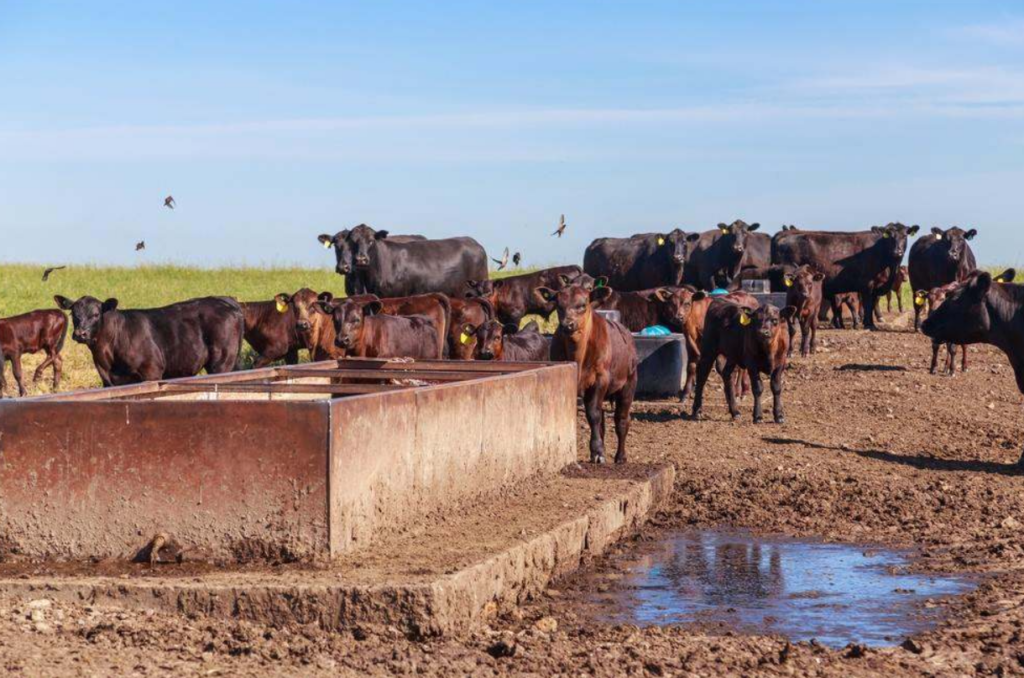
In today’s Beef Buzz, senior farm and ranch broadcaster Ron Hays speaks with Ben Weinheimer, president and CEO of the Texas Cattle Feeders Association, about the cattle industry’s response to the reintroduction of New World screwworm and renewed discussions surrounding mandatory country-of-origin labeling.
Industry Response to Screwworm Has Been Impressive
Weinheimer says the cattle industry, state officials and USDA have worked together to respond to the threat of New World screwworm, which was first detected in Texas in June. “That’s right, and as we’ve heard from our members, I think overall you’d classify it as impressed in terms of where we’re at currently,” Weinheimer said.
He said much of the groundwork for the response was put in place well before the parasite was detected in the United States. “The good really comes in the form of all of the planning and preparedness that went into this effort over the past 18 months to two years now,” Weinheimer said.
Weinheimer credited USDA and state veterinarians along the southern border for developing plans and procedures to address a potential reintroduction of screwworm. “They’ve really worked on plans, protocols, and procedures to really tackle this head on,” he said.
He said the response has included sterile fly dispersal, livestock and wildlife inspections, treatment protocols, record keeping and animal movement traceability. “They’re just a multifaceted approach that was strategically implemented,” Weinheimer said.
No Recent Cases in Cattle
Hays noted that no new screwworm cases had been identified in cattle for more than a month. Weinheimer said the lack of recent cases reflects a collective effort involving both government agencies and people working directly with livestock and wildlife. “So, really looking at a couple of months of no cases being identified in cattle, and again, I think speaks to the collective effort,” Weinheimer said.
While he recognized the work of USDA and state officials, Weinheimer emphasized the important role of people working on the ground. “This really hits home on the ground at the base level where cattle are handled, where wildlife are inspected, just the different elements of people on the ground who have eyes on livestock and pets and wildlife,” he said.
He added that the private sector has also played an important role in keeping screwworm at bay. “The private sector’s role here in helping to keep this at bay has also been a very key element,” Weinheimer said.
Weinheimer Opposes Bringing Back MCOOL
The conversation then turned to renewed discussions in Washington about mandatory country-of-origin labeling, or MCOOL, for beef.
Weinheimer said he hopes policymakers look closely at the history of the previous MCOOL program before considering bringing it back. “Well, one would hope that if everyone in this conversation kind of just paused for a minute and just looked back at the history of implementation of the previous effort of MCOOL from 2009 to 2015, that you factually speak for themselves,” Weinheimer said.
He said the previous program did not deliver the premium for cattle that producers had hoped for and instead added costs to the industry. “So here you had a program intended to help producers gain a premium for their cattle, and it did nothing to deliver that in terms of results, so there was no added premium at the end of the supply chain,” Weinheimer said.
“There were only additional costs,” he added. Weinheimer said the costs associated with a potential return of MCOOL could be substantial in today’s dollars. “If you look at that and kind of update those figures to a potential reimplementation of MCOOL in today’s dollars, you know that’s north of $700 million in cost with a five-year implementation cost estimated to be over $3 billion,” he said.
Let Voluntary Programs Work
Rather than returning to mandatory labeling requirements, Weinheimer said he believes cattle producers should have the opportunity to voluntarily differentiate their cattle and capture premiums in the marketplace. “To us, I think those facts really need to be taken into consideration for what was a failed policy, a failed effort by the government to dictate marketing of animals,” Weinheimer said.
He said voluntary programs allow producers to make their own decisions about how they market their cattle. “Let the voluntary effort really be the priority of where producers spend their time and energy,” Weinheimer said.
He pointed to value-added calf programs as an example of producers voluntarily differentiating their cattle in an effort to capture additional value. “Let the voluntary system work that USDA already has a lot of emphasis around,” he said.
Product of USA Program Should Run Its Course
Weinheimer also discussed USDA’s voluntary Product of USA labeling program, saying more time is needed to determine how successful it will be. “If you look at USDA’s really intensive focus on the voluntary Product of the USA label, that’s really just a handful of months of experience up to this point in time,” Weinheimer said.
He said the program should be given time to develop measurable results before policymakers consider replacing it with a mandatory labeling system. “In this situation, probably best to let it continue to run its course and get good metrics around the success or failure of the voluntary program before just setting it aside and reverting back to some type of mandatory country-of-origin labeling program,” Weinheimer said.
Ultimately, Weinheimer believes producers should have more control over how they differentiate their cattle. “I think without question, those who are willing to really think through it and evaluate it for themselves are going to definitely place a higher priority on the voluntary program, where they can make their own decisions, differentiate their cattle on attributes that they think are important, and not be dictated to by the government as far as mandatory labeling,” Weinheimer said.
The Beef Buzz is a regular feature heard on radio stations around the region on the Radio Oklahoma Ag Network and is a regular audio feature found on this website as well. Click on the LISTEN BAR above for today’s show and check out our archives for older Beef Buzz shows covering the gamut of the beef cattle industry today.







