
In today’s Beef Buzz, senior farm and ranch broadcaster Ron Hays features comments from Jamelyn Farney, a beef systems specialist at Kansas State University’s Parsons Research Facility in southeastern Kansas, about the growing use of virtual fencing in the cattle industry. With more companies offering virtual fencing technology to U.S. producers, Farney explains how the systems work and what cattle producers should consider before investing in the technology.
Virtual Fencing Has Come a Long Way
Farney has spent several years researching virtual fencing and how the technology has developed. She points to early research at New Mexico State University as an example of just how far virtual fencing has come.
The first-generation technology looked very different from the collars available today. “It was a PVC pipe deal that went all the way around over the top of the cow’s head, around their neck,” Farney explains. “It had a solar panel on them that was like a 13 by 11 inch deal. It’s just this huge contraption on the cattle.”
Despite its size, the system proved effective during research at the New Mexico facilities. “Worked wonders. It worked very well,” Farney says. “Had them on cows for four years there in the New Mexico research facilities and held together well.” Today’s systems are much more compact, with collars designed to deliver signals that help cattle recognize virtual boundaries.
How Do Today’s Virtual Fencing Collars Work?
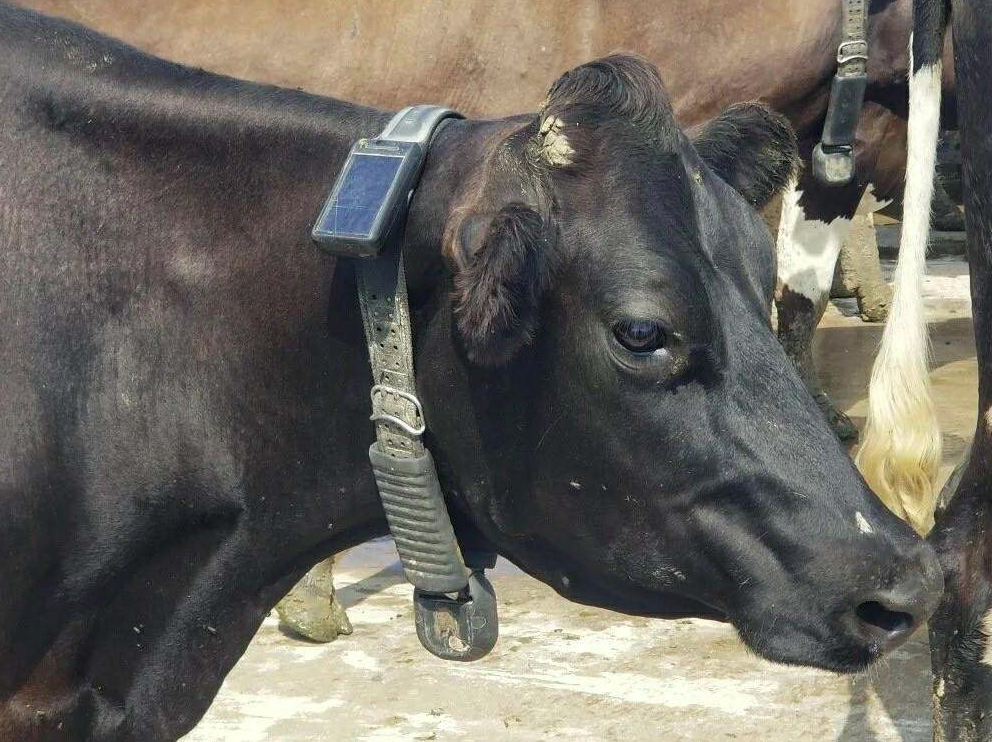
Current virtual fencing products generally use collars that communicate a boundary to cattle through audio cues, vibration or electrical stimuli.
Other systems place their equipment on top of the cow’s neck, where the devices can incorporate solar panels and deliver the signals used to guide cattle away from virtual boundaries. These systems are designed to alert cattle as they approach a containment boundary, helping producers manage grazing areas without relying entirely on traditional physical fencing.
More Companies Give Producers More Options
The virtual fencing market has expanded significantly over the past several years. Farney says that six or seven years ago, only one company was widely available to U.S. producers. Today, she estimates there are about five companies offering products.
Each system has different features, giving producers more opportunities to find technology that fits their operation. “Every one of these products that are out on the market offer a lot of really cool tools, and each one is different,” Farney says. “And because no cattle operation in the United States is the same. I say no two are even the same in most places.”
She says producers should evaluate their goals and management needs before choosing a system rather than assuming one product is the best fit for every operation.
Farney identifies three important factors producers should consider when comparing virtual fencing systems.
1. Connectivity and Infrastructure
The first consideration is how the collars communicate with the system.
Some virtual fencing products require permanent infrastructure, such as towers. The collars communicate with a tower, which then relays information through a satellite connection to a producer’s phone or computer.
Other systems offer solar-powered or satellite-connected options that may reduce the need for permanent infrastructure. Farney recommends making connectivity one of the first things producers investigate when comparing products.
The best option will depend on the operation’s location, available infrastructure and management objectives.
2. Battery Life and Maintenance
The second consideration is the power source and how much maintenance the system requires.
Farney says battery life may initially seem like a minor detail, particularly if a manufacturer advertises a battery that lasts six months. But the amount of labor required to maintain hundreds of collars can quickly become a significant consideration. “You wouldn’t think that would be that big of a deal until you’re like, ‘Oh yeah, this battery’s supposed to last six months. I preg or work my cows every six months. No biggie,’” she says.
“It actually gets to be a biggie when you’re trying to take them off and change out a battery,” Farney adds. “If you’ve got more than 200 head, that is a big workday.”
Some producers have developed efficient systems for changing batteries and are comfortable with that maintenance requirement. Others prefer solar-powered options to avoid regularly replacing batteries.
Farney emphasizes that the right choice depends on how producers manage their cattle and how much time they want to dedicate to maintaining the equipment.
3. Virtual Fence Boundaries and Pasture Size
The third factor is the size of the grazing areas a system can accommodate.
Farney says pasture size can make a major difference depending on whether a producer practices intensive rotational grazing or manages cattle across large expanses of rangeland. “If you are looking to do very intensive mob grazing, where you have want to contain your cattle on one or two acres at a time, some of those companies can’t go that small of a paddock size,” she explains.
On the other hand, producers in large-range states such as the Dakotas, Montana and New Mexico may need technology capable of managing much larger grazing areas.
Farney notes that some operations may rotate cattle through pastures of 400 or 500 acres, depending on the operation and its management approach.
Those differences mean producers need to understand the minimum and maximum boundary sizes supported by a system before making an investment.
These three considerations — connectivity, battery maintenance and boundary size — can help producers avoid choosing a product that does not meet their needs.
Finding the Right Fit for Each Cattle Operation
Although the available technologies differ, Farney says virtual fencing systems can work well when producers properly maintain them and keep the equipment on the animals. “All the technologies work very well when they are maintained and kept on the animal,” she says.
Rather than promoting one company over another, Farney encourages producers to compare the features of each system against their own grazing and management objectives.
With more options now available, virtual fencing offers cattle producers another tool for managing pasture boundaries and grazing rotations. Taking the time to evaluate infrastructure, maintenance requirements and pasture-size capabilities can help producers determine whether a particular system is a good fit for their operation.
The Beef Buzz is a regular feature heard on radio stations around the region on the Radio Oklahoma Ag Network and is a regular audio feature found on this website as well. Click on the LISTEN BAR above for today’s show and check out our archives for older Beef Buzz shows covering the gamut of the beef cattle industry today.