

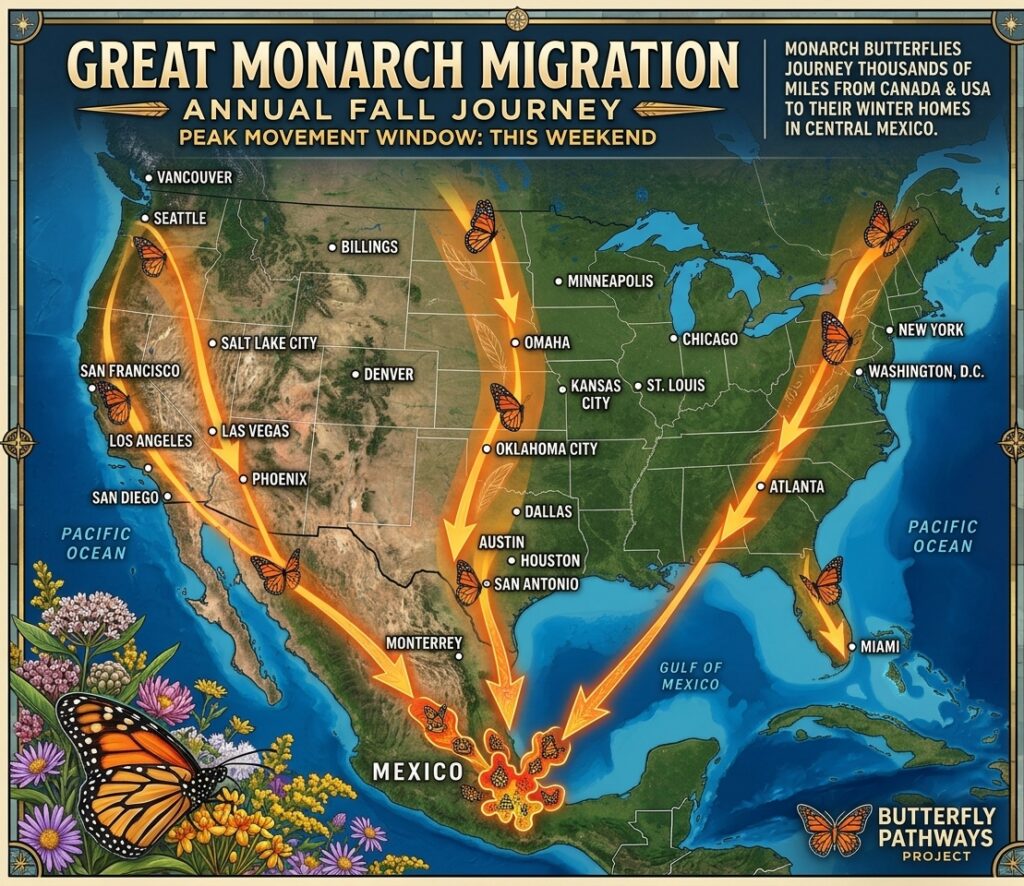
The Great Plains sky is hosting one of nature’s most extraordinary seasonal spectacles as millions of monarch butterflies travel southward. Navigating a journey of up to 2,000 miles from the northern United States and southern Canada down to the high-altitude fir forests of central Mexico, these winged travelers depend heavily on Oklahoma’s working lands, rangelands, and native pastures as vital pit stops to rest and refuel.
For agricultural producers and rural land stewards across Oklahoma, the autumn arrival of the monarch serves as a visual indicator of habitat health across the Southern Plains.
The Highway Through Oklahoma
Oklahoma sits directly along the central funnel of the eastern monarch butterfly migration corridor. Cold fronts moving across the Plains provide the tailwinds needed for these insects to glide efficiently southward, covering up to 70 to 100 miles in a single day.
Citizen-science tracking through programs like Journey North shows migratory roosts gathering across the state. During late afternoons, clusters of monarchs can be seen hanging together in the shelter of native hackberry, elm, pecan, and cottonwood trees, using the tree line windbreaks on agricultural lands to conserve energy before resuming their flight.
A Welcome Turnaround for Population Numbers
The 2026 migration brings a welcome measure of optimism for wildlife biologists and agricultural conservationists alike. Reports measuring the eastern monarch population at their overwintering sanctuaries in Mexico show a second consecutive year of growth and recovery, climbing 64% over recent low points. Favorable late-spring weather, balanced moisture across central breeding zones, and increased availability of late-season nectar plants helped strengthen the final generation before they took flight.
While populations remain below historic long-term averages, two straight seasons of steady recovery highlight the positive impact of habitat stewardship across the migration corridor.
Working Lands Fueling the Journey
Unlike earlier generations that live for only a few weeks, the “super generation” passing through Oklahoma right now does not reproduce on the way south. Instead, their sole mission is survival. To make the remaining flight into northern and central Mexico, monarchs must fuel up on late-season nectar sources.
This makes Oklahoma’s pastures, native prairie, and roadside conservation tracts critical components of the migration network. Native fall-blooming wildflowers—such as goldenrod, snow-on-the-mountain, asters, and ironweed—provide the necessary sugar and carbohydrates for monarchs to build up energy reserves.
Programs such as the Oklahoma Monarch Conservation Action Plan, led by the Oklahoma Monarch Society along with dozens of state and agricultural partners, continue working with landowners to support native plant biodiversity along pastures, fence lines, and field borders.
What to Watch For on the Ranch and Lawn
Ranchers, landowners, and homeowners across Oklahoma can participate in tracking the migration over the coming weeks:
- Roost Spotting: Look to sheltered groves of trees during the early evening hours. Monarchs often gather in dense clusters on lower branches to stay out of the wind.
- Nectar Heavy Hours: Watch native pastures and garden beds on warm, sunny afternoons, where butterflies feed heavily before cold fronts push them further south.
- Habitat Preservation: Leaving fall-blooming native vegetation standing in pastures, rights-of-way, and garden beds through late autumn ensures monarchs have the necessary fuel to complete their journey.