

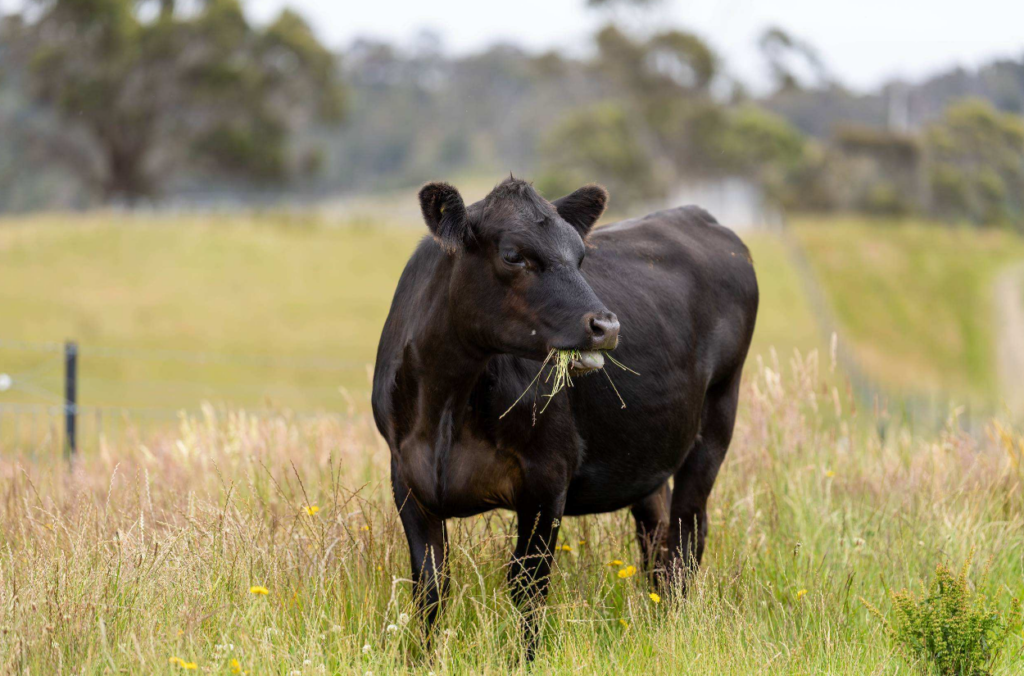
In today’s Beef Buzz, senior farm and ranch broadcaster Ron Hays features comments with Kelli Retalik Riley, President of Angus Genetics about GeneMax Advantage, a genomic testing program designed to help commercial cattle producers make more informed decisions when selecting replacement females. By connecting commercial Angus females to the extensive American Angus Association database, the program gives producers another tool to evaluate genetics, identify valuable cattle and make progress toward their herd goals.
Riley said GeneMax Advantage was developed with commercial producers in mind, particularly those purchasing registered Angus bulls to use on their commercial females. It’s a program developed by Zoetis in cooperation with Angus Genetics and Certified Angus Beef.
Connecting Commercial Cattle to Angus Genetics Data
Riley said Angus genetics influence approximately 80% of the nation’s cow herd, making genomic testing an opportunity to bring more information to commercial producers. “When you think about what’s special about GeneMax, it’s really that tie into the American Angus Association database and being able to provide that really large commercial Angus benchmark population that we have available to us,” Riley said.
She added that nearly 200,000 animals have been tested to help establish the commercial Angus benchmark population used in the program.
GeneMax Advantage also allows producers to connect the genetic information they see in registered Angus bulls with the genetics of their own commercial females. “You can be sitting at a bull sale on the bleacher seats and you can look at those Angus dollar values that you have on those registered Angus bulls and compare them back to your commercial females,” Riley said. “I think that’s just a really cool opportunity to make progress inside of your herd.”
Identifying Valuable Replacement Females
Riley said GeneMax Advantage can be useful for producers whether they are buying or selling commercial heifers.
For producers purchasing replacement females, the test provides additional information to help identify cattle that fit their production goals and environment. That could include matching cow size to available resources or selecting for carcass characteristics when retaining ownership and marketing cattle on the rail. “It’s really about how do I leverage those scores to be able to select the right commercial females for me more so than just knowing what sire they’re out of,” Riley said.
The program can also create opportunities for producers selling commercial females. Providing genomic information allows potential buyers to better evaluate the genetics behind the cattle and potentially identify females with traits they want to introduce into their own herds.
Matching Genomics With Phenotype
Riley said genomic testing gives producers another way to evaluate cattle beyond what they can see when looking at an animal.
She described the program as a way to look under the hood and help producers avoid relying too heavily on appearance or personal preferences when making replacement decisions. “We all have our favorites, and I think sometimes we can all get barn blind when it comes to some of those females that we really like or we think should be the next generation,” Riley said.
Finding females that combine desirable physical characteristics with favorable genetics can help producers make more confident selection decisions. “If we find that one that matches the genetics with the phenotype that we like, you know, it’s just one more tool in the toolkit to really help us make those decisions,” Riley said.
She emphasized the importance of having that information early enough to make selection decisions before producers invest additional time and resources into keeping replacement females.
GeneMax Advantage Testing Costs $28 Per Animal
For producers interested in getting started, Riley said GeneMax Advantage costs $28 per animal.
She recommended collecting samples while cattle are already going through the chute, such as at weaning. Producers can submit hair samples, blood samples or tissue sampling units (TSUs).
Riley said TSUs work particularly well for many producers because they do not slow down processing and have a good success rate when submitted for genotyping.
She also encouraged producers to be strategic about which females they test rather than testing every animal in the group. “Maybe we don’t need to test all of those, but we want to test a good two thirds of the females, knowing that we still want to use this information to cull off of,” Riley said.
Ultimately, Riley said timing is important because genomic information is most valuable when producers can use it in their final replacement decisions. “Test early enough that you can use it in your final decision making,” Riley said.
The Beef Buzz is a regular feature heard on radio stations around the region on the Radio Oklahoma Ag Network and is a regular audio feature found on this website as well. Click on the LISTEN BAR above for today’s show and check out our archives for older Beef Buzz shows covering the gamut of the beef cattle industry today.







