

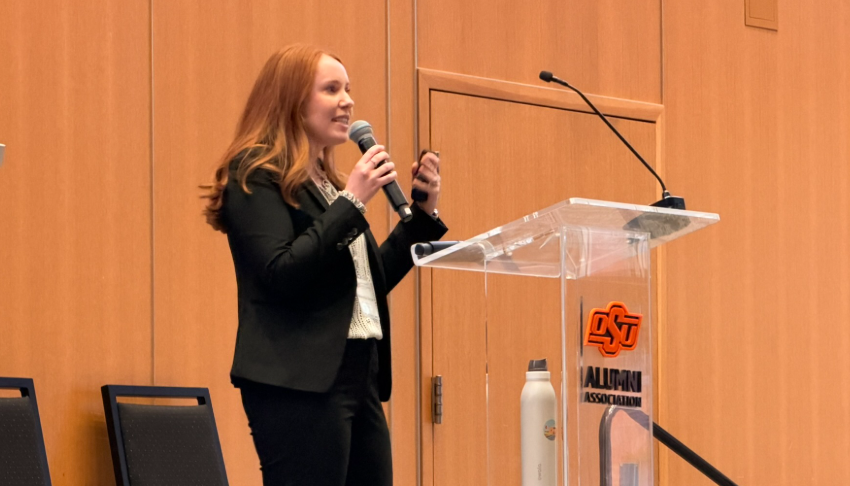
Data centers have become a frequent topic of debate across the country, but the facilities being planned today represent a dramatic shift from the infrastructure of decades past. Farm Director KC Sheperd visited with Oklahoma State University Agricultural Economics Assistant Professor McKenzie Boyce and OSU Agricultural Economics Professor Brian Whitacre, who also serves as the Neustadt Chair in Agricultural Economics, to evaluate what modern data centers mean for Oklahoma communities.
The Evolution to Hyperscale
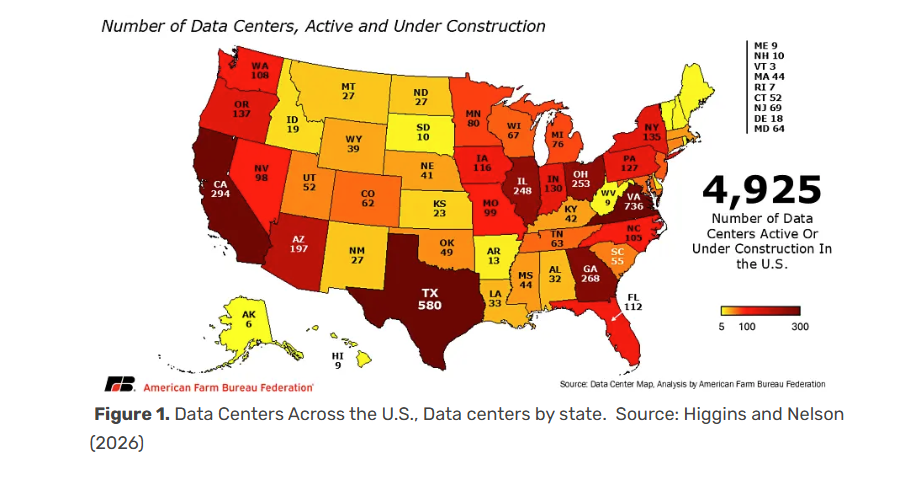
While data centers have existed for decades, older facilities developed in the 1990s and 2000s were typically modest operations housed within ordinary commercial buildings. Today’s landscape focuses on “hyperscale” facilities.
Whitacre pointed to Google’s complex in Pryor, which arrived around 2008, as an early high-profile example of this shift. Development continues to expand, with Stillwater seeing a planned facility spanning 400 acres. While not every acre is occupied by buildings, developments of that magnitude significantly alter the look and feel of rural areas.
Local Benefits and Community Alignment
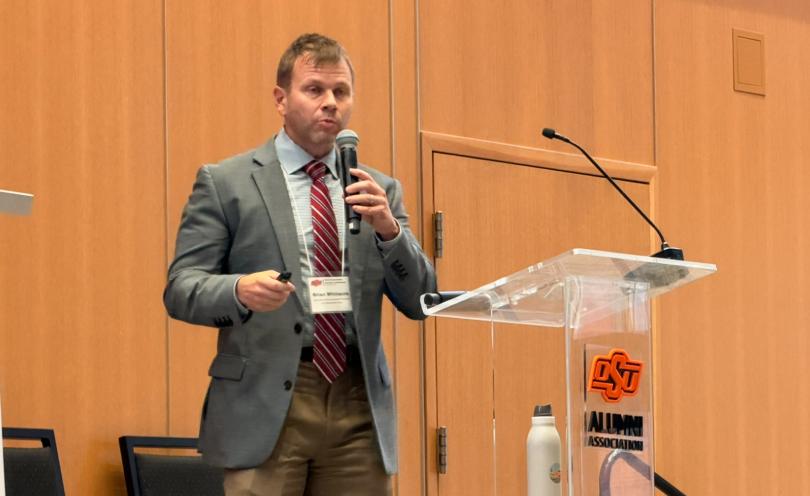
The incentive to host a data center largely centers on municipal revenue. Boyce explained that these facilities generate income through property taxes, payment in lieu of taxes (PILT) agreements, sales taxes, and utility franchise fees. These revenue streams expand local tax bases and fund public resources.
In addition, developers often fund required utility and infrastructure upgrades, creating broader public benefits, alongside substantial employment during the construction phase. Long-term operational staffing is comparatively smaller, but provides permanent positions with competitive wages.
Boyce emphasized that whether a data center is advantageous depends entirely on a community’s individual economic goals. In Stillwater, for example, city leaders viewed the development as a strong fit because it aligned with their strategy: generating steady public revenue with a smaller number of higher-wage jobs rather than requiring thousands of new positions.
Power, Water, and Agricultural Concerns
Resource consumption remains the primary concern among agricultural producers and rural residents, specifically regarding electricity and water demands during ongoing drought conditions.
On the energy side, Whitacre noted Oklahoma’s Consumer Ratepayer Protection Act serves as a proactive safeguard, requiring data centers to pay for their own electricity usage rather than passing costs on to existing consumers.
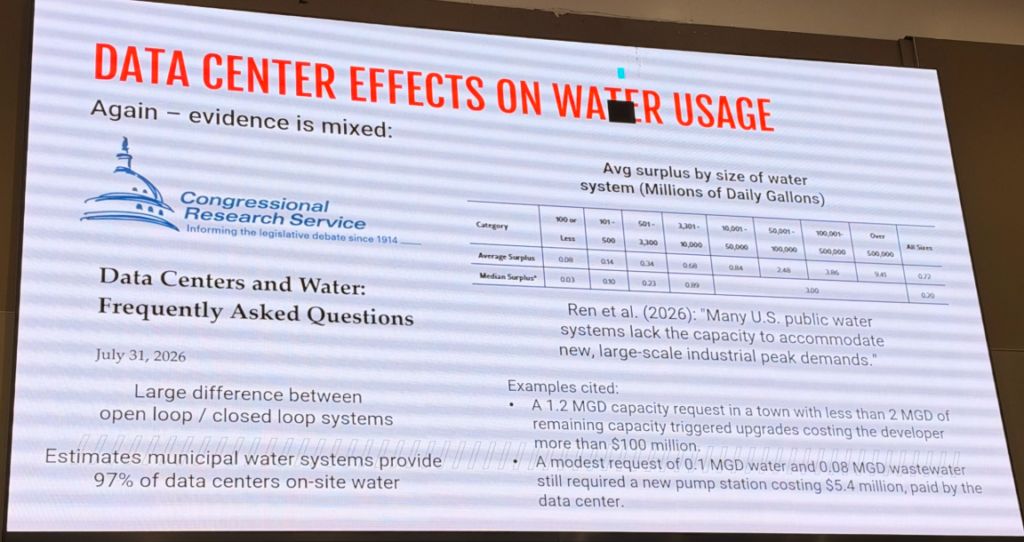
Water usage presents a more intricate challenge. Newer facility designs utilize closed-loop cooling systems that drastically cut consumption compared to systems standard only a few years ago. However, Whitacre stressed that municipal leaders must remain vigilant in contract negotiations, understanding utility capacity and building in protections if a developer’s operational water demands exceed initial estimates.
Because agriculture relies heavily on water, questions of competing resources and prioritization during severe drought require local study. Researchers at OSU—including teams at the Water Resources Center—continue to examine drought vulnerabilities and explore alternative cooling methods such as recycled or non-potable water systems.
Guidance for Local Leaders
For rural municipalities weighing development proposals, OSU provides decision-making resources through its Extension network.
Boyce highlighted the OSU Extension website, which hosts fact sheets tailored to community leaders. Among these is a comprehensive guide featuring 130 key questions communities should ask before approving a project, along with a directory of OSU researchers and extension specialists studying resource management, utility planning, and rural economic development.