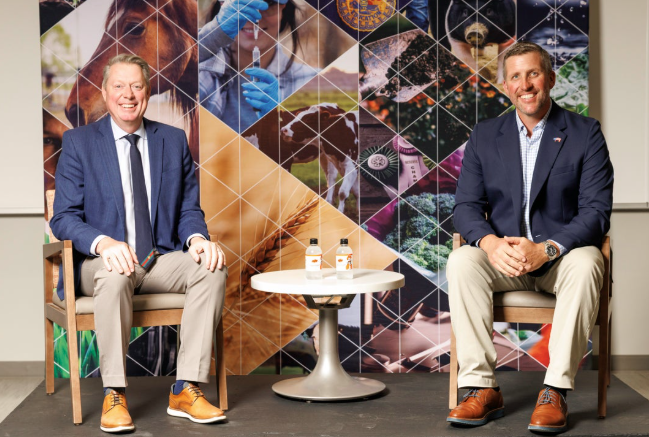
Protein demand is surging, and leaders in the pork industry are working to ensure producers benefit from growing consumer interest. Speaking with associate farm reporter Carli Davenport during a Dean’s Dialog at Ag Hall, Dr. David Newman, CEO of the National Pork Board, discussed the unique structure of the pork checkoff, efforts to grow pork demand, producer priorities, and the challenges shaping the future of the industry.
Pork Checkoff Built Differently Than Other Commodity Programs
Newman said one of the first things producers and consumers should understand is that pork’s checkoff program operates differently than many other agricultural commodity organizations. “One of the things that I like to explain is all of the checkoffs are uniquely different,” Newman said. “How they were organized, their focus area on behalf of the producers they represent, and then even the assessment rate that is collected.”
Newman says, the pork checkoff was established in 1985 and follows a distinct funding and mission model. “Pork is very unique and different than any of the other proteins,” Newman explained. “Our checkoff was created in 1985 and we have an assessment rate of 35 cents per $100 value. That’s how it works.”
Capitalizing on Protein’s Popularity
With protein consumption continuing to trend upward among consumers, Newman said the National Pork Board sees a major opportunity to expand pork demand both domestically and internationally. “Encouraging demand with consumers and this promotion aspect is one of the core fundamental principles of what we do,” Newman said.
He explained that the organization invests heavily in understanding changing consumer habits and targeting future demand. “At the checkoff, we have an entire staff that is dedicated to not only working with different consumer segments and really focusing on what the future consumer of pork looks like, how we help drive the entire category, not just an individual brand,” Newman said.
Rather than promoting one company or label, Newman said the mission is broader. “This is about- how do we get more people eating more pork more often,” he said.
That effort extends beyond U.S. borders as well. “Not just domestically, but also the investments we have internationally with our largest trading partners like Mexico, Japan, and Korea,” Newman said.
A CEO Focused on Producer Value
After being named CEO in September of last year, Newman said his priorities center on creating measurable value for pork producers while positioning the industry for long-term success. “My goals really align very much with the 15-member board of directors that I represent every day,” Newman said. “Every hour that I am putting into this role is about how can I drive value for the producers that we represent.”
He said the National Pork Board approaches that mission with a dual focus. “We drive value by focusing on the consumer and focusing on the producer,” Newman explained. “Literally our motto is consumer focused, producer led.”
For Newman, strategic investments are essential to keeping the pork sector competitive. “What are the investments that we can make strategically to actually drive the future of this business into a positive direction?” he asked.
He pointed to demand-building, producer support, and animal health as key priorities. “That strategy is around our demand and promotion efforts, how we work with our producers on the numerous factors that they’re dealing with every day,” Newman said. “Really honing in very specifically on some of those factors that are having the biggest impact—for example, right now, swine health.”
Protecting Pork’s Image With Consumers
Newman also addressed challenges surrounding consumer perception, particularly among younger audiences, as producers continue navigating issues such as Proposition 12 and broader public scrutiny of agriculture. “We have a great story to tell about the American agriculture story—one that I think we should all be very proud of,” Newman said.
While emphasizing that the National Pork Board is not the policy arm of the industry, Newman said education remains one of its most important responsibilities. “One thing that we certainly can do in our educational efforts is work very closely with our producers, with our state pork associations, and with our consumers, most importantly,” he said.
Part of that message, Newman explained, is helping consumers better understand food production and confidence in pork. “To help them understand that not only is pork safe,” Newman said, “but when we think about the factors of how consumers actually relate to and think about pork, one, it’s about driving relevance in the category.”
Once consumers see pork as relevant to their lives, he said, education becomes increasingly important. “Then it’s about making sure that our consumers are educated well on the factors that impact the producers themselves, but how it can positively impact the consumer side of the business,” Newman said.