

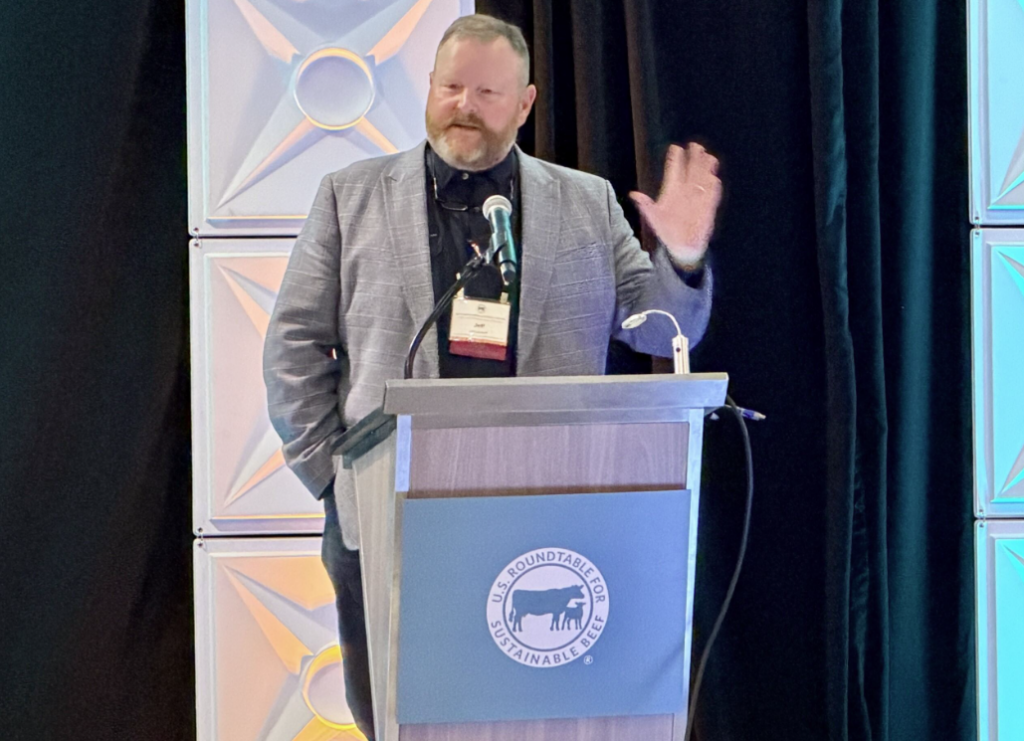
In today’s Beef Buzz, senior farm and ranch broadcaster Ron Hays continues his conversation with Dr. Jeff Goodwin, chairman-elect of the U.S. Roundtable for Sustainable Beef, about some of the biggest questions facing the cattle industry — from balancing larger carcass weights with efficiency to managing drought and building practical sustainability solutions for ranchers across the country. See part one of Hays and Dr. Goodwin’s conversation here.
Dr. Goodwin serves as the Director of the Center for Grazinglands and Range Management for Texas Agrilife.
Bigger Carcass Weights Bring Bigger Efficiency Questions
As cattle carcass weights continue growing, Goodwin said conversations at the ranch level increasingly focus on what defines the “right-size” cow in an efficient and sustainable beef system. “I think it’s a question of efficiency, right?” Goodwin said. “And so we’ve done a really good job creating an efficient beef animal, but it’s another question of how efficient is that animal at converting, at a beef produced per acre perspective, right?”
Goodwin explained that efficiency must go beyond animal performance alone and include what happens at the ranch scale. “It’s one question to say, are we efficient from a performance perspective, but also we’ve got to be efficient at the ranch scale” he said. “Is that reducing the number of cows that we run on a ranch because they’re bigger and they eat more, And so it’s an efficiency question, and those are some of the questions we’re trying to work on here in this project.”
Rather than expecting a one-size-fits-all answer, Goodwin emphasized that sustainability and efficiency vary depending on geography, forage resources, and management systems. “Context is the driver of all, right, and so what may work for an operation in Michigan is likely not going to be — it may look different in South Texas, for instance.”
Common Principles, Different Ranch Applications
Even though management practices vary regionally, Goodwin said there are likely core principles that apply broadly across the beef industry. “There are likely base principles that are going to apply anywhere,” Goodwin said, “but how those practices are implemented in a different context, it may look different, but I think some of the base principles and questions are going to be similar.”
That flexibility is central to sustainability discussions at the Roundtable, where researchers are trying to answer practical questions producers face every day.
Land-Grant Universities Team Up on Sustainability Research
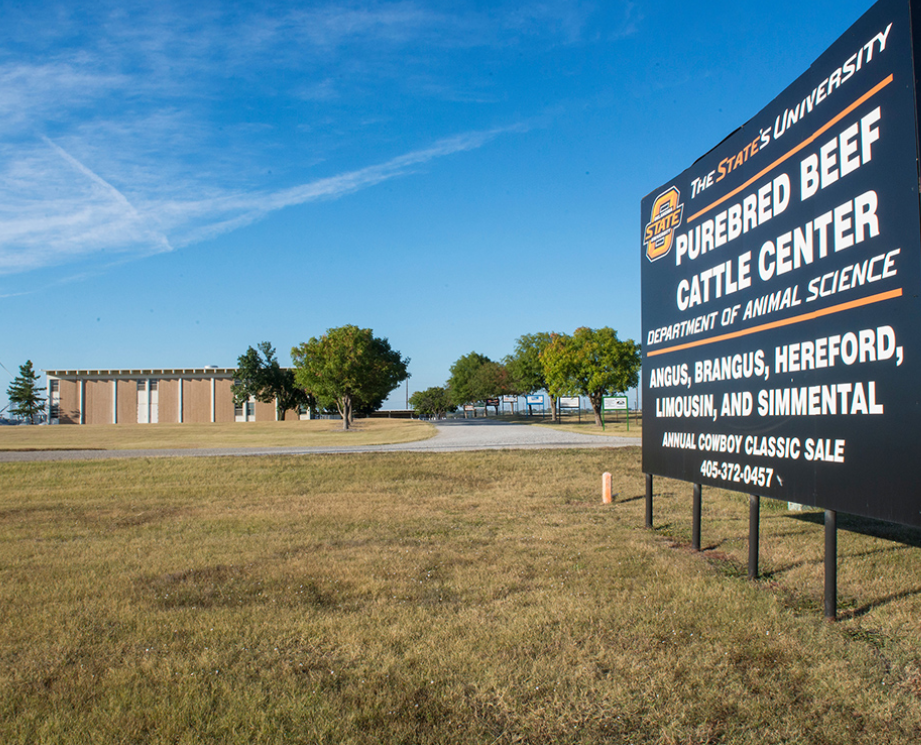
Goodwin said one of the strengths of current sustainability work is the collaboration happening among researchers from leading land-grant universities in cattle country. “We’ve got some of the main players — of course, Texas A&M, but also Oklahoma State University, Kansas State, Michigan State, Colorado State,” Goodwin said.
Because much of the nation’s cattle inventory is concentrated in the central United States, Goodwin said the goal has been to bring together the strongest scientific expertise to solve industry challenges.
“It’s no surprise most of the cattle are in the middle part of the country, and so we’ve really tried to seek out some of the leading researchers at those institutions and get the right people in the right room to answer the right questions,” he said. “Hopefully, we’re doing that.”
Drought Planning Requires Producers to Stay Proactive
Beyond sustainability metrics and cattle efficiency, drought preparedness remains a major topic of conversation between researchers and producers. “Drought management and really contingency planning is a big part of what we do every day,” Goodwin said.
Rather than reacting after conditions worsen, he encouraged producers to think proactively and build management flexibility into their operations. “We talked a little bit about being offensive, and I think another way to say that is be proactive in your management and build your adaptive capacity,” Goodwin said.
He added that drought planning is not optional in cattle country — it is cyclical and inevitable. “As producers begin to build contingency plans, we know the drought’s coming, it’s here, it’s going to rain again, but then the drought’s coming back again,” Goodwin said. “Those are contingencies that we have to plan for and stay adaptive and work through them.”
The Beef Buzz is a regular feature heard on radio stations around the region on the Radio Oklahoma Ag Network and is a regular audio feature found on this website as well. Click on the LISTEN BAR above for today’s show and check out our archives for older Beef Buzz shows covering the gamut of the beef cattle industry today.







