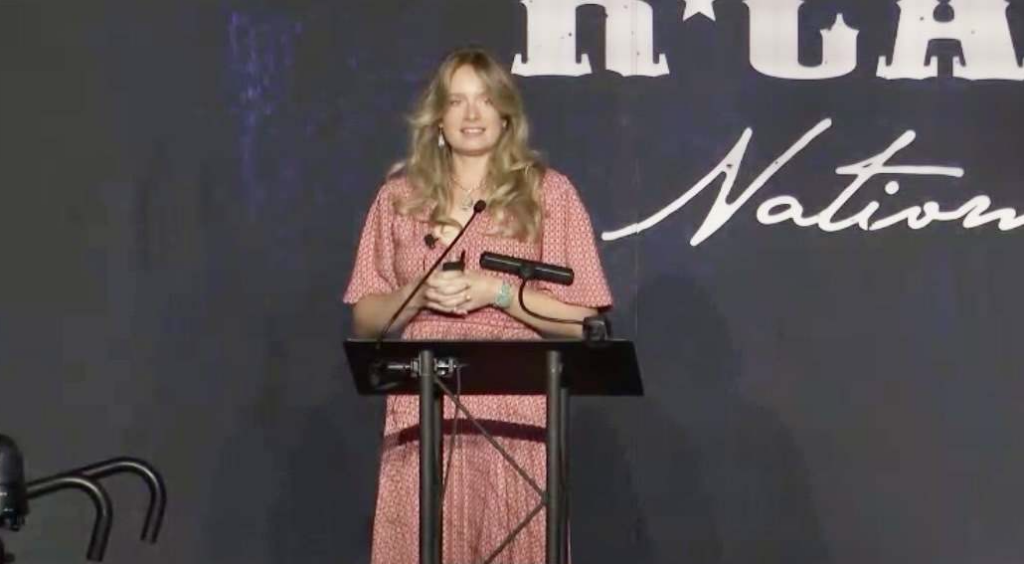
In today’s Beef Buzz, senior farm and ranch broadcaster Ron Hays features comments from Dr. Lora Bledsoe, Ag Resiliency Director with the Office of Health Security at the Department of Homeland Security, who says cartel-linked cattle smuggling—known as narco ranching—is creating serious risks for U.S. agriculture and biosecurity. Speaking at the R-CALF USA Convention, Bledsoe explained that agricultural security is no longer just about protecting farms and ranches—it is directly tied to national security.
Agriculture Security is National Security
Bledsoe emphasized that the U.S. government considers food and agriculture infrastructure essential to the country’s overall stability. “Food and ag security is national security,” Bledsoe said. “It is listed as one of the 16 critical infrastructure sectors that is so vital to American security that it would be debilitating to economic security, public health, or safety if it were under threat.”
She said protecting the nation’s food supply includes defending livestock systems from both intentional and accidental threats. “Our Agriculture and Food Act is codified in law,” Bledsoe said. “It is important to defend the food, agriculture, and veterinary systems against intentional or unintentional high-consequence events that could pose a risk.”
As part of that mission, the Department of Homeland Security monitors emerging threats to livestock health—including the spread of New World Screwworm.
What is Narco Ranching?
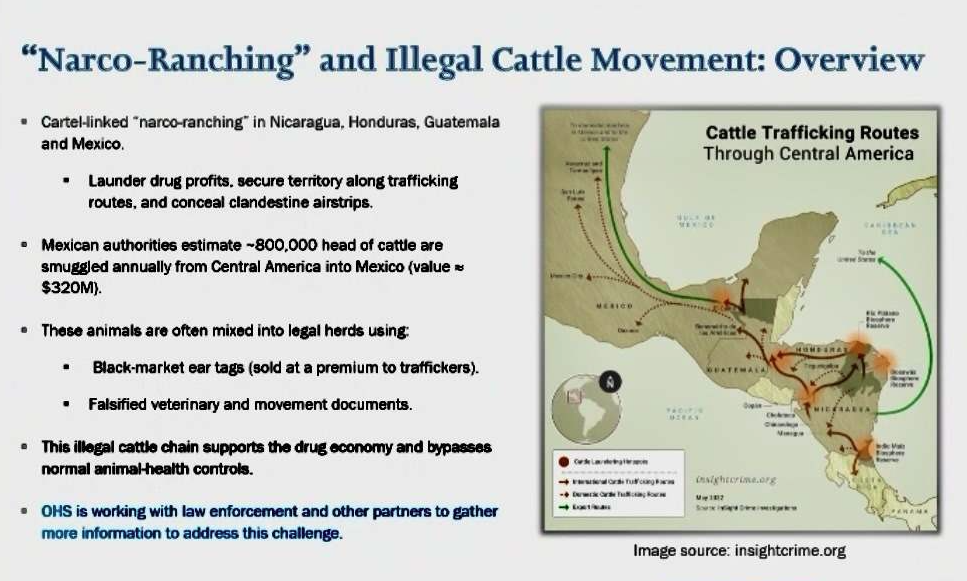
Bledsoe said one major factor behind the rapid movement of New World Screwworm through Mexico is illegal livestock trafficking tied to organized crime. “Narco ranching is a cartel-linked practice, generally in Nicaragua, Honduras, Guatemala, and Mexico, that is used to launder drug profits, secure territory along trafficking routes, and it seems to be a very lucrative practice for the cartel in Mexico,” she said.
According to Bledsoe, cartel operations use cattle as both a financial tool and a logistical asset. She said the illegal trade has become so widespread that Mexican authorities estimate roughly 800,000 head of cattle are smuggled annually through Central America into Mexico, representing an estimated value of around $320 million.
“These animals are also mixed into legal herds and kind of hidden amongst the group,” Bledsoe said. That makes detection much harder.
Illegal Cattle Movement Speeds Disease Spread
Bledsoe said illegally moved cattle often travel using black-market ear tags and falsified veterinary documents. “They’re moved under black market ear tags, which traffickers pay extra to get, and they are moved on falsified veterinary documents,” Bledsoe said.
That means infected animals can bypass health checkpoints entirely. “They’re basically bypassing normal veterinary inspection protocols in which these animals might be caught prior to moving with a screwworm infestation,” she said.
Bledsoe stressed that the concern goes far beyond screwworm. “It’s not just screwworm—it’s any animal disease that these animals could be trafficking through Mexico because they’re moving essentially under false documents and without inspections.”
That lack of oversight creates major biosecurity concerns. “This illegal cattle trade supports the drug economy and increases the risk of animal disease transfer,” Bledsoe said.
She added that Homeland Security intelligence indicates this is a major reason New World Screwworm has spread across Mexico faster than expected.
Traceability Becomes Nearly Impossible
One of the biggest challenges, Bledsoe said, is traceability. If an infected animal is found, investigators need to quickly determine where it came from and where it has been. But false documentation makes that nearly impossible. “Smuggled cattle avoid inspection and do not have any traceability, and this increases the chance that New World Screwworm-infested animals can move undetected through Mexico and bring the infestation with them,” she said.
She said fraudulent tags and paperwork create huge obstacles during investigations. “Because they’re moving on fraudulent ear tags and fraudulent paperwork, the traceback to figure out how those animals got to where they are is incredibly difficult.” For disease control, those delays can be costly.
Cartels Use the Same Networks for Multiple Crimes
Bledsoe said cattle smuggling doesn’t happen in isolation. The same criminal systems used to move livestock are also moving other illegal goods. “This is the same network used to move laundered money, currency, drugs, weapons— all of this is moving in the same networks,” she said.
That creates overlapping security threats along the border. Border regions, she said, are facing pressure from both organized crime and animal disease at the same time.
Livestock Trailers Can Hide Drugs and Weapons
One especially troubling trend involves livestock trailers being used for concealment. Bledsoe said cattle pots create a nearly perfect environment for smuggling contraband. “Everyone’s been in a cattle pot, right? It smells, there’s manure everywhere,” Bledsoe said.
That environment makes detection difficult. “It’s very hard for a drug dog or any sort of detection animal to sense or smell the things they’re looking for in an environment where there’s tons of manure and urine.”
She added that trailers offer numerous hiding places. “There are a lot of different compartments and areas that you can hide things in in a cattle pot, and then you pack it full with animals, and no one’s going to unload all those cattle off the truck to really look.”
Her conclusion was blunt. “It’s kind of the ideal environment to conceal things.”
Even Cattle Themselves Can Be Used as Drug Mules
Bledsoe said traffickers have gone even further, using animals themselves to transport contraband. “Cattle can be used themselves as drug mules,” she said.
She described multiple methods used by traffickers. “You can put things orally into the rumen. You can make an incision on the side and pack the abdomen with drugs. You can hide things vaginally in cattle.”
She said these methods show just how sophisticated cartel operations have become. “These animals are being used in a variety of ways to aid the objectives of the cartel,” Bledsoe said.
Warning Signs for Ranchers
Bledsoe encouraged ranchers—especially those near border regions—to watch for suspicious cattle shipments. She said warning signs may include loads with mixed ages, inconsistent breeds, mismatched ear tags, or unclear origin paperwork. “You may see a suspicious load of livestock where it’s hazy as to where these cattle have come from or where they’re going,” Bledsoe said.
She also warned producers to watch for physical evidence on animals. “Unexplained surgical scars on their sides that aren’t healed—these are all signs and symptoms of potential cartel and narco trafficking activity.”
The Beef Buzz is a regular feature heard on radio stations around the region on the Radio Oklahoma Ag Network and is a regular audio feature found on this website as well. Click on the LISTEN BAR above for today’s show and check out our archives for older Beef Buzz shows covering the gamut of the beef cattle industry today.