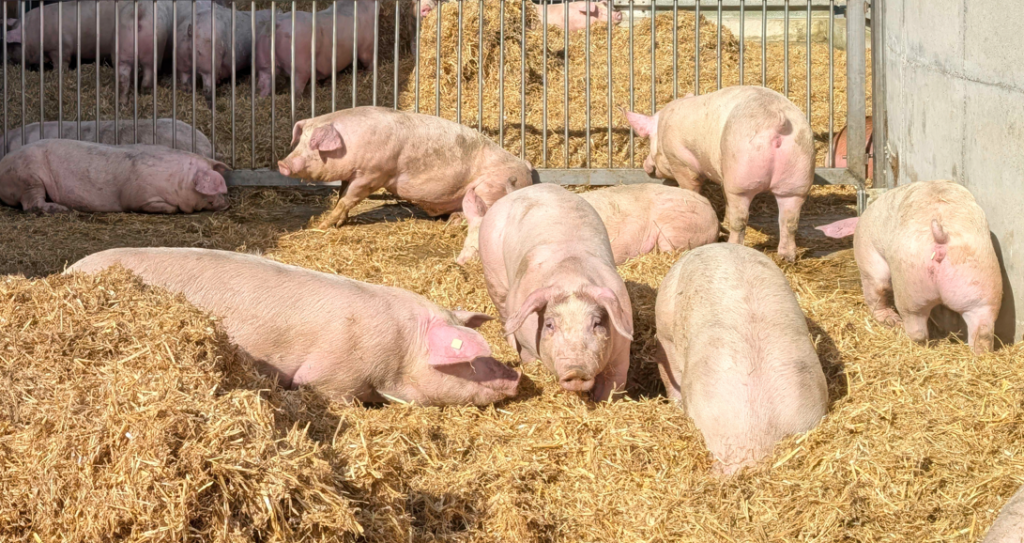
The release of the Senate Agriculture Committee’s discussion draft of the 2026 Farm Bill has renewed debate over California’s Proposition 12, a law that sets animal housing standards for pork, veal, and egg products sold in the state, regardless of where those animals are raised. For pork producers across the country, Prop 12 remains a major concern because of the production changes and added costs required to meet California’s standards. With the Senate draft omitting language that would address Proposition 12, both agricultural groups and animal welfare advocates are once again making their case as the broader farm bill discussion moves forward in Washington. If and when the Senate does pass a farm bill- the conference between the House and Senate will consider the Prop 12 issue as a fix is a part of the House passed measure.
Why Pork Producers Want a Prop 12 Fix
The National Pork Producers Council, which represents more than 60,000 U.S. pork producers, has been pushing Senate Agriculture Committee leaders to include language in the final 2026 Farm Bill that would address Proposition 12.
From the perspective of many pork producers, the biggest issue is not simply California’s law itself, but the precedent it sets. Because California is such a large consumer market, producers in other states may feel pressure to adjust housing systems to meet standards set by voters hundreds or even thousands of miles away.
NPPC President Rob Brenneman said producers are disappointed the Senate draft did not include a Prop 12 fix, but remain committed to pushing for one.
“We appreciate the Chairman putting forward a discussion draft to guide a path forward,” Brenneman said. “America’s pork producers will continue to advocate for a Prop. 12 fix in the formal farm bill like our livelihood depends on it—because it does.”
Producer groups argue Proposition 12 creates what they call a “patchwork” of state-by-state regulations, meaning farmers could eventually face different production standards depending on where pork is sold. They say that kind of uncertainty makes long-term planning difficult, especially in an industry where housing investments often involve major capital costs and facilities built to operate for decades.
NPPC also argues smaller and mid-sized producers could be hit hardest, as many may not have the financial flexibility to remodel barns or change production systems quickly. The organization says that without federal relief, producers could face higher costs, reduced marketing options, and more complexity in an already tight-margin business.
“Prop. 12 is creating an unpredictable, unavoidable wave of conflicting state laws and uncertainty — and farmers are the ones left to drown in its wake,” Brenneman said. Click here for the release from NPPC that lists the hundreds of groups that have signed onto the call for a Prop 12 fix.
Animal Welfare Activist Groups Support Senate Draft
While livestock groups are pushing for federal relief, animal activist organizations are praising the Senate Agriculture Committee’s decision to leave Proposition 12 language out of the current Farm Bill discussion draft.
Animal Wellness Action President Wayne Pacelle said the omission signals declining support in the Senate for legislation that would override California’s voter-approved standards.
“These laws were approved by millions of voters,” Pacelle said, arguing that federal lawmakers should not overturn state-level animal welfare measures through the Farm Bill process.
Supporters of Proposition 12 say the law reflects consumer demand for specific animal care standards and believe states should retain the ability to set rules for products sold within their borders.
Still, for many agricultural producers, the concern remains less about the debate over animal welfare and more about market access and regulatory consistency. Producer groups continue to argue that allowing individual states to effectively set production standards for farms nationwide creates costly uncertainty for the livestock industry.