

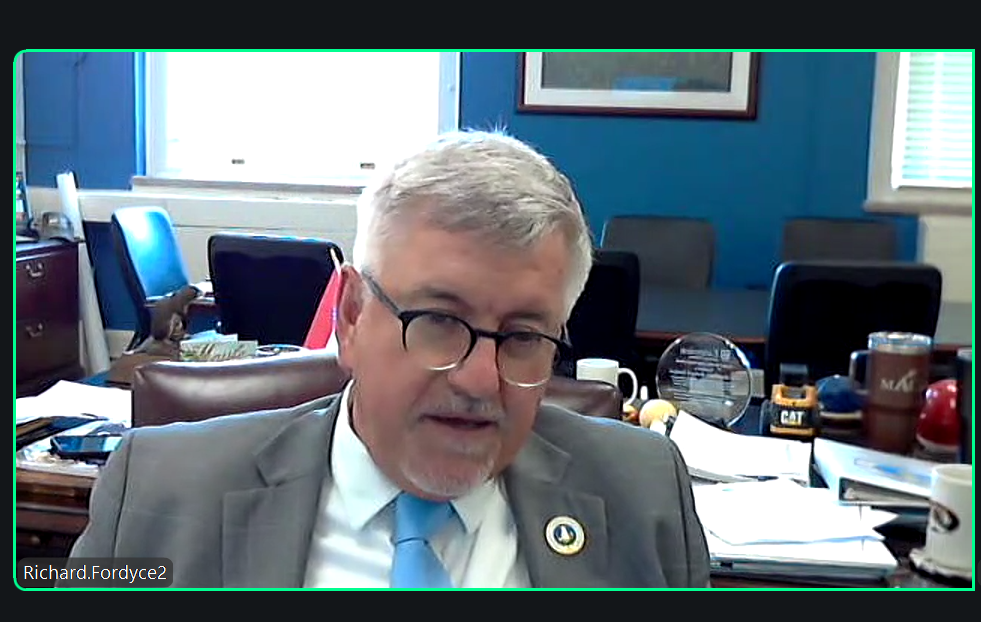
In a recent interview with Farm Director KC Sheperd, USDA Undersecretary Richard Fordyce detailed significant advancements in agricultural administration, highlighting how the USDA’s modernized acreage reporting system is set to transform daily operations for producers. Following recent testimony before the House Agriculture Committee regarding the implementation of the farm bill, Fordyce explained that while various agencies have quickly executed crop insurance improvements and conservation standards, the Farm Service Agency (FSA) has faced the largest task in updating its technology infrastructure.
Transitioning from Paper to Digital Maps
For decades, the acreage reporting process has relied on manual methods, requiring farmers to draw on paper maps with pencils before program analysts entered the data into separate systems. The newly developed system replaces this outdated approach with an interactive geospatial mapping platform.
Under the new system, producers can select fields digitally, prompting a crop code to appear to specify the crop type and planting date. Once the fields are completed on the interactive map, the report is finalized without requiring any duplicate data entry.
A Phased Rollout Timeline
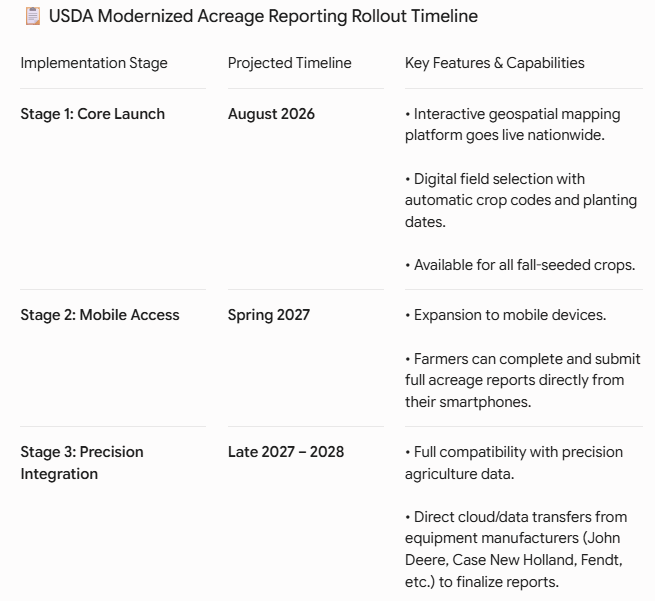
The USDA is introducing these technological upgrades through a structured, multi-phase rollout designed to ensure stability and ease of use:
- Stage 1: The primary geospatial mapping platform is scheduled to be fully operational across all counties by August, making it available for fall-seeded crops.
- Stage 2: The agency aims to introduce smartphone-based reporting capabilities, with a target deployment of spring 2027.
- Stage 3: Full integration of precision agriculture data directly into the acreage reports is anticipated between late 2027 and 2028.
To ensure the software could handle low-bandwidth environments, the USDA explicitly tested the platform in a Nebraska county known for having some of the slowest connectivity speeds in the agency’s network. The system maintained rapid responsiveness without lagging, confirming its readiness for remote rural areas. Major agricultural equipment manufacturers—including John Deere, Case New Holland, and Fendt—have also collaborated directly with USDA designers to ensure seamless data integration for the upcoming precision agriculture phase.
Boosting Conservation and Addressing Staffing
Beyond acreage reporting, the technological overhaul extends to the Natural Resources Conservation Service (NRCS) by expanding the Integrated Field Tool. This tool consolidates practice tracking and survey work onto a single device, accelerating the contracting and agreement process for programs like EQIP and CSP.
These digital efficiencies arrive at a critical time as local offices manage staffing shortages resulting from the voluntary Deferred Retirement Program (DRP). While some county offices remained unaffected, others experienced significant drops in personnel. State conservationists and executive directors are actively managing workloads and targeting critical hires. The agency is currently hiring new personnel and is looking to expand its budget in fiscal year 2027, beginning October 1, to further stabilize local staffing levels and support American producers.