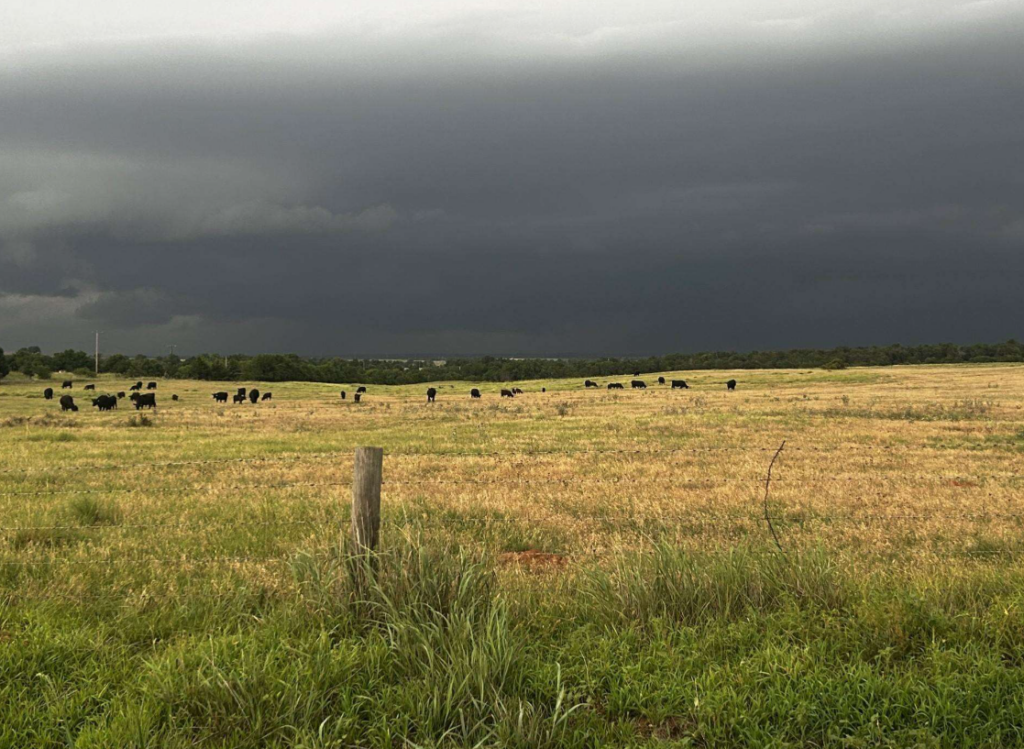
In today’s Beef Buzz, Senior Farm and Ranch Broadcaster Ron Hays speaks with atmospheric scientist Matt Makens of Makens Weather, who says the current Super El Niño is unlike any previous event and could bring meaningful improvements in moisture and forage conditions across the Southern Plains.
Makens explained that while the current event qualifies as a Super El Niño because of exceptionally warm ocean temperatures, producers should avoid comparing it directly to past events. “Super El Niño just applies to the most strongly developed El Niños based on one factor, and that’s the ocean temperatures,” Makens said. “It’s super in the regard that it’s up there with some of the big dogs like ’97, 2015, ’82 and some of the ’70s also, but if you change your focus away from where we define El Niño and go to the other regions of the ocean, they’re all very different than any other event.”
He said those differences make this El Niño unique. “We can’t call it a ’97 or a single year, but we can say, yeah, probably matches kind of this element or this element, and combine it, and it is a new creature of its own.”
Wetter Pattern Expected Through Spring
Looking ahead, Makens expects moisture to increase across much of the southern United States beginning this fall. “The frequency of water will pick up through the fall, carry over winter and spring, and the totals should be fairly decent,” he said.
While confidence is somewhat lower in western Oklahoma and the Texas Panhandle, Makens believes the overall outlook is favorable for livestock producers. “It’s an outlook that is very favorable for the beef industry, for forage, for row crops. We’re going to recharge the soil, so we’ve got a better soil outlook, moisture outlook, as we go through winter, spring, and early next summer.”
Drought Recovery Will Take Time
Even with a wetter forecast, Makens cautioned producers not to expect drought conditions to disappear overnight. “Let’s pump the brakes because don’t expect a rapid change in the drought,” he said. “The drought picture that we have now across Oklahoma will reverse and will pull those drought numbers down as the moisture increases September, October, November.”
He added that the state’s long-range drought outlook is becoming increasingly optimistic. “The drought outlook for the state is much more promising as this event kind of develops and gets going.”
Moisture Could Increase Screwworm Risk
Makens also discussed how wetter conditions may create a more favorable environment for the spread of New World screwworm. “Historically, we need to watch the tropical storm situation,” he said. “It’s not only going to push the fly, but deliver an environment that’s wet that the fly will like.”
He noted that a mild winter could allow more flies to survive into spring. “It’s likely to be a milder winter, so we’re going to have some overwintering of the fly. It’s going to be able to establish itself quickly in the spring as temperatures warm.”
Rather than El Niño directly causing the spread, Makens said the moisture associated with the weather pattern creates conditions that benefit the pest. “As a result of El Niño—not due to El Niño, but due to the residual impact of El Niño—we need to be very good about tracking the progression of the fly.”
Wind Patterns Also Help Spread the Pest
While livestock movement plays a role in spreading New World screwworm, Makens said weather patterns have historically been an even bigger factor. “Animal transport’s one, but second is the monsoonal flow, the flow of wind that comes off of the Gulf of Mexico, moves into Texas, west Oklahoma, New Mexico,” he said.
That seasonal airflow provides ideal conditions for the pest. “They love to follow that because it’s a wind direction that is favored for them to move in. It’s mild or warm, and it’s humid because of rainfall spreading in. So yes, the monsoon is a big driver…of the fly.”
Better Grazing Early, But Questions Later
For cattle producers considering herd expansion, Makens said improved forage conditions should benefit grazing through the first half of 2027. “We’re going to have better soils, forages will be healthier, grass will be healthier as we get into the start of ’27 and ’27’s grazing seasons. So that part of the outlook is very promising.”
However, historical patterns suggest those benefits may not last all year. “When I looked back historically…it became very limited starting around June into July. That’s when the El Niño impact kind of was gone.”
That could be an important consideration for producers making heifer retention decisions. “If I’m thinking of heifer retention, and I hear a wet year with El Niño, how long can I carry this? Well, through June, and then after that, there’s some questions.”
A Slow Transition After El Niño?
Makens also said this Super El Niño may not quickly transition into La Niña. “There’s not a great source of cold ocean moving around, so based on that, it perhaps could be a slower transition out of El Niño toward neutral or La Niña. He concluded that unless ocean conditions change dramatically, the unusually warm oceans should slow the shift into the next climate pattern.
The Beef Buzz is a regular feature heard on radio stations around the region on the Radio Oklahoma Ag Network and is a regular audio feature found on this website as well. Click on the LISTEN BAR above for today’s show and check out our archives for older Beef Buzz shows covering the gamut of the beef cattle industry today.