In today’s Beef Buzz, Senior Farm and Ranch Broadcaster Ron Hays continues his conversation with Colin Woodall, CEO of the National Cattlemen’s Beef Association (NCBA), about the new Dietary Guidelines, strong consumer demand for beef, herd rebuilding, and why NCBA continues to support voluntary Product of the USA labeling over mandatory country of origin labeling. Part one can be found here.
Dietary Guidelines Reinforce Beef’s Role
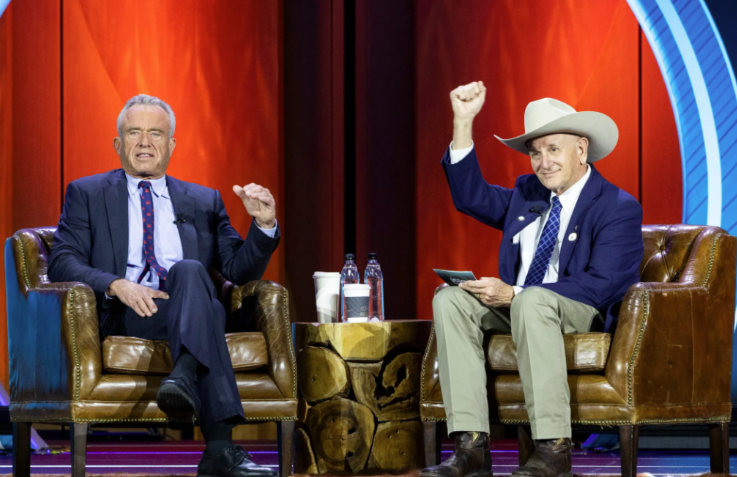
Woodall said NCBA has been encouraged not only by the release of the Trump administration’s new Dietary Guidelines, but by Secretary Robert F. Kennedy Jr.’s continued emphasis on the role of whole foods and protein in a healthy diet. “We are pleased because it wasn’t just a one and done announcement,” Woodall said. “It is something that the secretary has continued to focus on, and focus on the role of real food in the diet, which is why we have the position that we do in the new food guide pyramid.”
Woodall said Kennedy’s continued support for beef sends an important message to consumers. “For him to continue to talk about it, to push protein, specifically beef, has been a tremendous victory for us,” he said. “I believe that’s one of the reasons that we still see demand remaining extremely strong, and it will help us continue to keep that demand high as we move forward.”
He also credited decades of beef checkoff-funded research for helping shape the final recommendations. “We are a contractor to the national beef checkoff,” Woodall explained. “We’re not the beef checkoff. We’re a contractor. We have to go and compete for those dollars. One area where we do compete is in the realm of nutrition research. We had 40 years of checkoff-funded nutrition research that we were able to submit in this process.”
Consumers Want Beef Despite Higher Prices
While beef prices remain elevated, Woodall said demand has continued because consumers value the product they’re purchasing. “The consumer does not have to buy beef. The consumer wants to buy beef, and those are two completely different conversations,” Woodall said.
He believes quality continues to justify higher prices in consumers’ minds. “It’s that quality. It’s that eating experience that the consumer is getting every time they go to the grocery store or go to a restaurant, which is telling them, ‘Hey, this was worth the money, and I’m going to buy it again.’ They don’t have to; they want to, and that’s a big win for cattle producers.”
Moisture Is the Key to Herd Expansion
Although the U.S. cattle herd remains at historically low levels, Woodall said rebuilding is more dependent on weather than market incentives. “We’re going to grow. We’re absolutely going to grow,” he said. “It’s just a matter of getting some moisture.”
He pointed to improving weather forecasts as a reason for optimism. “With the predicted Super El Niño and some of the moisture that we’ve already started to see in some places, it will give people the confidence to go ahead and start making some of those decisions because we have the demand, we have good cattle prices, we just need moisture and green grass, and when we get that, we will grow again.”
Woodall acknowledged replacement females are more expensive than ever but believes strong demand will continue supporting profitability. “We need to do everything we can to continue to maintain that demand, build that demand even more, not only domestically but globally, so that way those who want to make that investment can get a return on that investment.”
He added, “As you look at the future, as you look at demand and what we have, I think we’re still going to have some great years ahead of us to be profitable.”
Voluntary Labeling Better Than Mandatory COOL
Woodall also discussed USDA’s voluntary Product of the USA labeling initiative and explained why NCBA continues to oppose mandatory Country of Origin Labeling (MCOOL). “Those who want mandatory COOL, they weren’t around when mandatory COOL was the law of the land,” Woodall said.
He noted that previous research found mandatory labeling had little impact on consumer purchasing decisions while creating international trade challenges. “For six years we had mandatory COOL, and what we found out is the consumer wasn’t paying attention to it,” he said. “Those were studies done by USDA academics outside parties that said the consumer just wasn’t paying attention.”
Woodall said the previous program also damaged trade relationships with Canada and Mexico after World Trade Organization rulings against the United States.
Instead, he believes the current voluntary approach gives producers and retailers more flexibility. “If the consumer wants it, now the program is there to deliver it,” Woodall said. “If the consumer wants a state program or a regional program, those are also available, so it’s going to allow producers and retailers to tailor whatever labeling program they want in a way that will actually help satisfy a consumer demand… Voluntary is the way to go.”
The Beef Buzz is a regular feature heard on radio stations around the region on the Radio Oklahoma Ag Network and is a regular audio feature found on this website as well. Click on the LISTEN BAR above for today’s show and check out our archives for older Beef Buzz shows covering the gamut of the beef cattle industry today.