

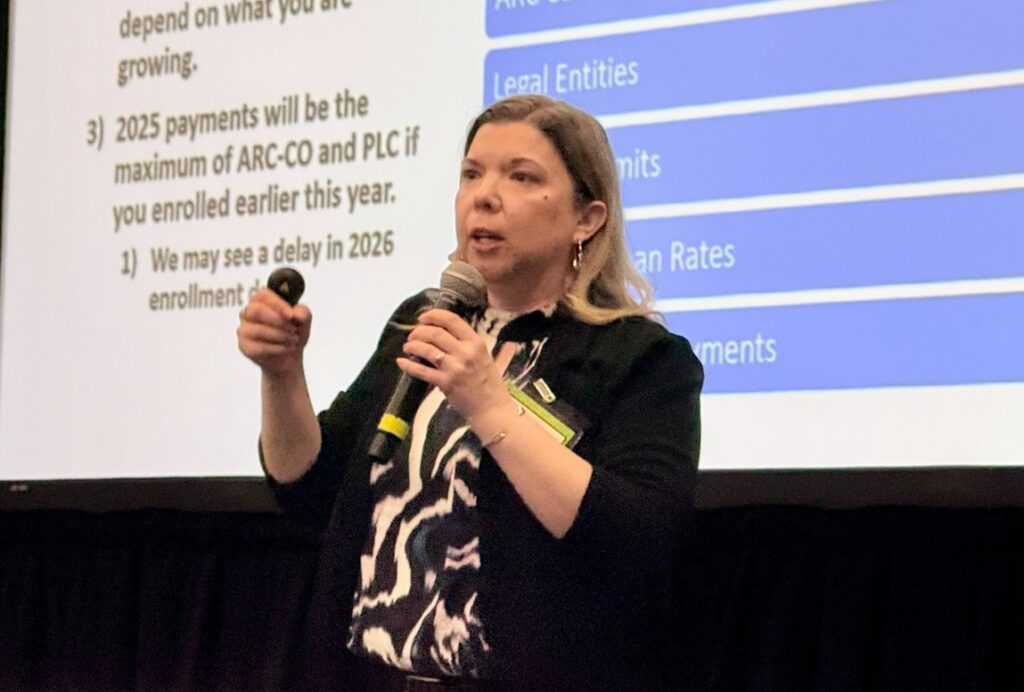
Understanding recent USDA livestock assistance changes is critical for cattle operations navigating ongoing weather volatility and market shifts. At the Oklahoma Cattlemen’s Association (OCA) Convention, Farm Director KC Sheperd sat down with Oklahoma State University’s Dr. Amy Hagerman to discuss newly implemented federal provisions, policy updates, and risk management tools designed to better support producers.
Livestock Forage Disaster Program (LFP) Updates
The United States Department of Agriculture announced implementation updates stemming from federal legislation passed last summer, with several provisions offering significant benefits to Oklahoma cattle operations. Given Oklahoma’s susceptibility to rapid, intense drought conditions, local agricultural producers frequently utilize the Livestock Forage Disaster Program (LFP).
Previously, the program required a county to experience at least eight consecutive weeks of D2 (severe) drought to trigger compensation eligibility. The revised regulations accommodate the rapid shifts in weather patterns often experienced in the region.
Key details of the LFP updates include:
- Revised Qualification Thresholds: Producers can now qualify for the first tier of LFP payments by meeting a threshold of four consecutive weeks of D2 drought, or at least four out of seven consecutive weeks.
- Retroactive Implementation: The rule adjustments are retroactive to January 1, 2026.
- Potential for Higher Payments: Due to the retroactive clause, drought conditions experienced during the spring may yield additional or adjusted payments for eligible operations.
Producers should monitor their mail for pre-filled applications or notifications from the Farm Service Agency (FSA). Even if a producer previously applied for or received an LFP payment for the period, new notifications or additional applications should not be ignored, as they may reflect updated payment rates under the revised rules.
Livestock Indemnity Program (LIP) Adjustments
Modifications have also been applied to the Livestock Indemnity Program (LIP), which provides financial assistance to livestock owners for elevated mortality rates caused by adverse weather events, such as extreme freezing conditions or severe storms.
A major enhancement to LIP specifically benefits spring-calving operations:
- Coverage for Heavy Bred Cows: Under prior regulations, an eligible livestock loss payment was issued only for the cow itself if a heavily bred cow died prior to calving.
- Expanded Calf Coverage: The updated guidelines now allow for a partial indemnity payment for the unborn calf in addition to the payment for the heavy bred cow.
This structural change offers higher risk protection during critical spring calving seasons when extreme weather events occur.
Documentation and Risk Management Strategies
With shifting weather patterns creating potential wildfire hazards following periods of forage growth, thorough record-keeping remains a fundamental component of disaster preparedness. Producers are advised to maintain comprehensive records documenting:
- Proof of livestock ownership
- Animal inventory numbers
- Pregnancy status and herd status
Beyond federal disaster relief, updates have also been made to federal crop and market insurance options through the Risk Management Agency (RMA). Cattle producers should evaluate the Livestock Risk Protection (LRP) insurance policy to manage price volatility, as well as the Pasture, Rangeland, Forage (PRF) rainfall index insurance to mitigate losses from low precipitation on grazing land.
Staying Informed and Prepared
Because agricultural policy guidelines and disaster program parameters are updated frequently, producers are encouraged to build a network of trusted advisors to stay informed. Recommended resources include:
- Local Farm Service Agency (FSA) offices (including signing up for direct text alerts)
- Specialized livestock insurance agents familiar with LRP and PRF products
- Experienced producer mentors
- Local OSU Extension educators for assistance with record-keeping practices and technical guidance







