

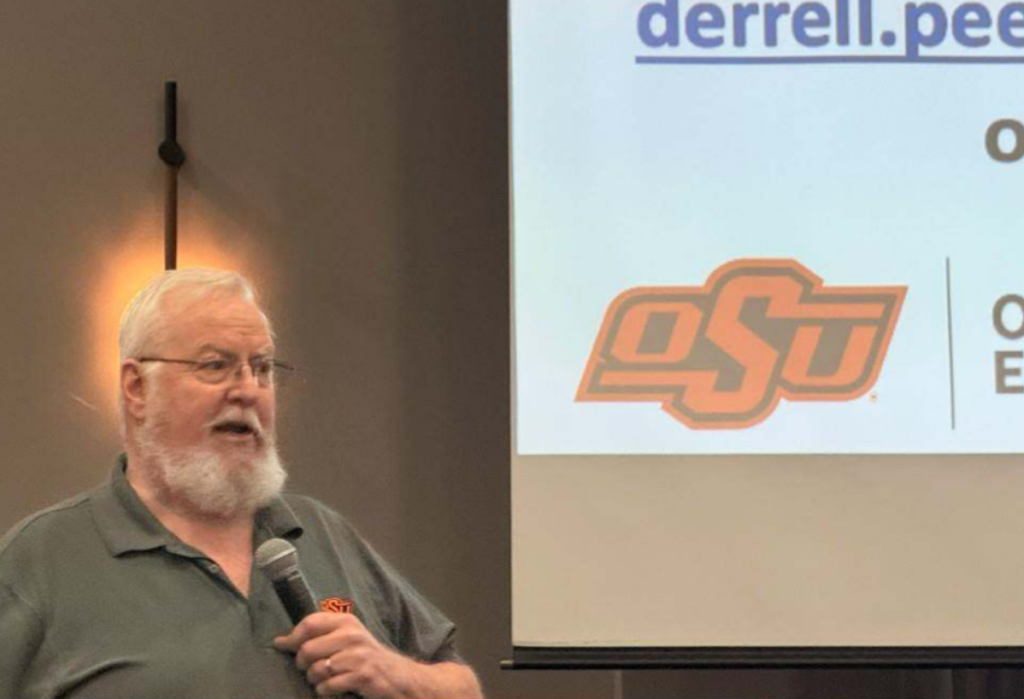
In today’s Beef Buzz, senior farm and ranch broadcaster Ron Hays features comments with Oklahoma State University’s livestock market economist Dr. Derrell Peel about the latest changes in the beef packing industry and what they could mean for cattle markets. Peel says Tyson Foods’ decision to close its Joslin, Illinois, beef plant is the latest in a series of major adjustments across the packing sector. His comments came from Agriculture Today from Kansas State.
“So this past week, you know, we got additional news on top of what we’ve already seen the last few months with beef packing infrastructure adjustments,” Peel says. “Tyson made an announcement this last week that they were going to cease slaughter and fab operations at their Joslin, Illinois plant.”
Tyson also announced the closure of a further processing plant in Utah, while its Pasco, Washington, facility has been put up for sale. Peel says the Pasco plant is expected to continue operating for now.
At the same time, Tyson has indicated it could eventually bring a second shift back to its Amarillo, Texas, beef plant as cattle supplies increase and the Mexican border potentially reopens. “With an additional shift in Amarillo would just about offset that Joslin, Illinois plant,” Peel says.
Packing Capacity Could Become a Future Concern
Peel says the number of recent packing industry adjustments stands out compared with previous periods of tighter cattle supplies. “Not like this that I can recall,” Peel says when asked if the industry has experienced this level of plant reductions before.
He points to Tyson’s closure of its Lexington, Nebraska, plant and JBS’ decision to stop slaughter and fabrication operations at its Pennsylvania facility as additional examples of the recent changes. “Obviously, the plants are struggling right now with the limited cattle supplies,” Peel says. “That’s why we’re seeing these adjustments.”
While packers currently have excess capacity because of limited cattle numbers, Peel says that could change as the cattle industry rebuilds. “That sets up the idea that someday, with rebuilding cattle numbers and production in the industry, that we could miss that capacity, bump up against a smaller capacity constraint,” he says.
Peel adds that the industry may not be finished making adjustments. “The more of these adjustments that we see, we may not be done yet,” he says. “The more likely that is at some point in the future.”
Mexican Cattle Imports Expected to Restart Slowly
Another factor cattle markets are watching is the reopening of the U.S.-Mexico border to cattle imports. Peel says the initial announcement from USDA contributed to volatility in cattle prices during the summer correction. “The initial volatility was when USDA made the announcement at the end of July that they were going to start the process of opening the border,” Peel says. “So that added additional pressure to the summer correction.”
However, Peel says cattle imports are expected to begin at relatively low levels. “When the border opens, they’re going to start in northwest Mexico in Sonora, and it’ll be limited numbers initially that will come across,” he says.
Peel does not expect a major influx of Mexican cattle in the near term. “In fact, I don’t think we’ll get that many cattle even by the end of the year,” he says.
Border Reopening Will Be a Staggered Process
Peel says the reopening is expected to happen gradually, with additional border crossings potentially opening later if the initial process goes smoothly. “If we start that process slowly, we’ll see cattle trickle in,” Peel says.
He notes that USDA has indicated additional crossings in New Mexico could open after the initial phase, including Santa Teresa and Columbus. “They did not give a timeline, but they did indicate that if everything goes well with the initial opening in late August here, that in a few weeks or at some point they might open the border crossings in New Mexico at Santa Teresa and Columbus,” Peel says.
Ultimately, Peel says the reopening will not dramatically change cattle numbers immediately, but it could gradually restore a more familiar flow of Mexican cattle into the U.S. market. “So again it’s a staggered process,” Peel says. “It’ll be a slow process, and so it doesn’t change the overall numbers very fast.”
“But over time, it suggests we might get back to something kind of like what we’ve seen in the past.”
The Beef Buzz is a regular feature heard on radio stations around the region on the Radio Oklahoma Ag Network and is a regular audio feature found on this website as well. Click on the LISTEN BAR above for today’s show and check out our archives for older Beef Buzz shows covering the gamut of the beef cattle industry today.







