

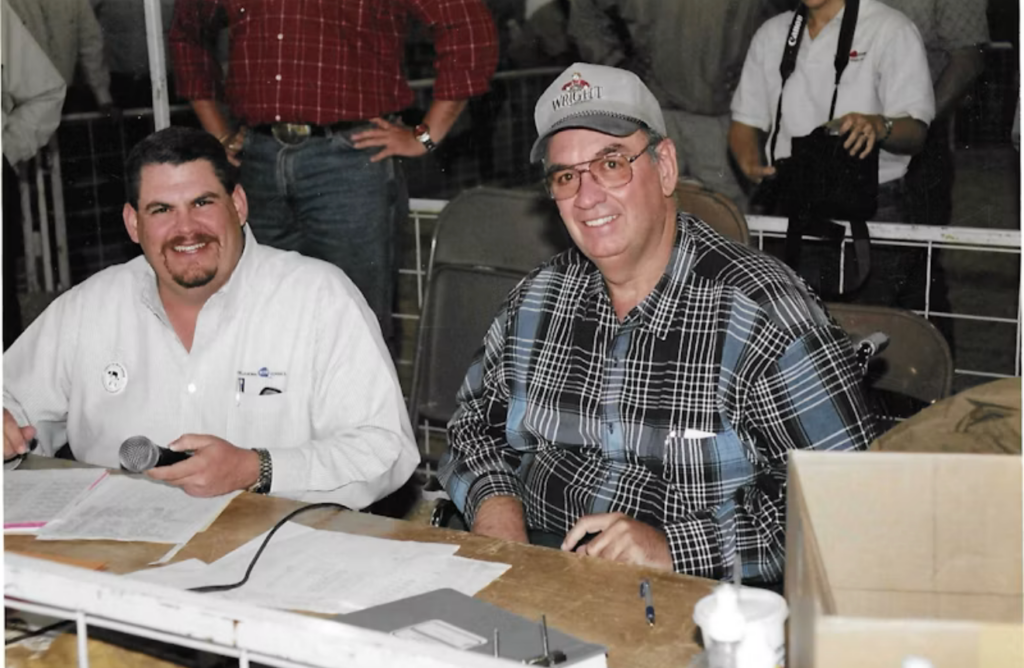
At the 2026 Oklahoma Pork Congress, Oklahoma Farm Report intern Haden Snelson caught up with Rick Maloney, former executive director of the Oklahoma Pork Council, to discuss how the pork industry has changed over the years and the challenges producers face moving forward.
Maloney has spent much of his life connected to the pork industry, and that involvement now extends to younger generations of his family. Looking back, he said he remains proud of how much Oklahoma’s commercial pork industry has grown.
“We’ve got our kids and grandkids in there, and our whole family has been engaged in it for a lot of years,” Maloney said. “To see the transitions that’s gone on in the commercial pork industry, growth in the state of Oklahoma and what it’s done, we still enjoy, as an outsider, very much kind of looking in on the industry and proud of what it’s accomplished.”
One of the biggest changes during Maloney’s career has been the way hogs are raised. Early in his career with what was then the Oklahoma Pork Commission, he said much of the state’s pork production took place outdoors on smaller farms.
Over time, the industry transitioned toward larger, more consolidated operations and indoor production systems.
“We’ve looked through the lifetime of seeing this expansion from that kind of pork production on lots of farms to more consolidation, more confinement, larger operations,” Maloney said.
As production has changed, Maloney said communicating with consumers has become increasingly important, particularly as younger generations have become further removed from agriculture.
He credited the Oklahoma Pork Council and its staff for promoting modern pork production while also reaching young people through programs such as 4-H and FFA.
“They’re doing a fantastic job of representing modern-day pork production, as well as being involved in 4-H and FFA programs, the educational components of that, the leadership side of it,” Maloney said. “Really telling the story of the industry and, from a consumer standpoint, those things that drive pork demand.”
Maloney said the growing disconnect between consumers and agriculture may be one of the industry’s biggest long-term challenges.
“As we got more generations removed from the farm, [the challenge is] really getting the populace in the country to understand modern-day pork production,” Maloney said. “We’ve got less people that can relate back to their production or their grandparents or great-grandparents that come from that.”
With a larger urban population having little direct experience with agriculture, Maloney said producers and industry organizations must continue educating consumers about how food is produced.
“It’s an ongoing effort to try to get that education component of how modern-day pork production still is what’s necessary to feed this state, this country and the world,” Maloney said.
Policy is another area Maloney said producers are watching closely. He emphasized the importance of maintaining the freedom to farm while ensuring lawmakers at both the state and federal levels understand changes within modern agriculture and the role pork producers play in the nation’s food supply.
Asked to identify the single biggest change he has witnessed throughout his career, Maloney pointed to one development above all others: consolidation.
“I think that would have to be the biggest,” Maloney said.







