

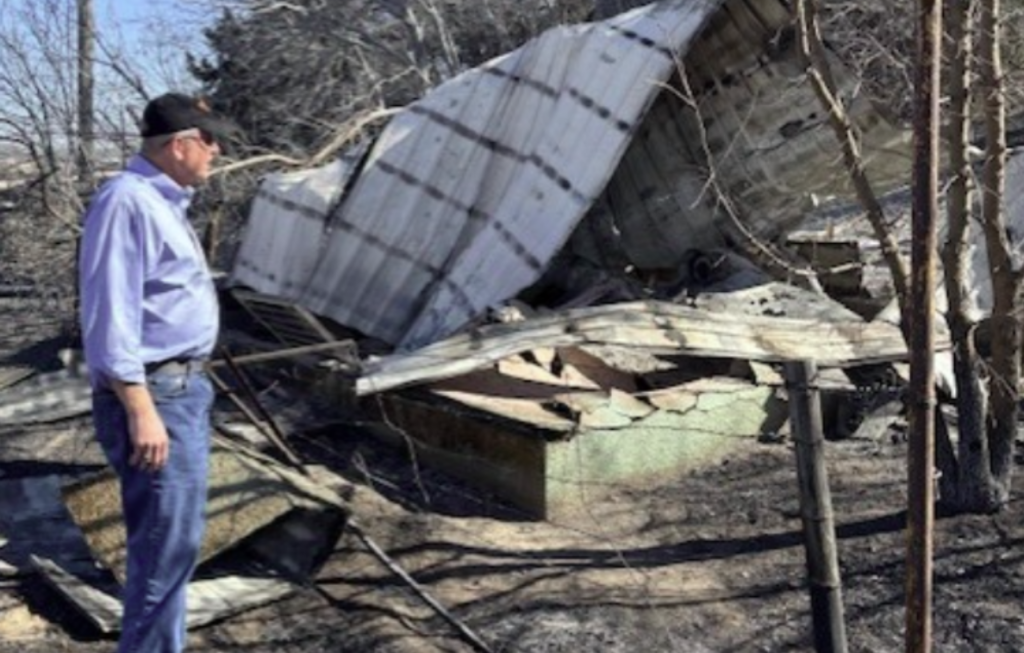
Oklahoma farmers and ranchers are facing a wide range of urgent challenges, from wildfire devastation to uncertainty surrounding farm policy, as former House Ag Committee Chair and current senior member of the House Ag Committee Congressman Frank Lucas joined Ron Hays for an in-depth conversation on the Oklahoma Farm Report. Lucas opened by addressing the severe wildfire conditions across western Oklahoma, noting that the situation remains dangerous as dry weather and high winds persist.
Lucas said the scale of destruction has been staggering, estimating that burned acreage in his district has likely surpassed expectations. “We’re probably well past 125,000 acres, maybe close to 150,000 acres,” he said, pointing to fires in Beaver, Harper, Texas, and Woodward counties that even crossed into Kansas. He added that the damage extended to public infrastructure, including the Agricultural Research Station in Woodward, where he had visited to assess what it would take to restore operations. “Until these weather patterns change, it only takes one spark to burn off 100,000 acres,” Lucas warned. Disaster assistance information is also available on the Frank Lucas website.
On the federal response, Lucas emphasized the importance of permanent disaster assistance tools available to livestock producers. He highlighted the Livestock Indemnity Program and the Livestock Forage Disaster Program, both of which he helped craft in the 2014 Farm Bill. “These are two programs that are really, really important,” Lucas said, explaining that they provide protection for livestock losses and forage destruction. He stressed that producers should work directly with their local FSA offices and noted, “They’re permanent law. They don’t expire.”
The discussion then shifted to the ongoing work on what Lucas described as the second phase of the Farm Bill. While major components such as crop insurance, price protection, conservation funding, and nutrition programs have already been addressed, Lucas said lawmakers are now focused on finishing the remaining pieces. “Now we focus on rural development, ag research,” he said, along with conservation implementation language and moving the Food for Peace program under USDA control to ensure U.S.-grown food is used in humanitarian aid.
Lucas also addressed debates surrounding the farm safety net and Title I programs, pushing back on calls for wholesale changes. He explained that modern farm policy relies on insurance-based risk management rather than outdated supply controls. “If you have a good year, you don’t get anything back,” he said, comparing it to insurance, “but if you have a problem, it’s there.” Lucas said adjusting reference prices was critical due to inflation and economic changes since 2018, adding, “We’ve got something we can politically defend and something that delivers help to people.”
Turning to the legislative environment, Lucas acknowledged the growing difficulty of passing farm policy in a sharply divided Congress. “The margins just get smaller and smaller,” he said, noting narrow party control in both chambers and increased political tension. Despite those challenges, Lucas expressed cautious optimism, saying the farm bill may be one of the few issues capable of moving forward. “Honestly, the farm bill might be the easiest subject matter he could pick right now to take across the floor,” he said.
In closing, Lucas outlined key priorities he hopes to see included in the Farm Bill 2.0 legislation, including permanent language on foreign investment review through CFIUS(making the Secretary a member of the group), support for rural hospitals and infrastructure, and continued vigilance against animal health threats like the New World screwworm. He praised USDA’s recent actions but cautioned producers to remain mindful of market dynamics tied to cattle supplies. “We are subject to supply and demand,” Lucas said. “Supply may change at some time in the future.”







