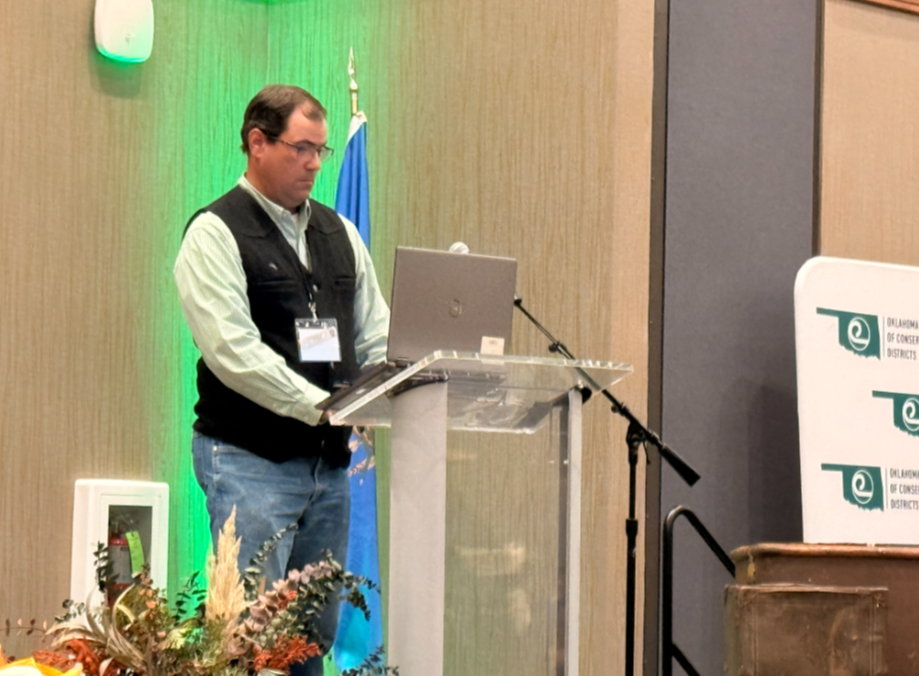
At the OACD state meeting, Farm Director KC Sheperd visited with Caleb Stone of the Natural Resources Conservation Service to discuss the Regenerative Pilot Program and what it means for Oklahoma producers. Stone explained that while the program is new as a pilot, it operates within existing conservation frameworks. “It’s a pilot that operates within the existing EQIP and CSP program that the last Farm Bill put out,” he said, noting that the key difference is a specific set-aside of funds aimed at regenerative agriculture practices and long-term soil monitoring.
Stone emphasized that a major focus of the pilot is tracking outcomes over time. “There are set aside dollars to try and focus not just on those practices, but on the soil sampling that can be done with that to try and track the impact over the course of five years during the life of that contract,” he explained. Unlike standard EQIP contracts, the Regenerative Pilot Program requires that soil and water resource concerns be fully addressed by the end of the five-year period, including erosion control and water quality improvements.
For producers interested in participating, Stone said the process starts locally. “They just go into their local office, ask to sign up for EQIP CSP, and tell them you’re interested in the regenerative ag,” he said. NRCS staff then meet with the producer, assess the operation, and develop a long-term conservation plan. While participation is voluntary, Stone noted that producers who are not ready to commit to the full scope of the pilot can still access traditional EQIP options.
According to Stone, the program can benefit a wide range of operations across the state. “Anybody in Oklahoma” can see value, he said, whether they have practiced regenerative agriculture for decades or are just starting out. He added that even experienced producers can “always move the needle, add carbon to the soil, or add infrastructure.” For more information, Stone encouraged producers to visit their county NRCS office or explore resources available through the United States Department of Agriculture, stressing that local offices best understand county-specific priorities and conservation needs.