

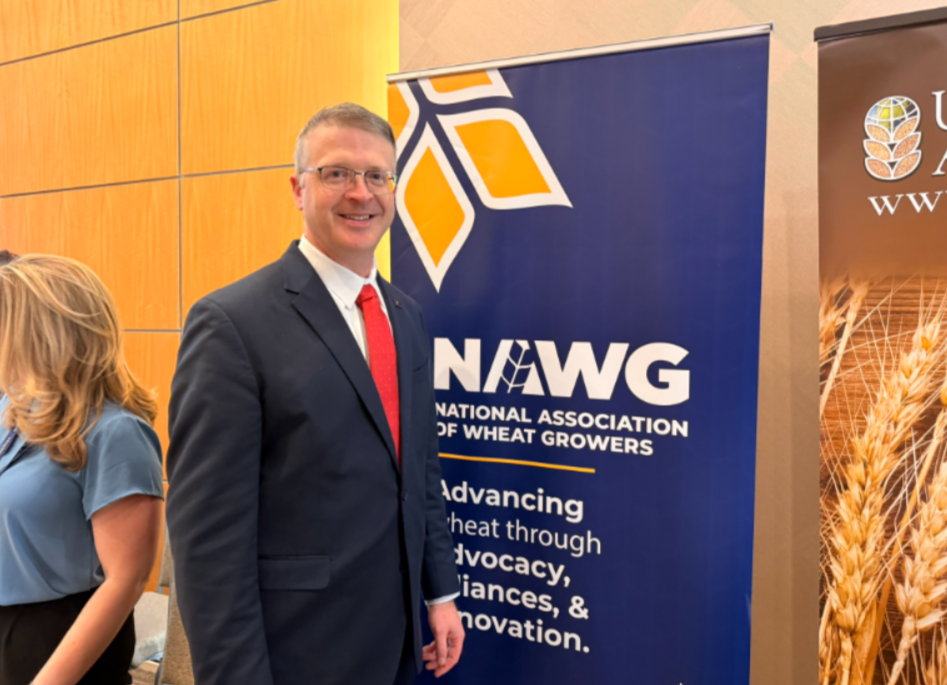
Farm Director KC Sheperd is in Washington, D.C. this week as part of the National Association of Farm Broadcasters’ annual meeting with lawmakers and agricultural groups, where one of the key issues being discussed is the growing pressure facing wheat producers. Farmers across wheat country are dealing with a difficult combination of drought stress, rising input costs, and uncertain production prospects, even as wheat prices begin to show some improvement. National Association of Wheat Growers CEO Sam Kieffer said Oklahoma’s challenges are part of a much broader problem stretching across major wheat-producing states.
Wheat Country Feeling the Pressure
Kieffer said dry weather continues to weigh heavily on the crop and recent USDA reports have reflected the worsening outlook. “It’s not just Oklahoma. That’s a lot of other states, but wheat country is struggling with rain.”
He added that conditions have steadily declined in recent weeks.
“The USDA crop progress report comes out again today, and it’s not good. We’ve just been in downhill decline for the last four weeks.” While some fields are still showing promise, he said production potential remains highly uneven.
“There are still some patches of pretty good wheat that we’re seeing, but it’s patchy, for sure.” Kieffer described one Oklahoma producer’s situation as an example of the challenges many growers face. “A little more than half of his crop just saw the insurance adjuster, and he’s hoping for a half crop on his remaining acres.”
Rising Costs Still Hurting Growers
Even with stronger wheat prices, Kieffer said many farmers are still under financial pressure because expenses remain so high. “The story over the last several years has been inputs. Inputs are exponentially out of control.”
He pointed to fertilizer as one of the biggest concerns. “Fertilizer prices are now just through the roof.” According to Kieffer, current price gains are tied more to fears of smaller supplies than to improved profitability on the farm. “The price recovery that we’re seeing on wheat is a reaction to the anticipation of a lower crop.”
Safety Nets and Farm Bill Progress
Kieffer said federal farm programs remain critical after several years of financial losses in wheat country. “The safety nets are extremely important.”
He noted many wheat farmers have faced repeated losses. “Probably the fourth straight year of losses in wheat country on every acre planted.”
Kieffer said recent legislative efforts could provide much-needed help and praised movement on the House Agriculture Committee bill. “There are a lot of good things in there for all of agriculture, including wheat growers.”
Marketing Depends on Having Wheat to Sell
With wheat prices improving, some growers may be considering sales opportunities. But Kieffer said that depends on whether producers actually have grain available. “If you have it.”
For new crop marketing, he said there are still too many unknowns. “There’s still a lot of unanswered questions as to how much will be there. It’s dry… and farming is gambling every time.”







