

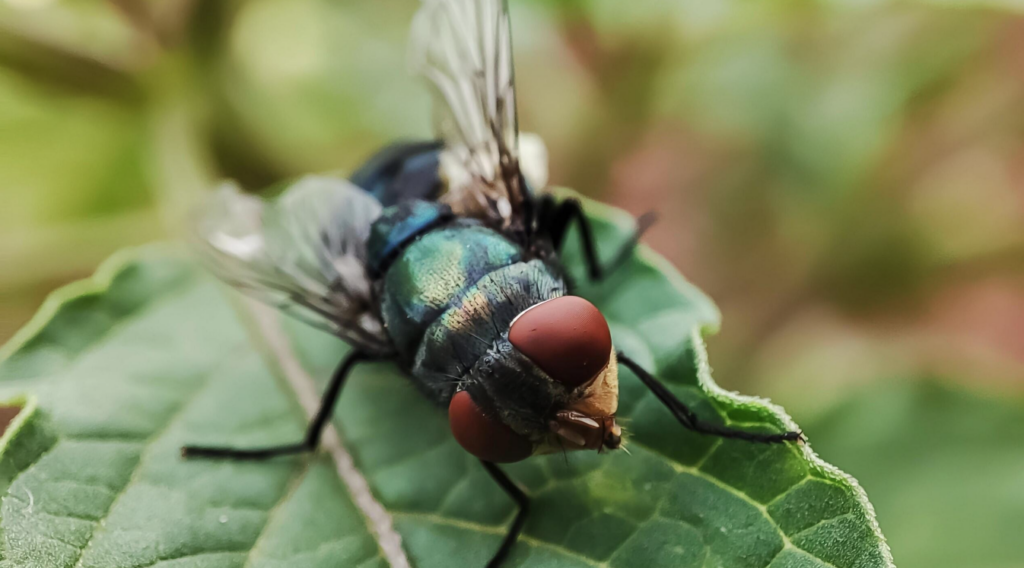
In today’s Beef Buzz, senior farm and ranch broadcaster Ron Hays features comments from farm director KC Shepards ‘ conversation this week at Washington Watch with the Executive Director of Government Affairs for the National Cattlemen’s Beef Association Sigrid Johannes, who says the cattle industry must stay focused on preparation and coordination as concerns grow over the continued northward movement of the New World screwworm in Mexico.
Florida Restrictions Raise Industry Concerns
One of the latest developments involves Florida imposing added screening, testing, and veterinary certificate requirements on cattle moving from several South Texas counties.
Johannes said while states have authority to make their own decisions, inconsistent regulations could create serious logistical problems. “That’s a decision that their state Animal Health Department made, and it is, of course, their prerogative to do so.”
She added that NCBA has spent nearly two years working toward coordinated national discussions and regional agreements between states. “The main thing that we’re trying to avoid here… we are very concerned about a regulatory patchwork emerging that makes it really difficult to move cattle interstate, because that’s the biggest thing that’s going to slow down the supply chain.”
Johannes said those disruptions could affect producers trying to move cattle and complicate beef movement throughout the supply chain. “There’s a lot of parts of the country where those state animal health officials are talking to each other, and they’re figuring out, if not one total agreement, then at least regional agreements that encompass a couple states.”
She called those cooperative efforts positive because they help minimize confusion and unnecessary barriers.
Cases Near the Border Continue to Climb
While no New World screwworm detections have occurred in the United States, Johannes said the recent rise in cases in northern Mexico deserves close attention. “So far, we haven’t had any detections in the U.S. I think that’s really important to stress.”
Still, she acknowledged growing concern over how close some new cases are to the border. “In the last two weeks, we’ve had three more detections reported. Two of them have been in dogs that are about 90 miles from the border, and one has been in a one-month-old calf that is only about 62 miles from the border.”
Johannes said the pest has steadily advanced since late 2024. “Since November of 2024, this thing has been marching steadily north. It hasn’t really suffered too many setbacks in its progress.”
Hope for the Best, Plan for the Worst
Johannes emphasized that preparation should not be mistaken for panic. “What I’ve been telling everybody, and what I’m going to stick to here, is we have to hope for the best and plan for the worst.”
She said industry leaders should be ready in the event of a domestic detection rather than relying entirely on Mexico to contain the pest. “It is not an admission of defeat to say that we need to be ready for a domestic detection. It’s really just planning ahead.”
Are Sterile Flies Enough?
Currently, the primary suppression effort depends on sterile flies produced in Panama. Johannes said the question is less about total fly numbers and more about deployment density. “If we can keep dropping them just in that area, 115 million will get the job done.”
However, if the infestation spreads geographically, those same fly numbers become less effective. “If it breaks loose from there and starts to cover a bigger and bigger geographic area, the density of the fly drops decreases, and that’s when we start to see a decrease in efficacy.”
She credited USDA APHIS for continuously adjusting treatment zones to maintain effective coverage.
Why the Sterile Fly Strategy Still Works
Johannes said the sterile insect technique remains the industry’s most proven defense. “We know it works because we’ve seen it over and over again.”
She noted it was the same tool used to eradicate screwworm decades ago. “At the end of the day, it eradicated it last time, we believe it will eradicate it this time.”
The current challenge, she said, is simply supply. “We’re just running low on flies right now.”
More Production Capacity Is Coming
Johannes said additional sterile fly production is expected from a facility in Mexico later this year, with a major new USDA operation planned in South Texas by 2027.
“At that point, our arsenal will be very full of flies, and we’ll be prepared to deal with this on any scale, at any level across the southern United States.”
The Beef Buzz is a regular feature heard on radio stations around the region on the Radio Oklahoma Ag Network and is a regular audio feature found on this website as well. Click on the LISTEN BAR above for today’s show and check out our archives for older Beef Buzz shows covering the gamut of the beef cattle industry today.







