
The U.S. Department of Agriculture (USDA) released its May 1 Cattle on Feed report on Friday afternoon, revealing a surprise uptick in feedlot inventories. The data marks a shift in recent market directions, marking the first year-over-year inventory increase the industry has seen in 18 months.
In the latest Beef Buzz, Senior Farm and Ranch Broadcaster Ron Hays sat down with Dr. Derrell Peel, Oklahoma State University Extension livestock marketing specialist, to break down the numbers and discuss what this means for cattle markets moving forward.
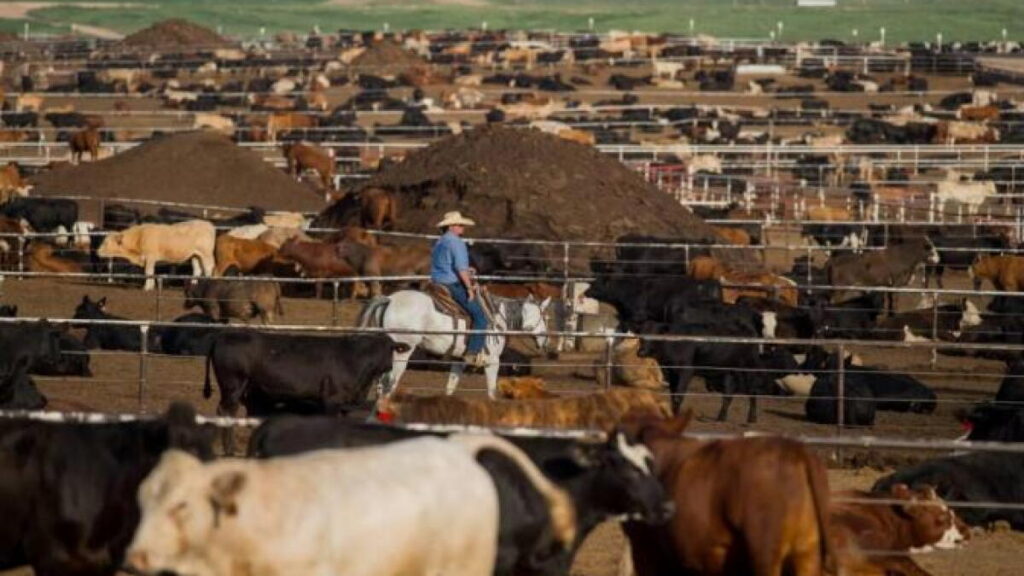
According to the USDA, cattle and calves on feed for the slaughter market in the United States for feedlots with a capacity of 1,000 or more head totaled 11.6 million head on May 1, 2026. The total inventory sits at 2% above May 1, 2025, topping average pre-report analyst expectations.
Drought Drives Unexpected April Placements Up 6%
The primary catalyst behind the heavier total inventory was a significant increase in April placements, which totaled 1.70 million head—a 6% increase compared to the same period last year. Analysts had projected a lighter placement number.
Dr. Peel noted that persistent, severe environmental conditions across key grazing regions forced producers to alter their typical spring management plans.
“Drought conditions continue to plague much of the High Plains, which forced some producers to sell early, as they simply don’t have the grass to turn cattle out onto this summer,” Peel explained, addressing the movement of lighter-weight animals into feedlots rather than summer pastures.
The placement numbers reflect an ongoing lack of regional moisture that has left forage resources severely restricted, overriding typical seasonal patterns where cattle remain on grass for longer durations.
Slower Turnover and Sluggish Marketings
On the outbound side of the ledger, feedlots marketed 1.64 million head of fed cattle during April, a 10% decrease compared to April 2025. This reduction in marketings represents a slower-than-average turnover rate in commercial yards.
Peel attributed the slow movement out of feedlots to fundamental shifts in how cattle are currently being managed and fed out.
“Cattle today spend far more time on feed,” Peel noted. “The industry standard used to be 120 days on feed to finish, but there are far more cattle that kill around 190 days on feed today than there are those that finish at 120 days.”
By feeding cattle to significantly greater final weights, feedlots are intentionally slowing down their supply pipeline, which effectively stacks up inventories on paper despite a historically tight national cattle herd.
Market Outlook and Rebuilding Horizon
While the immediate report presents a somewhat heavier supply of cattle in feed yards than the trading pits anticipated, Dr. Peel emphasizes that the long-term, structural reality of the beef industry remains unchanged. The national cow herd remains at multi-decade lows following years of intense drought liquidation.
The slow pace of heifer retention suggests that any meaningful expansion of the domestic beef supply remains far on the horizon.
“If we start saving heifers in 2026, we can breed them in 2027 and have their calves in 2028,” Peel said regarding the biological timeline of the cattle cycle. “By the time those calves are on the ground and weaned and through the feedlot, we’re pretty close to the end of the decade, and there isn’t anything that anybody can do to change that.”
For producers navigating the current market climate, Peel advises keeping a steady hand and focusing tightly on input management, adding that “a little bit of flexibility goes a long way in this market, because it is very resilient”. He recommends utilizing risk management strategies, such as Livestock Risk Protection (LRP) or traditional futures options, to safely clear short-term marketing windows during periods of temporary report-driven volatility.
May 2026 Cattle on Feed Summary Table
| Category | USDA Actual Volume | Percentage of Previous Year | Pre-Report Average Estimate |
| On Feed (May 1) | 11.58 million head | 102% | 101.6% |
| Placements (April) | 1.70 million head | 106% | 103.4% |
| Marketings (April) | 1.64 million head | 90% | 90.7% |
The Beef Buzz is a regular feature heard on radio stations around the region on the Radio Oklahoma Ag Network and is a regular audio feature found on this website as well. Click on the LISTEN BAR above for today’s show and check out our archives for older Beef Buzz shows covering the gamut of the beef cattle industry today.