

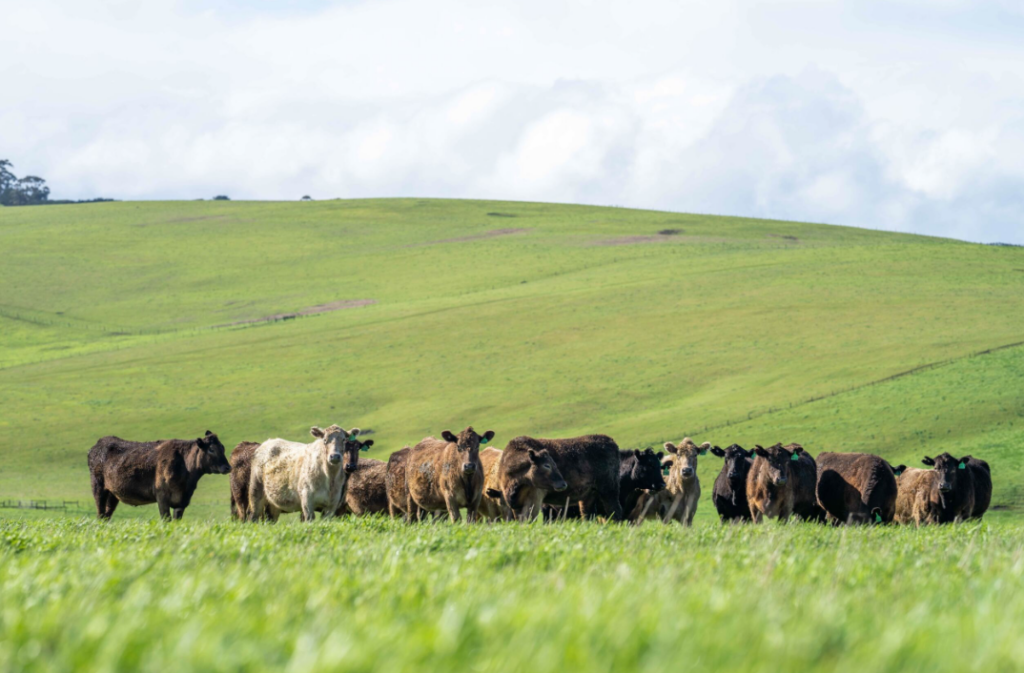
In today’s beef buzz, senior farm and ranch broadcaster Ron Hays features comments from Don Close of Terrain, who says despite growing discussion about rebuilding the U.S. beef cow herd, producers still face significant financial and weather-related risks before widespread heifer retention becomes reality.
The U.S. beef cow herd currently stands at 27.6 million head, near its lowest level since 1961, fueling industry conversations about when cattle producers may begin retaining heifers and rebuilding inventory.
What Will It Take to Retain Heifers?
Close said the industry has spent years asking what conditions will finally convince producers to start holding back replacement females. “The topic we spent the last few years talking about is what it is going to take to convince these guys to retain heifers,” Close said. “If you take replacement female prices, if you take the interest rates that are associated with the cost of retaining a $4,500 replacement female and you take a quick look at the current drought monitor, or if you look at the weekly pasture and range conditions and index that thing, we’re asking a huge, huge ask of these guys to take on that debt.”
According to Close, drought remains one of the biggest obstacles standing in the way of herd rebuilding, particularly across major beef cow states. “Missouri is in the best shape. They’re just at 19% moderate drought or worse,” Close said. “And this week we’re looking at 43% in Texas — that’s not a bad number for them — moderate drought or worse, 59% in South Dakota, 82% in Oklahoma, and 90% of Nebraska, moderate drought or worse.”
“So drought continues to rear its ugly head in this whole conversation of rebuilding the U.S. mama cow herd,” he added.
The Economics Eventually Win
Even with those challenges, Close said he believes market economics will ultimately force expansion. “Now I am an absolute believer that economics work,” Close said. “I believe with my core that before this market is over with, we’re going to make that carrot so big that we will attract these guys to retain females. We’re just not there yet.”
Why Lower Cow Slaughter Isn’t Enough
Close also pushed back on the idea that slowing cow slaughter alone signals stabilization in the cattle cycle. “You cannot stabilize the cow inventory by not killing cows if we’re not putting replacement heifers on top of that,” Close said. “We’re going to continue to decline.”
He said an overlooked issue is the aging of the nation’s cow herd. “Every one of those cows has a clock,” Close said. “By not killing the cows and not replacing with females, the average age of our cow herd is getting substantially older.”
When expansion finally happens, Close said producers will face a bigger rebuilding challenge than many realize. “When we do finally start to expand, we’re going to have to retain enough females, not only to rebuild what we’ve lost, but we’re going to have to retain additional replacement females because of the accelerated attrition of the cows that are still out there,” he said.
Tight Supplies Keep Markets Strong
Retaining heifers also means fewer animals available in the short term, something Close says continues to support cattle prices.
“Every time we do retain a heifer, we’ve got one less animal on foot,” Close said. “That’s why this market continues to be so explosively strong.”
Producers Aren’t Expanding—Yet
Looking ahead, Close said producers may not be expanding yet, but the conversation appears to be changing. He mentioned a quote from Dr. Derrell Peel, “I don’t think that producers are expanding yet, but I think they’re thinking about thinking about it,” Close quoted Dr. Derrell Peel. “We’re mathematically still not retaining enough heifers to grow this market.”
With drought concerns, expensive replacement females, high borrowing costs, and an aging cow herd all in the mix, Close said the path toward rebuilding the U.S. beef cow herd remains complicated—and likely slower than many expect.
The Beef Buzz is a regular feature heard on radio stations around the region on the Radio Oklahoma Ag Network and is a regular audio feature found on this website as well. Click on the LISTEN BAR above for today’s show and check out our archives for older Beef Buzz shows covering the gamut of the beef cattle industry today.







