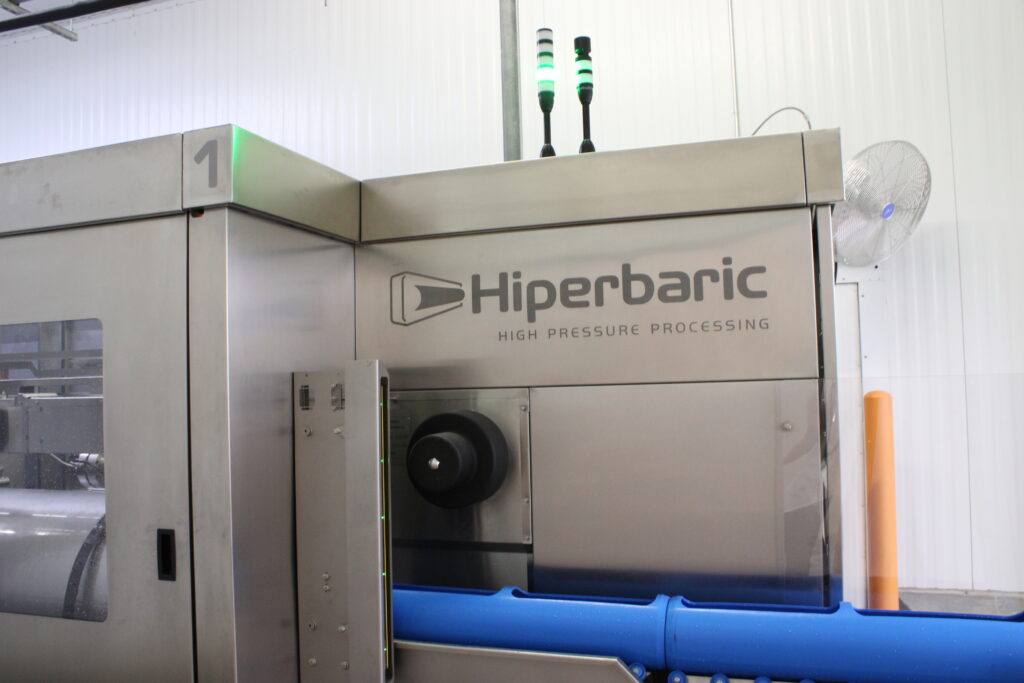
Oklahoma State University hosted food industry professionals and researchers Thursday, Sept. 17, for a workshop exploring how high-pressure processing technology can improve food safety, extend shelf life and create new opportunities for the beef industry.
Oklahoma Farm Report intern Haden Snelson visited with researchers from OSU and the University of Nebraska-Lincoln during the HPP workshop in Stillwater to learn more about the technology and its potential applications in food production.
Dr. Rodney Holcomb, assistant director of OSU’s Robert M. Kerr Food and Agricultural Products Center (FAPC), said the university has been exploring high-pressure processing, or HPP, as a way to improve food safety while reducing the need for additional ingredients.
“We’ve looked at different food processing technologies, food preservation and food safety,” Holcomb said. “There’s so much that we do here at the Food and Egg Product Center that’s related to food safety.”
Holcomb said the technology presents opportunities for food manufacturers seeking to produce safer products with longer shelf lives.
Dr. Gary Sullivan, professor of animal science at the University of Nebraska-Lincoln, explained that HPP uses extremely high pressure rather than traditional heat treatments to control harmful microorganisms in food products.
“They fill the vessel with water and then that water is pressurized,” Sullivan said.
Depending on the application, the pressure can reach approximately 87,000 pounds per square inch.
Sullivan explained that the pressure disrupts proteins in bacterial cell membranes, making it difficult for harmful microorganisms to survive and reproduce. The technology can help control pathogens such as E. coli, although the effectiveness depends on the pressure and treatment used.
Beyond food safety, researchers are exploring how HPP could improve the value of dark-cutting beef, which can be discounted because of its unusually dark appearance.
Sullivan said researchers have found that the technology can lighten the color of meat, potentially improving its appeal to consumers.
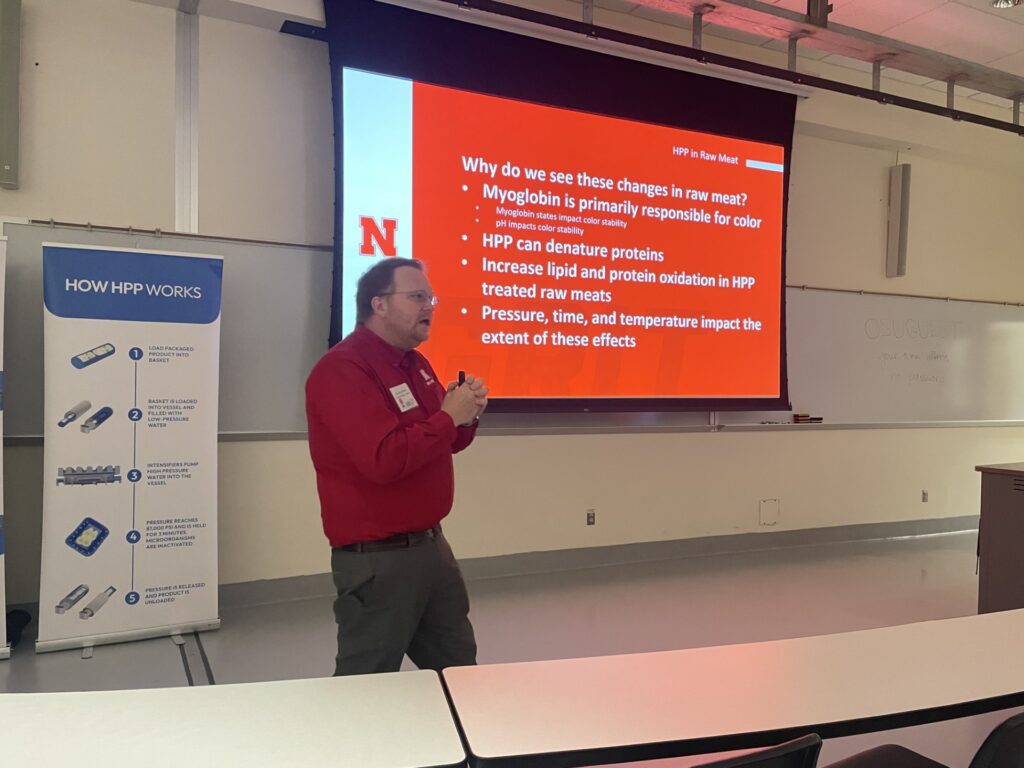
“We can actually take things that are too dark,” Sullivan said, explaining that the process can bring the meat’s color closer to what consumers expect.
While the color change can be undesirable in conventional fresh beef, researchers believe it could provide an opportunity to recover value from dark-cutting carcasses.
“If we can add value back to the beef carcasses, especially at a time of a tight beef supply,” Sullivan said, the technology could have a significant impact on the industry.
Dr. Mary-Grace Danao, research associate professor at the University of Nebraska-Lincoln, said the collaboration between the two universities began several years ago when Nebraska researchers sought assistance from OSU meat color scientist Dr. Ranjith Ramanathan.
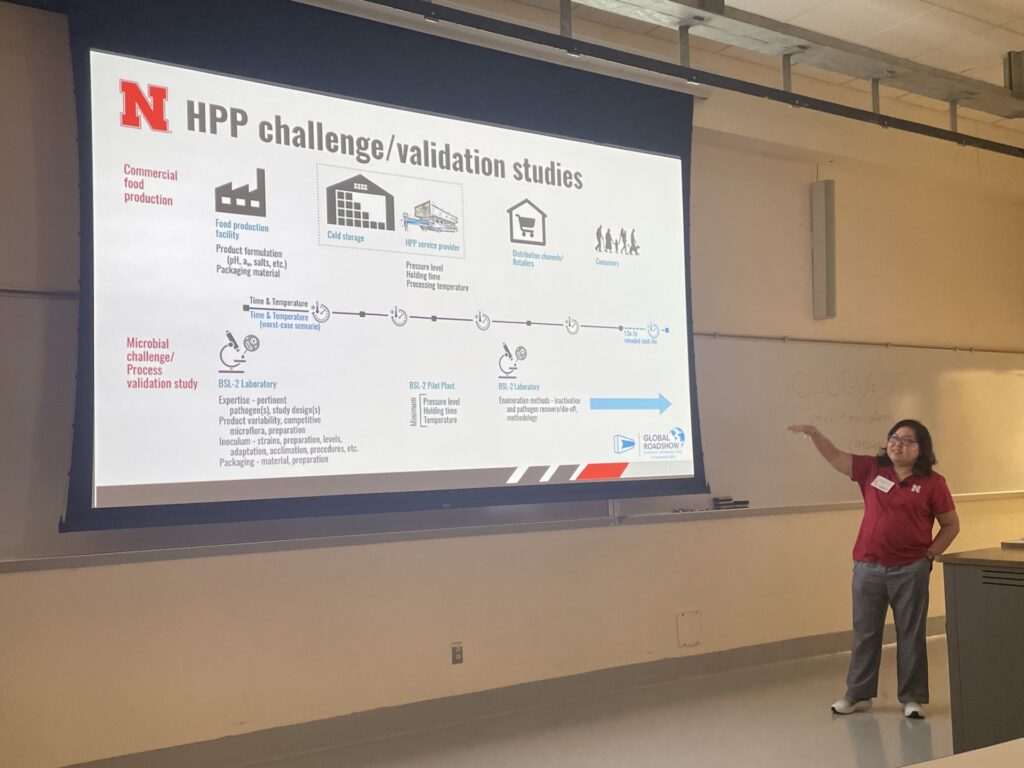
The partnership has allowed students and researchers from both universities to investigate how pressure affects meat proteins and explore potential solutions for dark-cutting beef.
Danao said the research could also help scientists better understand why conventional ground beef becomes lighter during high-pressure processing and potentially find ways to address the color change.
The technology also has applications beyond meat products, including juices, dips, baby foods and ready-to-eat foods.
Danao explained that traditional pasteurization relies on heat to reduce harmful microorganisms, while HPP uses pressure to achieve similar food safety objectives in certain products.
“Because we’re not using heat, we’re not also lowering some of the heat, labial or heat sensitive compounds like your vitamins, some of your minerals, some of the color pigments,” Danao said.
She added that the technology can help manufacturers produce minimally processed foods while maintaining desirable characteristics and extending shelf life.
Holcomb said Nebraska’s experience with HPP has been instrumental in helping OSU establish its own research capabilities.
“We already had that connection and they’re very open and very helpful,” Holcomb said.
He explained that Nebraska researchers have helped OSU develop validation studies to determine whether high-pressure treatments can effectively control foodborne pathogens and extend product shelf life.
Danao said the collaboration also played a role in bringing the workshop to Stillwater.
“I think the best place to do it would be at Oklahoma State because they are a good partner, a good collaborator for us,” Danao said.
Holcomb said the workshop provided an opportunity for attendees to better understand the technology and evaluate whether it could benefit their own food products.
“I think there are a lot of people that found out that many products they consume are already treated to HP processing,” Holcomb said.
He added that the technology offers potential applications ranging from improving food safety to extending shelf life and developing products with fewer ingredients.