

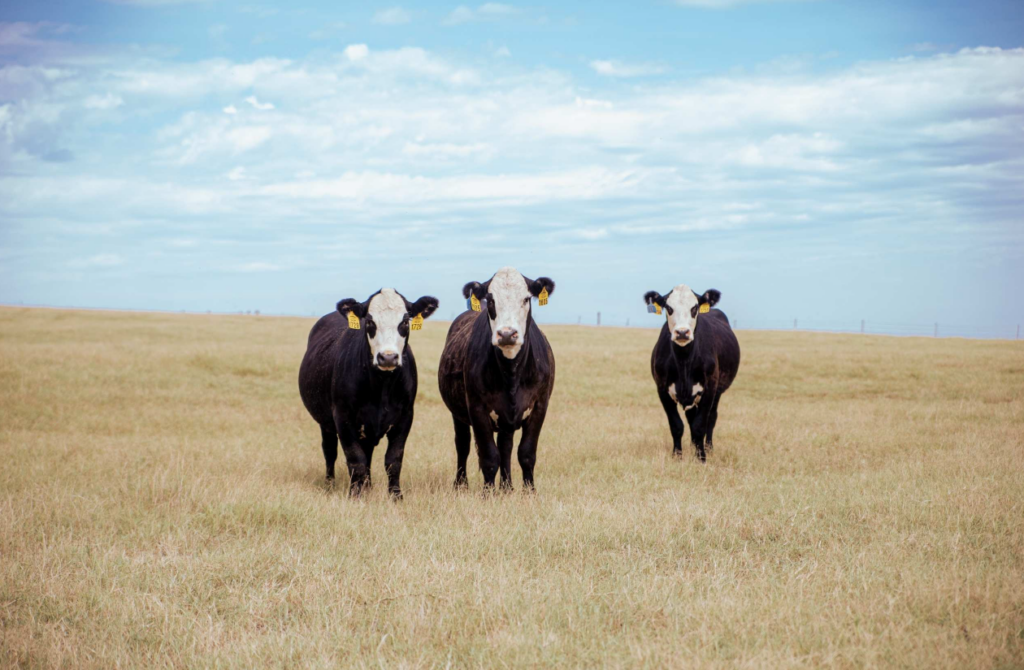
For the first session of Ag Econ After Hours, Oklahoma State University Extension Specialist Scott Clawson examined what producers should consider when deciding what to do with open cows this fall. Clawson focused on cull cow prices, seasonal market trends and the economics of keeping certain cows in the herd longer.
Cull Cow Prices Typically Weaken in the Fall
Clawson said the cull cow market is one of the cattle markets where seasonal price patterns tend to be fairly predictable. “We typically see a stronger market through the spring and summer,” Clawson said. “We see a market that falls off going into the fall, finds a bottom ground typically in that late fall period, and then rebuilds back into the spring.”
That seasonal decline is tied in part to the production cycle of the beef cow herd. With roughly 70% of U.S. cattle operations being spring-calving operations, fall is when producers commonly wean calves, pregnancy check cows and make culling decisions before winter. Clawson said putting additional cull cows into the market during that period increases supply, which can pressure prices.
Current Market Factors Add Another Layer
While seasonality provides a useful historical guide, Clawson cautioned producers not to rely on it alone. “One of the big issues with seasonality is that it only has a rearview mirror,” Clawson said.
He pointed to several current market factors affecting cull cow values, including smaller cow inventories, heavier fed cattle and the importance of lean beef in the ground beef market.
Clawson said demand for 90% lean beef is particularly important because it is used to blend with leaner trimmings from heavier cattle. “As we make more 50s, we need more 90s,” he said.
Strong beef demand has also helped support cull cow prices, although Clawson said tariffs, imports and other market factors could create additional pressure in the short term.
Not Every Open Cow Has the Same Decision
Clawson divided open and cull cows into different groups, starting with cows that have known health or performance problems.
For those animals, he said producers probably should not hesitate to move them into the market while prices remain historically strong. “Cull cow markets are pretty good. No sense in keeping things around that are problems that are just going to generate us more problems later,” Clawson said.
The decision becomes more complicated with otherwise healthy cows that are open, older, thin or simply poor performers. Clawson said producers may still decide to sell those cows, but another option could be keeping them temporarily and attempting to add value.
Using Contribution Margin to Make the Decision
One of the tools Clawson recommended is contribution margin, which can help producers compare the potential revenue from keeping an open cow with the additional costs required to do so.
In one example, Clawson estimated about $600 in variable costs to keep a cow, including hay, feed and other expenses. Using a 55% weaning rate, a 500-pound weaning weight and a $3.75-per-pound calf price, the potential revenue was about $1,031 per cow.
That left a potential contribution margin of about $431 per head if those assumptions hold. “This is also what we would do to calculate, you know, how much can we spend to keep cows through a drought?” Clawson said. “What would be the impact on my operation if I added five or 10 more cows to the place?”
He emphasized that producers should use their own costs and production history when making the calculation.
Adding Weight and Condition Could Create Another Opportunity
A third possibility is keeping healthy but thin cows through the winter and attempting to capture both seasonal price improvement and additional value from weight and body condition.
Clawson said that strategy depends heavily on having adequate and economical feed resources. “We’re going to add weight to that thin cow. We’re going to add condition to that cow, giving her a higher grade, and then we’re going to get paid for all three of those things,” Clawson said.
However, he stressed that producers need to carefully evaluate their available hay and feed before taking on additional cows.
Producers Should Keep Their Long-Term Culling Goals in Mind
Clawson said keeping an open cow temporarily does not mean abandoning established culling practices. If a producer chooses to give an open cow another opportunity, he recommended clearly identifying that animal as a high-priority cull for the future. “We’re just looking at maybe a short-term adjustment based on what the market’s doing,” Clawson said.
Ultimately, Clawson encouraged producers to evaluate each cow individually, consider their feed resources and use contribution margin to determine whether keeping an open cow creates enough potential value to justify the additional expense. “Again, that contribution margin is really your friend,” Clawson said.
Pictures and graphs can be found in the full video below:







