

In the latest Crop Marketing letter from OSU’s Todd Hubbs he writes: Grain and oilseed prices moved lower last week as speculation on the Black Sea conflict and the Trump-Xi meeting cast a bearish light on prospects. Harvest pressure from spring planted crops along with no information from the Chinese delegation on potential trade deals created weakness to close out the week. Wheat prices were the distinct loser in futures market over the last week.
Wheat Market Outlook:
Traders appeared unduly focused on a revival of exports out of the Black Sea area last week, even with absolutely no indication of any resolution. Despite Turkey indicating efforts to reach an agreement, progress on a deal seems limited. Wheat demand also influenced prices as exports continue to lag USDA projections. A stronger dollar, while not definitive in impacting U.S. wheat exports, still influenced traders. Monday saw continued lower price pressure under the negative market outlook. The NASS Small Grains summary report, released on Wednesday, provides USDA’s next major wheat production estimate.
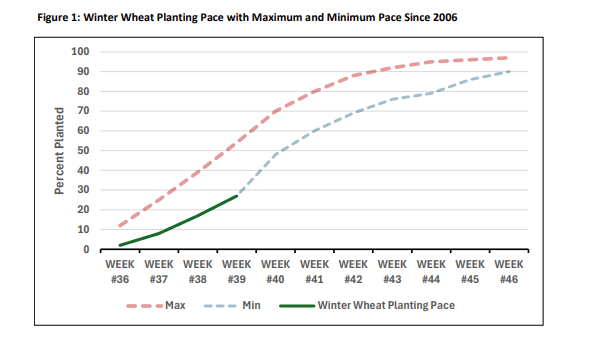
Domestically, winter wheat planting remains slow. Planting sits at the slowest pace over the last 20 years. At 27 percent, winter wheat planting is 7 percent lower than the five-year average. Weather forecasts from NOAA indicate a much needed 2-5 inches of rain over the southern Plains over the next seven days. Expect planting progress to remain slow.
Weak export demand is showing up in the export sales report. U.S. wheat export total commitments sat at 344 million bushels as of September 17, down 31 percent from last year and equal to 45 percent of USDA’s projected exports. The average pace over the last five years is 54 percent of projections. All wheat needs to average 12 million bushels of net sales a week for the remainder of the marketing year to hit USDA’s projection. Over the last month, wheat net sales averaged slightly over 10 million bushels per week. Hard red winter wheat is a major contributor to slow wheat exports. HRW total commitments sit at 76 million bushels, down from 199 million bushels at this time last year. Last week saw a jump in HRW net sales to over four million bushels on buying by Mexico and Japan. The increase was a departure from 1.3 million bushels per week over the prior month. Given export port prices and global demand at present, the potential for continued follow-through in this week’s sales report seems low despite the price being rundown over the last week.
On the global market, Bangladesh and Sri Lanka bought milling wheat from India for between $305-$326 per ton. Tunisia bought 125 thousand tons of milling wheat for around $317 per ton with cash and freight on an optional origin contract. Global wheat prices from major origins sit well below HRW Gulf prices. U.S. Gulf wheat free on board at 11.5 percent protein remains elevated at $9.27 per bushel ($341 per ton) despite the recent price weakness.
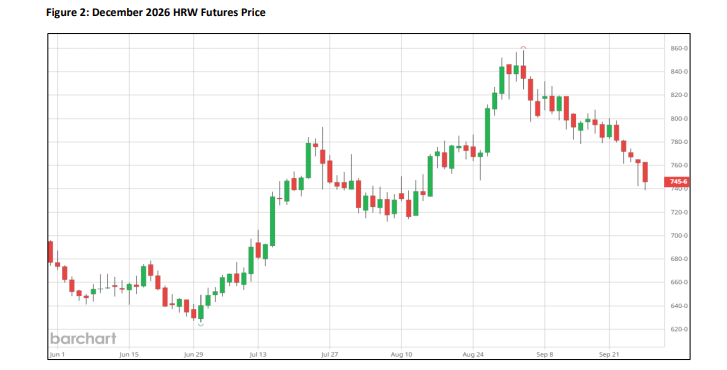
December HRW future price moved 16 cents lower on Monday to close at $7.46 per bushel. Over the last five trading sessions, December HRW lost 50 cents per bushel. December prices dropped back in the range last seen in early August. July 2027 futures price closed at $7.59 and followed a similar pattern to the nearby contract over the last week. Current July price is 52 cents below the projected RMS crop insurance price of $8.11 per bushel in Oklahoma. Basis in Oklahoma ranges between -55 to -70 across the state on cash delivery.
Milo Market Outlook:
The December corn future price closed on Monday at $5.23 per bushel, moving five cents lower on the day. Corn prices fell 20 cents over the last five trading sessions. Futures prices remain in the $5.20 – $5.40 range seen over the last month. Barring an unexpected shock from the Stocks report this week on corn demand, an expectation of corn prices staying in this range remains in place given the current market situation.
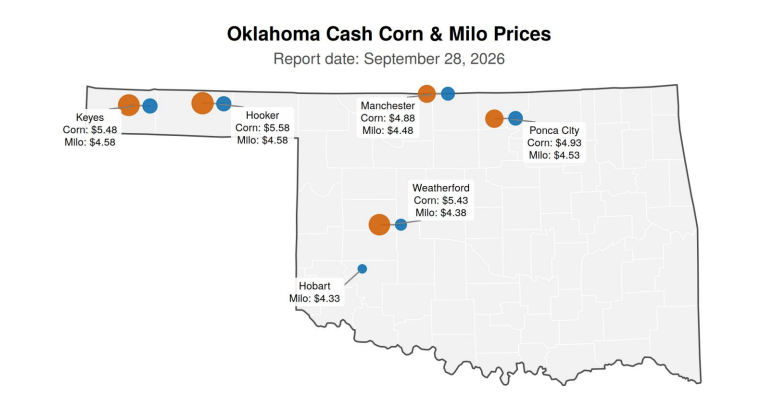
Milo cash prices in Oklahoma stay below corn. While not as large as this time last year, the smaller crop shows cash prices ranging from 40 cents to a dollar under corn prices across Oklahoma. The Trump-Xi meeting saw both corn and milo listed as agricultural commodities set for tariff reductions. No concrete specifics on timing or magnitude of tariff relief have been released yet. If the deal materializes in stronger milo exports to China, expect narrowing of basis.
The current marketing year for milo has seen exports get off to a slow start. Total commitments through September 17 sit at 1.7 million bushels. The slow pace lies below last year’s pathetic start to the marketing year. While China has purchased 0.72 million bushels of the total commitments, the current levels do not bode well for milo prices. Export inspections through September 24 came in at less than a million bushels, down from last year’s 2.6 million at this point. Monitoring export sales after the agreement on reducing tariffs remains crucial. Since production is projected 153 million bushels lower at 284 million, crop production and availability may be a portion of the story.
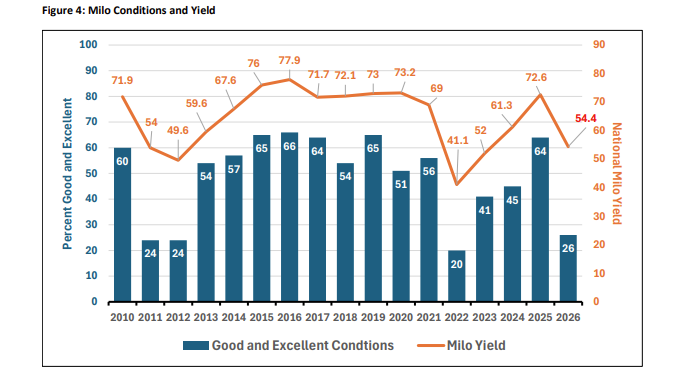
Milo yield for the U.S. was projected at 54.4 bushels per acre in the September Crop Production report. On Monday, crop conditions showed good and excellent conditions for the milo crop at 26 percent. Current conditions are in the bottom four levels seen in since 2010. While it is feasible for milo yield to come in at 54.4 bushels, the potential for lower yields and production levels as we move into the fall remains possible. Oklahoma shows conditions at 25 percent good and excellent while Kansas, the largest production state, sits at 24 percent. Harvest pace for milo sits at 29 percent, two percent behind the five-year average. Expect harvest to lag the typical pace with the forthcoming weather systems currently forecast.
Global milo production is forecast at 2.38 billion bushels in the latest WASDE report, down approximately 100 million bushels from last year. Major exporters Argentina, Australia, Brazil, and the U.S. make up 31.4 percent of the total production. Southern hemisphere crops appear in good condition at present. China is by far the largest importer. China is projected to import 83 percent of the world’s trade this marketing year which sits slightly above the five-year average of 81 percent. Given high diesel prices and transport costs, the share of China’s imports falling to the U.S. may be limited despite the tariff agreement.







