

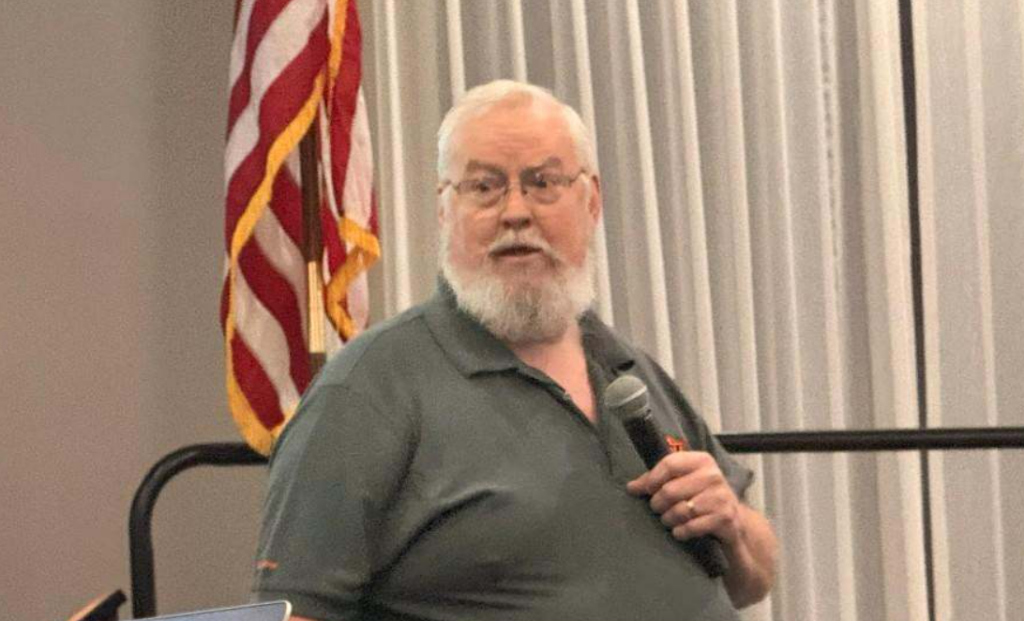
In today’s Beef Buzz, senior farm and ranch broadcaster Ron Hays spoke with Oklahoma State University livestock marketing specialist Dr. Derrell Peel about cattle market volatility, declining beef production, producer decisions on rebuilding herds and what the industry could expect heading into 2027. Despite a more turbulent second half of 2026, Peel says the underlying fundamentals supporting cattle prices remain strong.
Cattle Market Volatility Follows Record First Half of 2026
Peel said the cattle market started 2026 with record-setting prices across the board, but the second half of the year has brought considerably more volatility. “First half of the year we set new records across the board. Very strong first half,” Peel said. “We’ve had a lot of volatility in the second half of the year.”
He explained that several challenges have continued to affect the market, although the fundamentals of cattle supplies have not changed significantly. “We’re still trying to figure out for sure if we’re at a bottom on inventories,” Peel said. “What we do know is that beef production is falling. We’re going to be down another four and a half percent or so in 2026.”
Peel added that the industry has managed to maintain more beef production than might have been expected because of heavier carcass weights. “Slaughter’s down because of the inventory. We don’t have the cattle. Obviously, carcass weights have gone up dramatically this year as well as the last two years,” Peel said. “And yeah, we would have seen bigger declines had it not been for that.”
Producers Consider Rebuilding Their Herds
As cattle prices remain historically strong, producers are beginning to consider what herd expansion could look like. Peel said producer expectations have been an important part of determining when the industry turns the corner in the cattle cycle. “It’s been hard for producers to kind of come around to the idea that, you know, that we first of all we’re going to have to save some heifers sooner or later,” Peel said.
He believes more producers are beginning to recognize the potential for a longer period of favorable cattle prices. “We’re in basically the fourth year of high prices, and I think they’ve kind of come around to the idea that this thing’s for real and It’s got some legs. It’s gonna be around for a while.”
However, drought conditions continue to complicate expansion decisions and can slow producers’ plans to retain replacement heifers.
Buying Bred Heifers Versus Raising Replacements
For producers considering expansion, another important decision is whether to purchase bred heifers or develop replacement heifers from their own herds.
Peel said the decision depends on each operation’s financial situation, long-term goals and how quickly producers want to increase their numbers. “One of the issues with raising your own is you’re starting from scratch, so it’s quite a ways down the road. You’re going to make a bunch of investment,” Peel said.
Purchasing bred heifers can provide a quicker opportunity to take advantage of the current market, but availability and prices are major considerations. “If you want to get in on this market right now, you’ve got to buy a bred heifer that can calve next spring, for example, and get you right in the market next year,” Peel said.
He noted that bred heifers are already expensive and could become even more costly as demand for replacements increases. “I think those heifers are going to get more expensive before it’s all over with,” Peel said. “So, you know, if you’re going to do it, you probably want to do it sooner rather than later.”
Cattle Market Outlook Through the End of 2026
Looking toward the remainder of 2026, Peel said uncertainty has contributed to the market’s recent swings. He expects some of that volatility to settle, allowing prices to work back toward levels supported by the underlying fundamentals. “I think they just don’t know what to expect at this point,” Peel said.
He expects the market to gradually work through the remainder of the year, although a full recovery could take longer. “I do look for this market to kind of grind through the rest of the year,” Peel said. “We should see some recovery based on this last week.”
Peel added that producers may not see a complete recovery to what he considers fundamentally supported market levels until after the first of the year.
Looking Ahead to Cattle Prices in 2027
Peel expects beef production to decline again in 2027, although the decrease may not be as significant as the decline projected for 2026.
He also expects carcass weights to remain high but believes they are nearing their limits.
Looking ahead to the spring market, Peel said another round of stronger prices could push cattle prices beyond the records established in 2026. “I wouldn’t be surprised if the spring of 2027 takes out the 2026 highs,” Peel said. “I don’t think we’ve seen the highest prices necessarily.”
For producers, he said decisions about expansion should also account for the condition of their land and available forage. “The market’s in fundamentally good shape,” Peel said. “And, you know, then it’s going to be a question of kind of where are you physically as far as drought conditions, your forage base. Is your country in good shape? If it is, then I think you want to move forward with your long-term game plan.”
Beef Demand Remains Strong Despite Higher Prices
While consumers continue to face higher beef prices, Peel said demand for beef remains robust.
He acknowledged that some consumers are making adjustments and eating less beef because of the cost, but he has not seen indications of a significant shift away from the product. “We continue to see very robust consumer demand,” Peel said. “Prices are high relative to other meats, and there’s plenty of alternatives. So, I think it’s obvious that consumers haven’t wanted to turn away from beef.”
Peel said strong demand, combined with tightening supplies, should continue to support the cattle market as the industry moves into 2027. “I think we’re going to go forward with both demand and supply going into 2027, supporting the market as it has.”
The Beef Buzz is a regular feature heard on radio stations around the region on the Radio Oklahoma Ag Network and is a regular audio feature found on this website as well. Click on the LISTEN BAR above for today’s show and check out our archives for older Beef Buzz shows covering the gamut of the beef cattle industry today.







