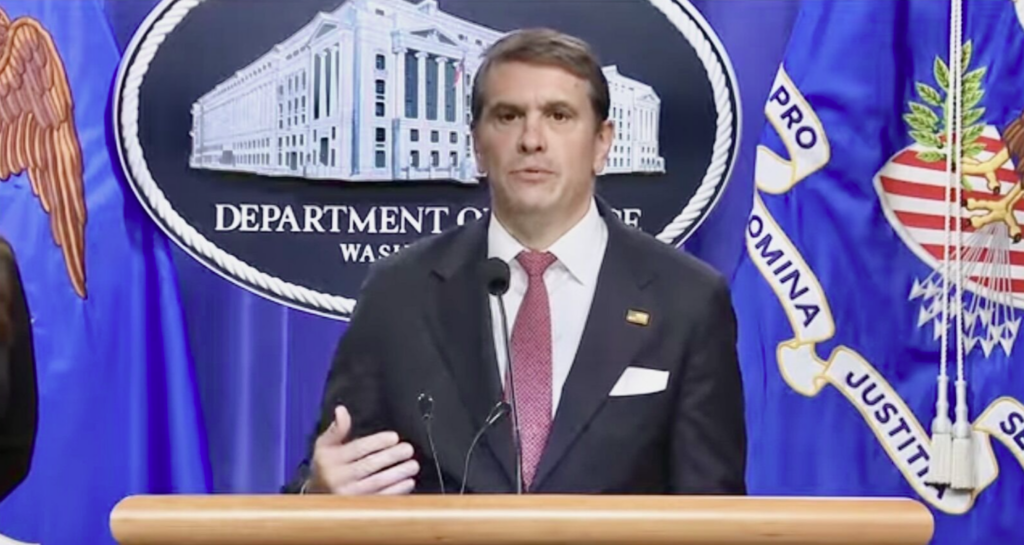
In today’s Beef Buzz, senior farm and ranch broadcaster Ron Hays features comments from Acting Attorney General Todd Blanche, U.S. Secretary of Agriculture Brooke Rollins, White House advisor Peter Navarro, Shad Sullivan, ag journalist Jerry Hagstrom, and NCBA Colin Woodall regarding the ongoing Department of Justice investigation into the nation’s four largest meatpackers. While no fresh developments were announced during the briefing, officials emphasized that the investigation remains active and that more work still lies ahead.
Acting Attorney General Todd Blanche used the event to encourage industry insiders to come forward with information related to possible antitrust violations. Blanche said the Department of Justice is seeking information involving “price fixing, bid rigging, market allocation, or even procurement fraud” through its whistleblower rewards program. He noted that whistleblowers whose information leads to fines exceeding $1,000,000 could receive up to 30% of the penalty amount.
Secretary of Agriculture Brooke Rollins focused much of her remarks on concentration within the meatpacking industry, specifically referencing Brazilian-owned companies including JBS USA and National Beef. Rollins stressed the importance of maintaining a strong domestic food supply and protecting rural America. Responding to a question from longtime ag journalist Jerry Hagstrom about whether the administration hopes to break up large meatpacking companies or demand the Brazilian companies to sell their interests to American buyers, Rollins said, “The goal is to preserve a way of life of rural America, to ensure that our food security is absolute.” The Secretary added “I can’t answer that question” as that is what the investigation will determine.
Rollins added that the investigation is aimed at understanding “what we need to do to ensure that our ranchers and our farmers and our agricultural community have everything they need.” She also tied the issue to the administration’s “Make America Healthy Again” initiative, saying that as consumers move toward eating more “real food,” American farmers and ranchers stand to benefit.
One cattle producer invited to speak during the DOJ event was Shad Sullivan, who ranches in Colorado and North Texas and serves as chair of the property rights committee for R-CALF USA. Sullivan said, “Restoring a fair marketplace, rebuilding a resilient American food system, and protecting the food security of this nation are critical.” He added that the administration’s actions signal that concentration concerns in the cattle industry “are being taken seriously.”
The National Cattlemen’s Beef Association did not participate in the event directly but released a statement afterward. NCBA CEO Colin Woodall said, “NCBA appreciates acting Attorney General Todd blanche for providing an update on the antitrust investigation into the meat packing sector. This is the first update we’ve received in the six years since these investigations have opened. We appreciate the transparency in the process and look forward to further developments.”
While the Secretary and the Acting Attorney General did not specifically call for the breaking up of the largest meat packers that buy and process cattle in the US- there are groups that believe that should happen. Steve Dittmer who runs the Agribusiness Freedom Foundation says flatly- that would be a mistake. He says
Breaking up larger packers that produce the biggest volume of beef at the lowest average cost would result in:
- Higher average beef costs to consumers
- Higher average processing costs for the packing industry
- Supply disruptions as ownership changes
- buyers for fed cattle with needs for fewer cattle and less deeper pockets.
Dittmer adds that twenty years ago “Major meat packer Swift was on the market for years looking for a buyer. Why did it languish? Investment capital looks for the best return on investment. Processing yields roughly 2.5 to 3 percent profit in good times. Packaged processed meats, like bacon or hot dogs or pre-cooked meats, can generate 10 percent or more. Of all the private capital or public companies in America, no one stepped forward.”
Dittmer reminds us that JBS of Brazil did and bought Swift in 2007. They brought a ton of capital into the U.S. beef industry, regardless of how they managed to marshal or leverage it. No one else did as much.
The Beef Buzz is a regular feature heard on radio stations around the region on the Radio Oklahoma Ag Network and is a regular audio feature found on this website as well. Click on the LISTEN BAR above for today’s show and check out our archives for older Beef Buzz shows covering the gamut of the beef cattle industry today.