In today’s Beef Buzz, senior farm and ranch broadcaster Ron Hays continues his conversation with Chandler Keys about President Donald Trump’s recent presidential orders involving the beef cattle industry, including a directive to the U.S. Department of Agriculture and the U.S. Trade Representative’s Office to re-examine mandatory country-of-origin labeling, or MCOOL, and whether it could be put back in place.
Chandler Keys, who has lobbied on the issue extensively throughout his career, argues the discussion needs to account for how integrated the North American cattle industry has become.
Part one of Keys’s discussion can be found here.
Keys Says North American Cattle Industry Is Integrated
Keys says the cattle industry cannot simply be divided by the country where an animal was born. “I’ve probably lobbied on this issue more than anybody else still in professional standing in the industry.”
He points to cattle moving between the United States, Canada and Mexico as an important part of the North American beef system. “I’ve always thought we had a North American system that should have worked.”
Keys says Mexican calves can enter the United States as young feeder cattle and then spend much of their productive lives in the U.S. “Three quarters of the value of the animal is developed in the United States.”
He also points to cattle moving north into Canada before some eventually return to the United States. “How many genetic programs do we work back and forth with Canada? How many bulls do the Canadians come down and buy the United States every year?”
Keys Says Label the Beef, Not Where the Animal Was Born
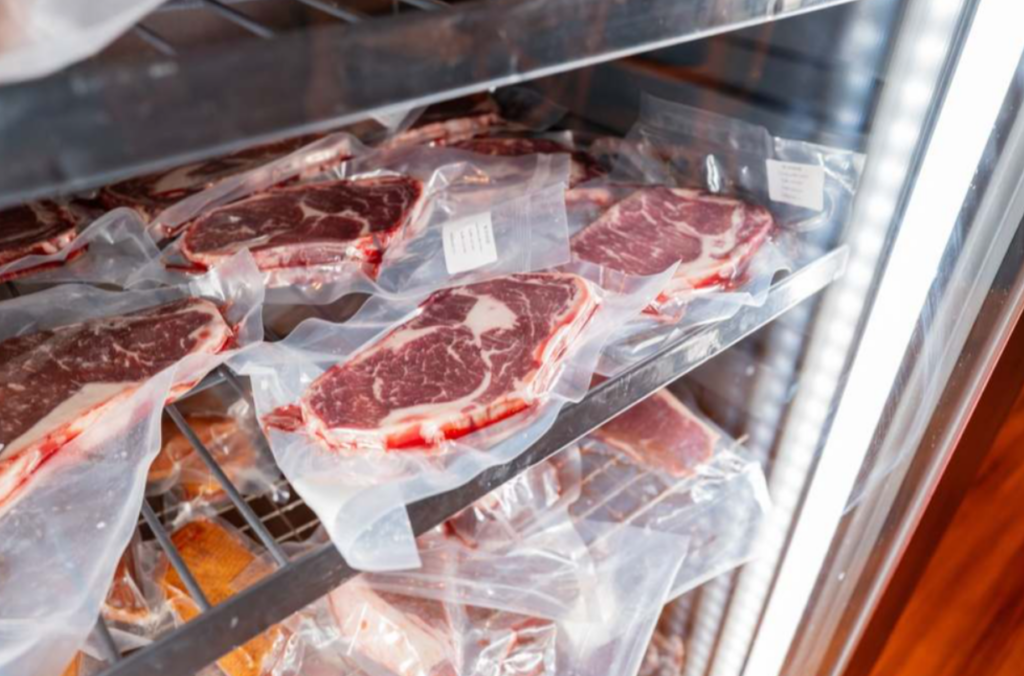
Keys argues that if country-of-origin labeling is pursued, the focus should be on the beef itself rather than the birthplace of the animal. “If you wanted to label meat, label the meat. Don’t label where it’s born because you’re just hurting Mexico and Canada, and it’s hurting us.”
He says that approach would better reflect the way cattle and beef move throughout North America. “So label the beef. If the beef comes in ready for consumer consumption, label it there.”
Trump’s executive order calls for USDA to review existing statutory and regulatory authorities for mandatory beef labeling and conduct an updated economic analysis before potentially pursuing regulations or legislative recommendations.
Food Service Remains a Major Question
Keys also questions why the discussion around country-of-origin labeling has largely focused on retail. “We’re only talking about labeling and the retail space, and not labeling in food service.”
He says imported beef used by restaurants and other food-service operations represents a significant part of the market that was not subject to the same country-of-origin labeling requirements under the previous laws authorized by Congress.
The Senate Ag Committee’s proposed COOL guidance offered by Senate Majority Leader John Thune states that food-service establishments, including restaurants and cafeterias, are exempt from the labeling requirements that apply to covered products sold by retailers.
Keys says that raises a larger question about what comprehensive country-of-origin labeling would actually look like. “So why are we going to just label the retail? We’re only five. Let’s be generous. 10% and more.”
He adds that some imported whole-muscle cuts sold through retail are already identified by country. “The great unlabeled product is in food service, and they don’t label it there. And no one’s talked about labeling it there.” “So, is that really truly country of origin labeling?”
Social Media Has Changed the Policy Debate
Keys says the current push for MCOOL also reflects a broader change in how agricultural policy debates unfold. “Well, welcome to social media.”
He contrasts traditional livestock organizations with individuals and groups that can now build significant audiences through online platforms. “Organizations like state cattle associations, NCBA, the Farm Bureau, all these traditional organizations that have a very, I call them the Roberts Rules of Order organization.”
Keys says those groups typically rely on established policy processes, research and internal review before taking positions. “Very methodical, policy-driven, research-driven, knowledge-based-driven, with a lot of filters in these organizations that go through a high degree of scrutiny before policy is developed.”
He says social media has changed that dynamic. “Now with social internet, just a few influencers, whatever that means, using the internet and using likes and subscribe this button, like this button, whatever, in public policy figures have started to listen to the influencer class.”
Keys Says Traditional Cattle Groups Face a New Challenge
Keys says traditional organizations are now competing for policymakers’ attention with people who have built influence through blogs, podcasts and other online platforms. “Those organizations just get discounted for people that you know have influence with a microphone or a blog.”
When asked how groups such as NCBA can regain influence, Keys says the answer may ultimately rest with policymakers. “They’re the ones that are going to have to push back and say, you know, we’re going to listen to their state cattlemen’s association.”
He says elected officials need to consider the positions of established agricultural organizations when making policy decisions. “They’re going to listen to their state farm bureau. They’re going to listen to the national farm bureau. They’re going to listen to the national cattlemen, national cotton growers, or whoever they may be.”
Keys says the shift from traditional media to online platforms has changed how agricultural policy arguments gain attention. “Used to be Ron, it used to be a barrel of ink, right? Now it’s an internet site.”
Debate Over MCOOL Continues
The MCOOL debate now moves into a new phase following Trump’s executive order.
For Keys, however, the central issue remains how labeling would fit within a North American cattle industry where animals, genetics and beef regularly cross borders.
The Beef Buzz is a regular feature heard on radio stations around the region on the Radio Oklahoma Ag Network and is a regular audio feature found on this website as well. Click on the LISTEN BAR above for today’s show and check out our archives for older Beef Buzz shows covering the gamut of the beef cattle industry today.