

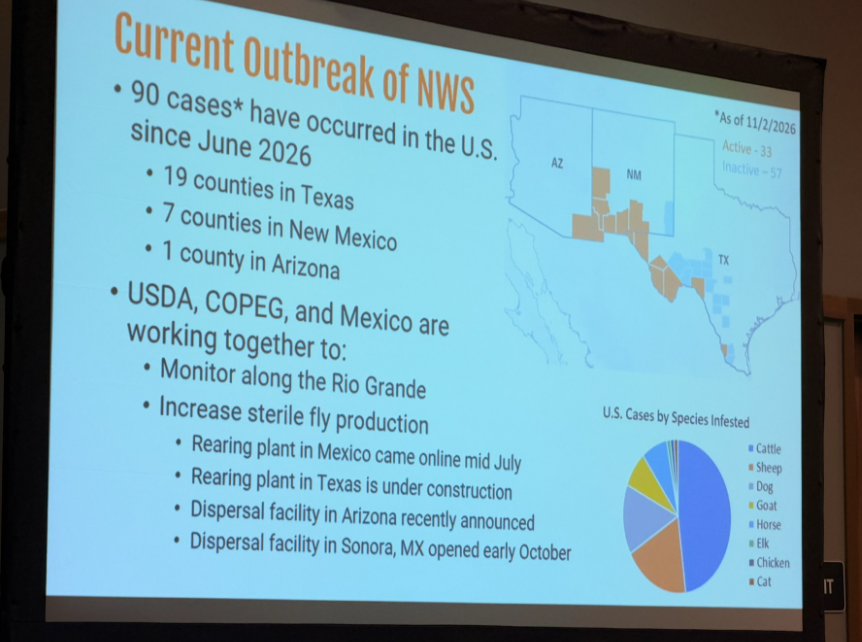
With nearly 100 cases confirmed since June, the pressure from New World screwworm populations continues to build along the southern border. Farm Director KC Sheperd recently sat down with Oklahoma State University Entomology Professor Dr. Justin Talley to examine the pest’s current spread, its destructive life cycle, and the critical management steps livestock producers must take.
“When it comes down to this pest, you know, we think we can get it under control and there’s some natural life cycles that we get past, but really what’s happening is this pest is going to be continually pressuring the U.S. because of the population in Mexico,” Dr. Talley explained. “Until we get that population in Mexico reduced, it’s always going to threaten.”
Recent spikes in activity have raised red flags across the Southwest. “The new cases in Arizona and New Mexico, it’s popping up more frequently in the last two weeks, mainly because we have that pressure from Mexico and some other entities,” Dr. Talley noted.
Understanding Infested and Surveillance Zones
To contain infestations, the USDA’s Animal and Plant Health Inspection Service (APHIS) establishes specific control zones upon detecting a case. In areas such as southern New Mexico, these containment perimeters are expanding.
“When we think about the infested zones, those are always set up by USDA-APHIS after a detection has occurred,” Dr. Talley said. “That’s essentially 12.4 miles of the actual infested zone, but they can connect. When we think about a map of New Mexico, most of the southern part of New Mexico is in an infested zone because they’re all connecting.”
Beyond the core infested areas, officials implement adjacent and fly surveillance zones. In these surrounding regions, authorities place monitoring traps rather than conducting the intensive, mandatory animal inspections required within primary infested zones.
A Rapid, Destructive Life Cycle
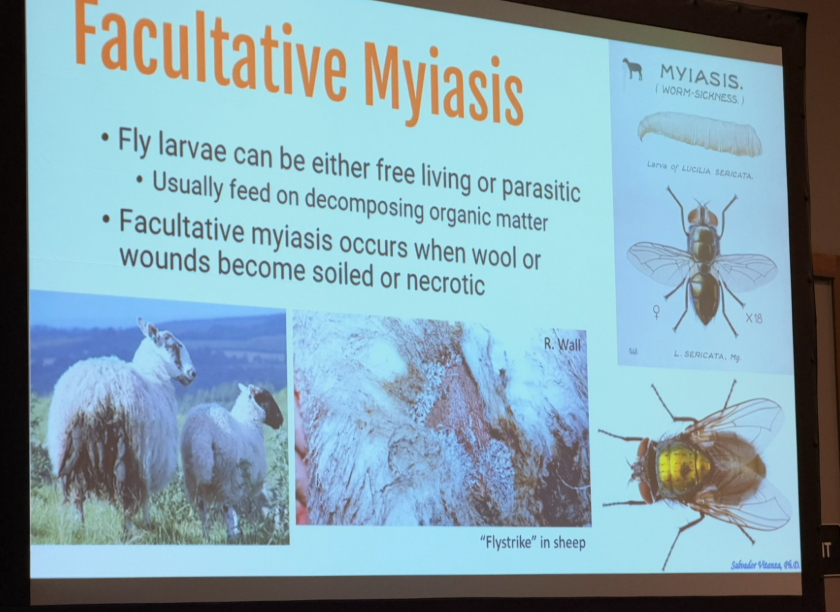
The biology of the screwworm makes rapid detection vital. From egg to adult, the pest’s entire developmental timeline spans only a few weeks.
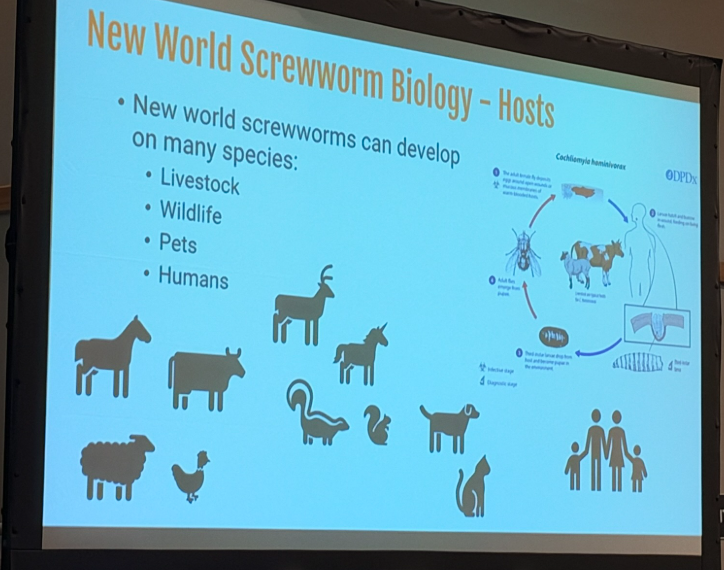
“The life cycle really starts off and, in total, is going to take about 21 days to go through a complete life cycle,” Dr. Talley said. “Once a fly lays its eggs on an animal, or on a wound on an animal, they can hatch in about 10 hours. After that, it goes through three different instars, and again, that’s what we’re really concerned about because that’s what’s causing the infestation.”
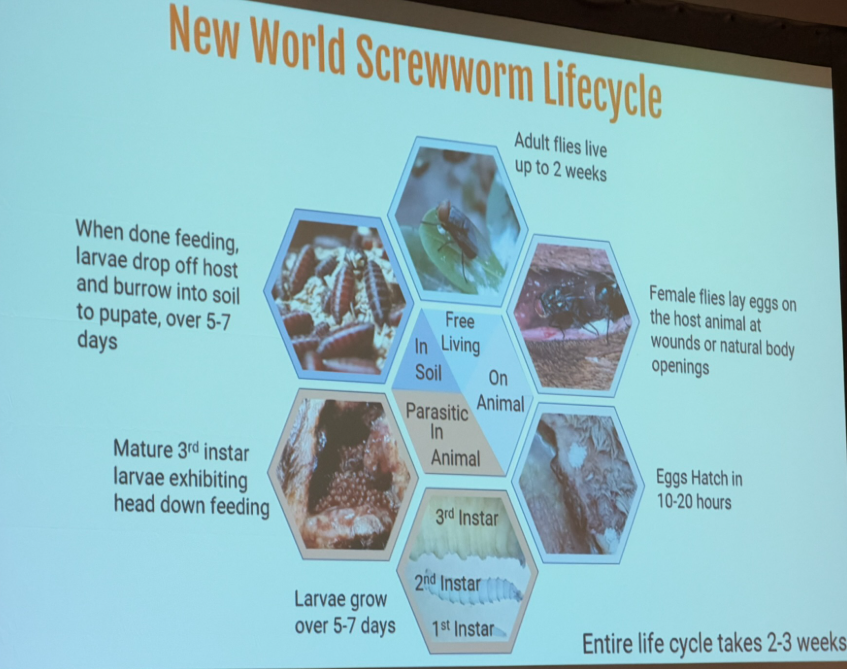
Dr. Talley emphasized that the feeding larval stage inside an open wound lasts between seven to 10 days before the larvae drop into the soil to pupate for five to 10 days. The newly emerged adult flies then begin searching for mates and new hosts.
The Centerpiece of Defense: Wound Management
One of the largest hurdles in screwworm eradication remains locating and monitoring animals in rugged, isolated terrain.
“One of our biggest challenges is getting eyes on animals in some pretty remote areas,” Dr. Talley stated. “Even in Mexico where we’re seeing a really big influx of this fly, it’s in areas that are really isolated, remote, and we may not see these animals on a frequent basis. Once we get eyes on these animals, we can treat these animals. These animals can be moved out of an infested zone as long as they’re inspected and treated properly.”
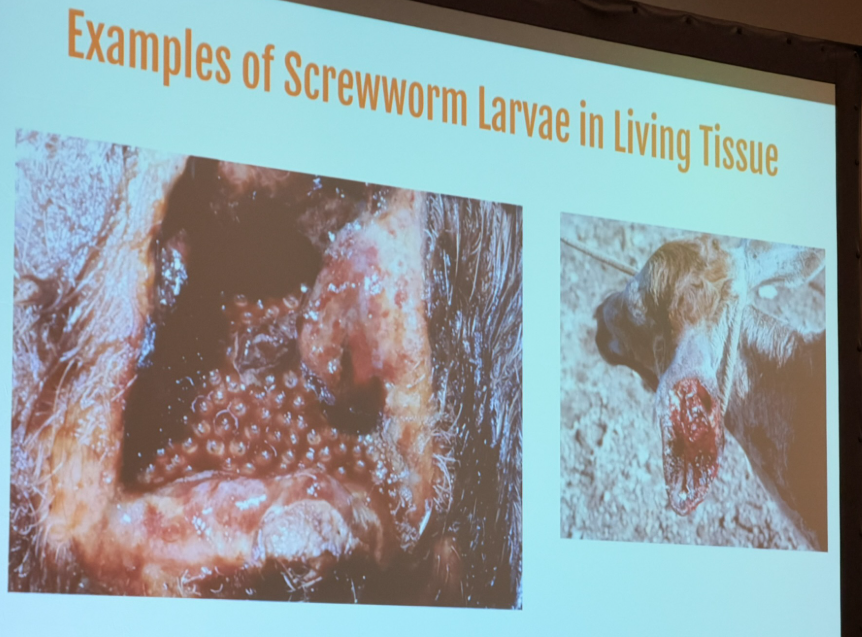
Dr. Talley urged cattle producers to be thorough during herd checks, particularly regarding wounds that might easily be overlooked.
“Think about looking on the underside of these animals,” he said. “One of the most common areas that we see infestations of screwworms is the umbilicus area of calves. In fact, the very first detection in Texas was a three-day-old newborn calf in its umbilicus.”
Routine herd injuries, fence scratches, and even external parasites can serve as an open door for screwworms.
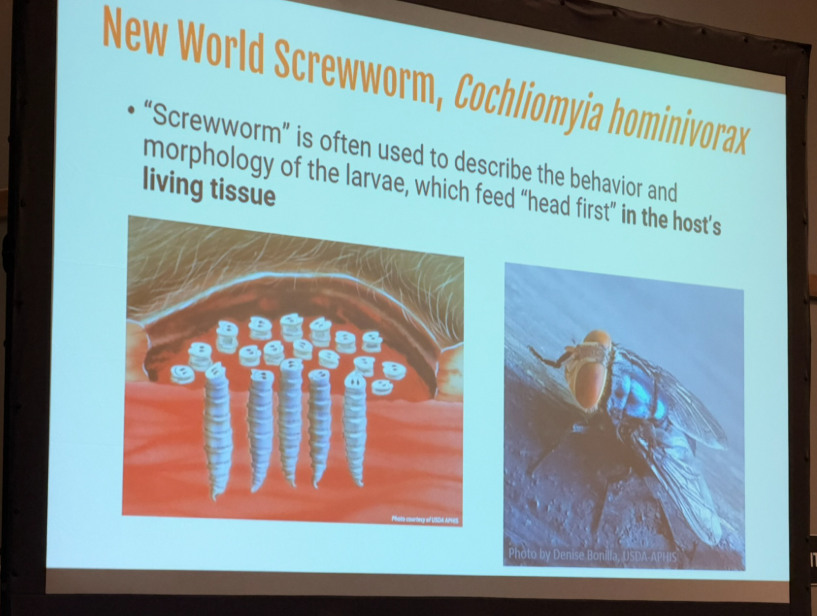
“Even down to ticks: if ticks are in the ears of cattle, then we need to be concerned about screwworms because the screwworm will come in where that tick was feeding and establish itself,” Dr. Talley cautioned. “It’s all about wound management. If we limit the amount of wounds or we treat those wounds timely, then it reduces the impact of this fly.”
Overwintering and the Power of Sterile Insect Technique
Because the screwworm is a tropical and subtropical insect, colder temperatures significantly suppress fly activity.
“In general terms, the fly doesn’t do well pretty much below 58 degrees,” Dr. Talley noted. “So we usually use about 55 degrees or below—this fly is not going to be active and doing a lot.”
While sustained freezing temperatures can kill pupae in the top layers of unprotected soil, Dr. Talley warned against complacency. Microhabitats—such as warm river valleys or sheltered barn interiors—can allow the pest to survive through milder winters.
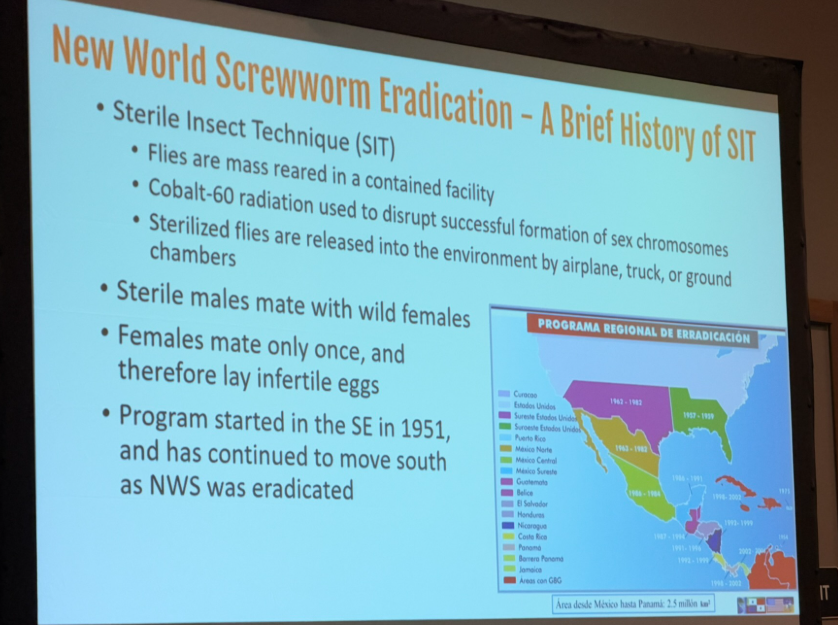
Long-term suppression hinges on the Sterile Insect Technique (SIT), which relies on releasing sterilized male flies to mate with wild females, yielding unfertilized eggs.
“Sterile insect technique is still the best way to control this fly,” Dr. Talley said. “Essentially, it’s using the biology of this fly to control it. This fly mates really just once; that’s why when we sterilize male flies and release them and they mate with wild females, those females cannot reproduce.”
He highlighted that production efficiencies are increasing with male-only strains and operational facilities in Mexico and Panama, while a planned southern Texas facility will provide crucial future capacity. Tools like Dectomax also provide effective pharmaceutical support for treatment protocols.
Rapid Response Protocols and Industry Stakes
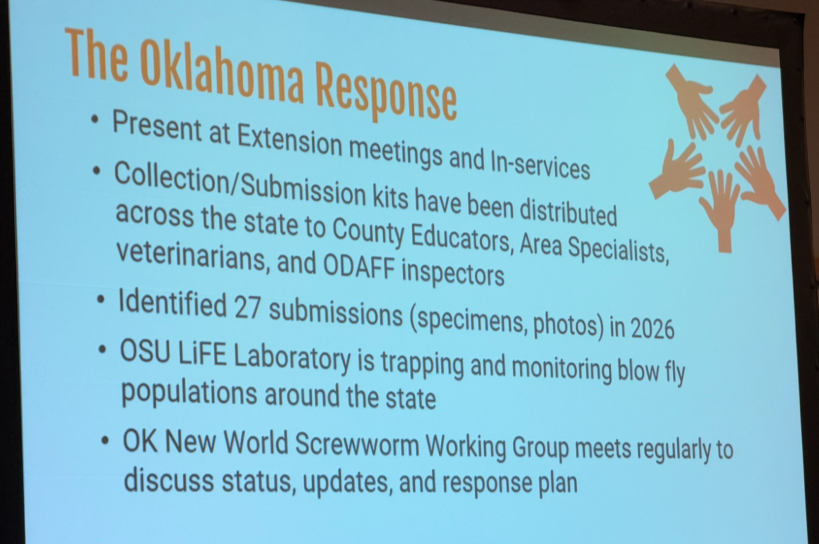
Should screwworms be detected within Oklahoma, regulatory agencies have established clear 72-hour notification and quarantine procedures.
“We already have some things established with ODAFF and our state veterinarian,” Dr. Talley explained. “Once that we identify our first screwworm in Oklahoma, the state veterinarian will contact the Secretary of Ag, and the Secretary of Ag will contact the Governor to let them know. Then after that, they’re in communication with USDA-APHIS. APHIS will come in and help establish some of these infested zones, adjacent zones, and fly surveillance zones.”
Training programs are already in progress to prepare inspectors to assist livestock producers if an introduction occurs.
The economic incentive to keep the pest at bay is staggering. Reflecting on historical eradication campaigns that stretched from the 1950s until final eradication around 2000–2001, Dr. Talley put the danger into financial perspective.
“The U.S. cattle industry alone is getting a benefit of anywhere from $760 to almost $850 million a year by not having this fly,” Dr. Talley emphasized. “And that’s from the damage they cause, the treatments that you have to implement, as well as all the other regulatory things that come into play with this fly.”