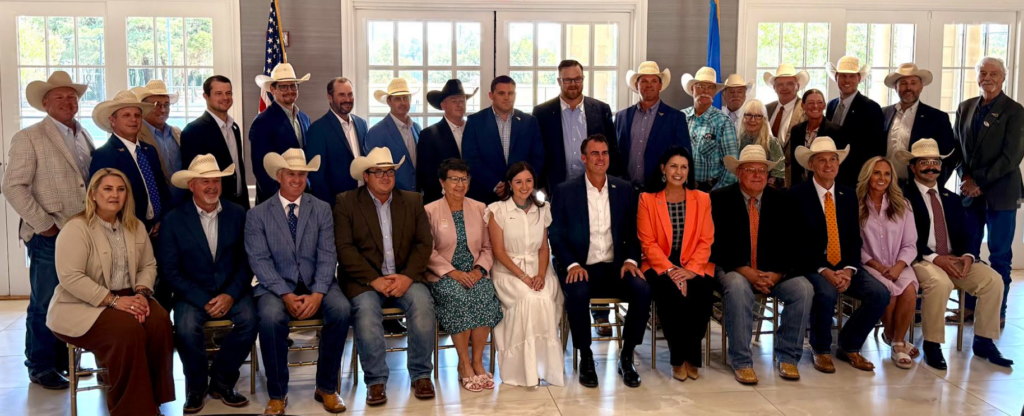
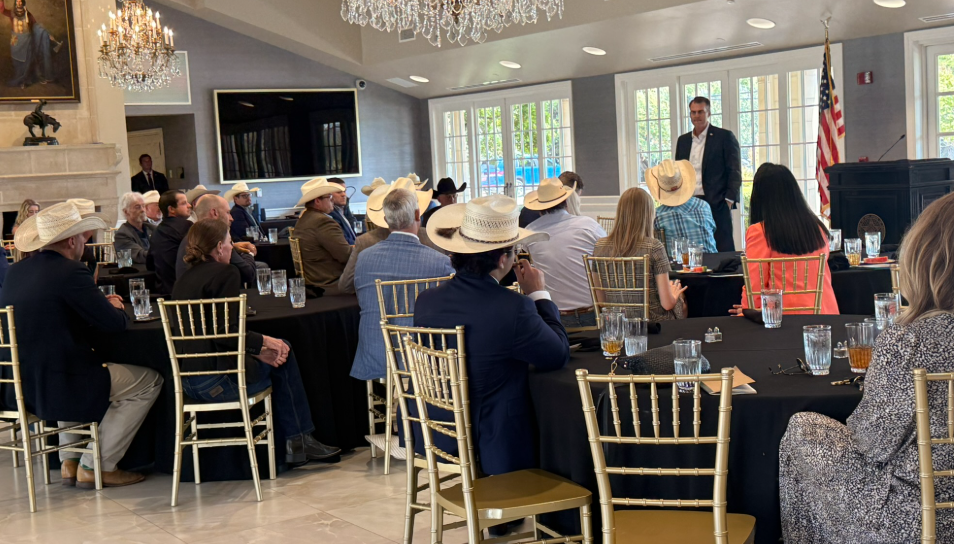
Following a beef industry roundtable in Oklahoma City, Oklahoma Governor Kevin Stitt and Oklahoma Secretary of Agriculture Blayne Arthur voiced strong concerns over recent federal market interventions, warning that abrupt policy shifts disrupt cattle operations and undermine market stability. Both leaders outlined key takeaways from the discussion with agricultural producers and discussed the mission of an upcoming agricultural task force designed to advise state and federal policymakers.
Arthur explained that the roundtable came together quickly following federal commentary regarding beef imports late on a Friday afternoon.
“The Governor is always very interested in agriculture and how our farmers and ranchers are doing,” Arthur said. “Some comments last Friday that everybody heard from the federal level really, unfortunately, make a big difference to our beef producers here in the state of Oklahoma. The Governor said, ‘Let’s get these leaders in the beef industry together.’ The best way to find good answers and solutions is to talk to the folks that live and exist in the midst of that specific industry.”
The Threat of Federal Intervention
Governor Stitt emphasized that attempts by the federal government to manipulate commodity pricing short-circuit the free market and create extreme financial risks for producers who have already invested substantial capital.
Stitt added that while producers are accustomed to managing the inherent risks of agriculture, arbitrary policy actions make business planning nearly impossible.
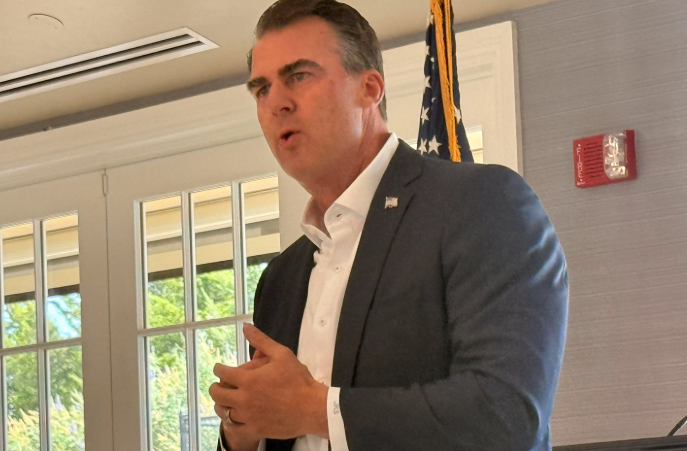
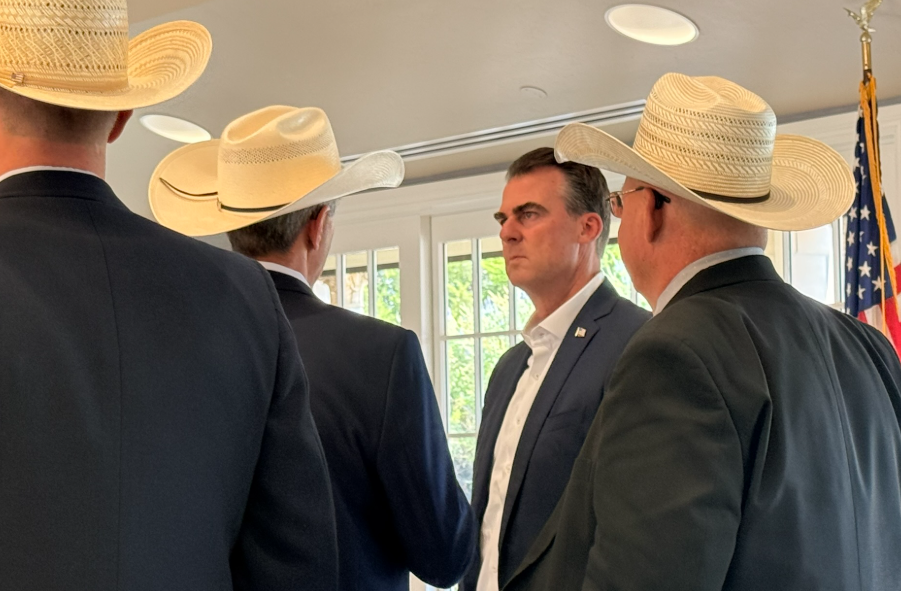
“We believe in a free market approach that we need government get out of intervention, because when you try to intervene short-term on pricing, it causes a lot of disruption,” Stitt said. “You’re looking at the market and saying, ‘I’m going to go buy this group of cows’… and all of a sudden the next day, the prices drop by $50 a hundredweight. That can be devastating for a small business that just borrowed money from a bank. You heard the banker’s perspective and a margin call, and those are things you just can’t anticipate.”
“You take enough risk to buy tractors and to have farmland, and to take enough risk on the death loss on your cattle, but then to all of a sudden have government intervention like this, it can be very depressing,” Stitt noted. “We don’t need that. We need cattle producers in the game, passing on to the next generation. These are the guys that feed America.”
Market Timing and Herd Rebuilding
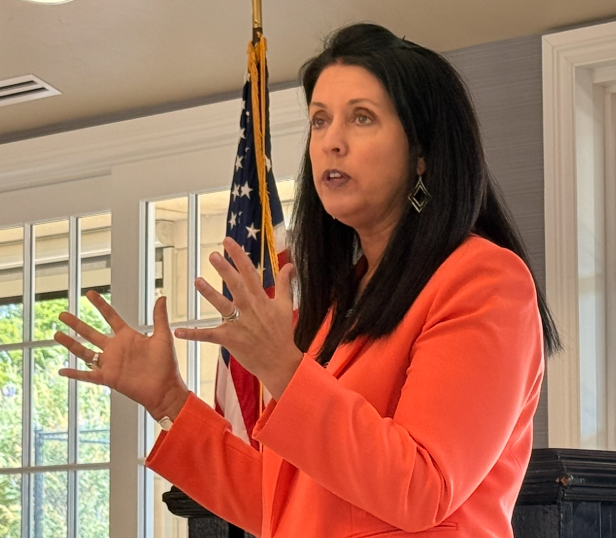
Arthur pointed out that managing weather and operational risks is already challenging enough without unpredictable government intervention altering market trajectories.
“Mother Nature is a pretty tough business partner, especially here in Oklahoma,” Arthur said. “We’re always trying to find how we can mitigate risk… but then when the government starts to intervene in things, it’s nearly impossible to mitigate that risk, especially to have announcements on a late afternoon on a Friday.”
When asked whether beef imports would successfully lower consumer costs or aid rebuilding the national cattle herd, Arthur expressed doubt.
“I don’t think that we ultimately get there for the consumers,” Arthur stated. “In the animal protein sector, we just want the market to determine what that price should be. We produce the best beef in the world, and we’re very proud as American beef producers to do that. I think it hurts rebuilding the cattle herd. For those folks here in Oklahoma, as you know, it’s a pretty tough drought situation, especially in the western part of our state.”
Arthur added that long production cycles force difficult financial choices when markets drop unexpectedly.
“A lot of times we’re talking you’ve got two years before you see a calf,” Arthur explained. “You say, ‘I’ve got bills to pay… I’ve got this line of credit at the bank… Do I try to hang on to this heifer when someone’s just adjusted the market in a way that was not beneficial, or do I say I need to be able to take care of these financial responsibilities that I have?’ Unfortunately, I feel like it is not helping us to keep those replacement heifers and build the cattle herd.”
Inflation, Input Costs, and Broader Economic Pressures
Addressing retail beef prices, Arthur stressed that current prices reflect surging operational costs rather than excessive margins.
“Beef producers are making the profit that they work really, really hard for every single day,” Arthur said. “Fuel gets more expensive for our cattle producers. Fertilizer, you kind of go through all the input costs… We want beef producers to be able to stay in business. It all circles back to: let the market decide. Government stay out of it, let the market decide.”
Stitt echoed those economic realities, pointing to federal spending and regulation as the primary drivers of consumer inflation.
“The reason we have price problems is because of government intervention,” Stitt argued. “More government intervention actually drives up the hidden cost to the American consumer, whether it’s gasoline prices or overregulation at the grocery store. More government intervention is not the answer… The real problem is we’re spending two trillion over our income, we’re devaluing the dollar, and we’ve got inflation out of control.”
Task Force Next Steps
To ensure Oklahoma producers have a voice in shaping future agricultural policy, Secretary Arthur will lead a task force bringing together leaders from across the sector.
“Secretary Arthur is going to be the chairman of the task force, and then she’ll select a few people out of this agriculture community to serve with her,” Stitt said. “The purpose is to advise the Governor, and then the President of the United States and the Secretary of Ag nationally on how these policies affect Oklahoma cattle producers.”
Arthur noted that the group will incorporate both producers and agricultural financial experts to craft actionable, long-range recommendations.
“We will gather leaders within the beef industry,” Arthur said. “Today we really had producers here from all different segments of beef production, but I also want to bring people in from the financial sector. I’m always very solution-oriented and love proactive ideas of what can really help this current generation of beef producers, but how can we look five to ten years down the road as well to put some good ideas and guidance in place that can be shared with all those policymakers.”
Oklahoma Cattlemen’s Association Statement:
The Oklahoma Cattlemen’s Association appreciates Governor Kevin Stitt’s announcement creating an Oklahoma Beef Industry Advisory Council. Oklahoma’s beef cattle industry is a cornerstone of our state’s economy and rural communities, and bringing industry leaders together to identify opportunities and address challenges can strengthen an already important sector.
Secretary of Agriculture Blayne Arthur is the perfect person to lead this effort. She understands Oklahoma agriculture, knows the cattle industry and has consistently demonstrated an ability to bring people together around practical solutions.
As cattle producers, OCA members are committed to the future of our industry. Our legacy is to grow Oklahoma’s beef cattle herd and strengthen beef production opportunities for future generations. OCA looks forward to working with Secretary Arthur, the Governor and the Oklahoma Beef Industry Advisory Council.