
In today’s Beef Buzz, senior farm and ranch broadcaster Ron Hays speaks with Steve Dittmer, president of the Agribusiness Freedom Foundation, who weighs in on President Donald Trump’s recent calls to lower beef prices and break up the nation’s largest beef packers.
Dittmer has written in his most recent blog about Glenn Beck’s conversation with President Trump which has apparently lead to the President’s latest Friday proclamation on his intention to work to break up the four largest beef packers, who he say many call a “nasty monopoly.”
Two weeks ago Friday- Trump proposed bringing in additional lean beef to help lower ground beef prices, while this past Friday called for action against the Big Four meatpackers. Dittmer says the discussion needs to account for how the modern beef industry actually operates.
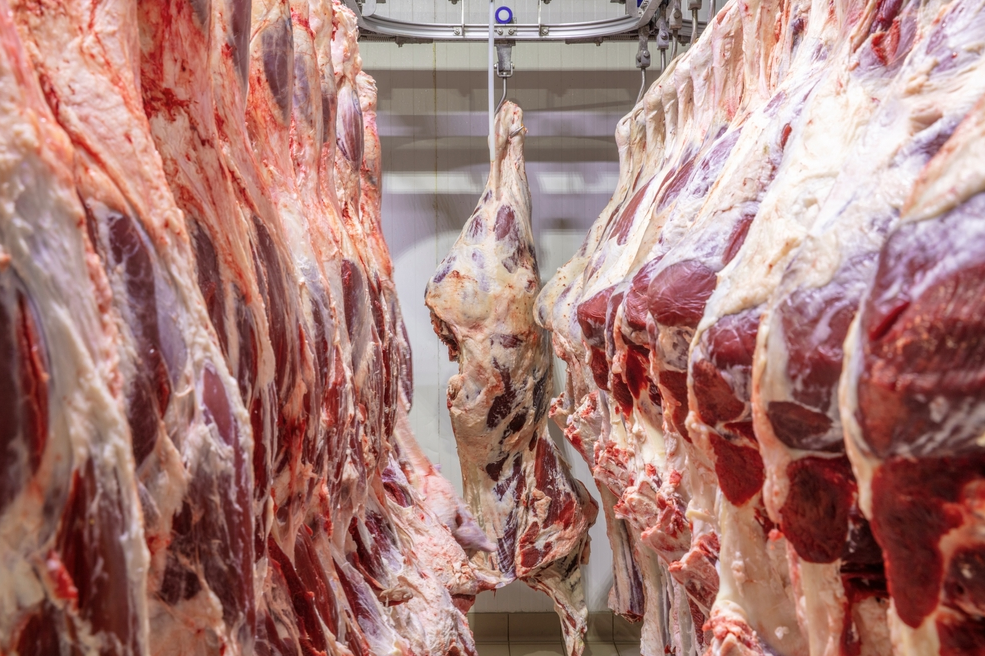
“While we have four big major packers, they always key in on that number four, but they have 15, 20 plants between them,” Dittmer says. “They’re actually cutting back some shifts in some plants because there’s not enough cattle to keep their fixed costs in line, and it costs a bunch to have a big plant. But that’s what keeps the cost down for the consumers.”
Dittmer: Breaking Up Big Packers Could Raise Costs
Dittmer argues that breaking up the major packers would not necessarily benefit cattle producers or consumers. Instead, he says it could make beef more expensive to produce. “We have to have something reasonable, and right now the supply of cattle is tighter. But we’re producing a lot of beef from that. It’s just that the demand is there,” Dittmer says.
He says strong consumer demand for beef is one of the biggest factors driving today’s market. “People really like the flavor. They like the tenderness. They like all this. That’s what’s pushing demand more than anything else,” Dittmer says. “Not all the politicians seem to understand that.”
Dittmer says smaller processing facilities face significant challenges competing with large plants on cost. “We’ve got five or 600 smaller plants in the country, but they can’t produce a product at the same kind of price point that the big plants do,” he says.
Food Safety Remains Essential
Dittmer also pushes back on the idea that regulations could simply be relaxed to allow more ranchers to process beef for public consumption. “They’re talking about, well, we should allow ranchers to produce their own beef. Well, they can do it for their own consumption now. There’s no rules that say you can’t,” Dittmer says. “But if it’s going to go into state or through federal regulations, then you can sell it to the public. You can’t otherwise.”
He says food safety cannot be treated as an optional part of the system. “Food safety is not a nice thing to have. It’s an absolute essential,” Dittmer says. “And to talk about relaxing regulations on food safety, we can’t do. We have to be careful what we talk about when we talk about deregulation.”
Dittmer ultimately says breaking up the largest packers would not be the right move for the cattle and beef industry. “Indeed, getting on and breaking up the big packers is not a smart thing for us to do,” he says.
Big Packers Benefit From Using the Entire Carcass
Another advantage Dittmer points to is the ability of large processors to find markets for virtually every part of the animal.
He says products that have relatively little value in the United States can become valuable exports in other countries. “We have a totally different idea than we did that our grandfathers and grandmothers ate totally different than we do now,” Dittmer says.
He points to products such as sweetbreads and other variety meats that can be considered delicacies in international markets. “Those things are not worth nearly as much in this country, but they’re delicacies in other countries,” he says.
Dittmer says large packers have the scale and logistics necessary to move those products quickly and in large enough quantities to make international sales economical. “One of their biggest problems is getting rid of the variety meats and the hides and things of that in a quantity,” Dittmer says of smaller plants. “It’s not economic for a small plant to do it, they just can’t gather enough of it fast enough as the big plants can.”
The Industry Has to Explain the Bigger Picture
Dittmer says the cattle industry faces a difficult communications challenge when trying to counter claims that the largest packers are the primary reason for high beef prices.
He says the public needs to understand that the beef business is complex and that processing economics matter. “Everybody says, ‘Oh well, they’re selling billions of dollars a year.’ Yeah, they are, and they’re not even getting a 1% return on it now. They’re losing money,” Dittmer says.
Ultimately, he says the industry needs to focus on three things: producing a safe product, maintaining quality and keeping beef affordable for consumers. “We have to have a product that people like, that is safe, and that is something they can afford,” Dittmer says.
The Beef Buzz is a regular feature heard on radio stations around the region on the Radio Oklahoma Ag Network and is a regular audio feature found on this website as well. Click on the LISTEN BAR above for today’s show and check out our archives for older Beef Buzz shows covering the gamut of the beef cattle industry today.